
Govt pushes livelihood creation, productive use of exhausted mines in new closure rules


NEW DELHI: Govt has made the conversion of exhausted mines into productive assets -- including solar power sites , eco-parks, agricultural land and fisheries -- a key part of its revised mine closure framework , while making companies more accountable for creating alternative livelihoods for communities dependent on mining.
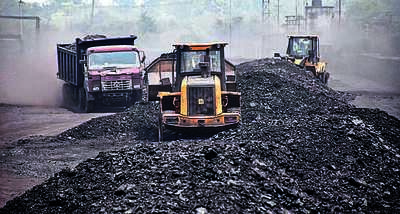
The new guidelines, which build on the framework introduced in 2025, make it mandatory for coal and lignite companies to provide mechanised systems for loading coal and adopt blast-free mining as the norm, while allowing drilling and blasting only where such technology is technically unfeasible or commercially unviable. Mines with a capacity of 2 million tonnes per annum or more will also have to plan for transporting coal through modes other than road, as far as practicable, within five years of starting production.
The guidelines have assigned a greater role to district administrations and local communities in deciding what happens after a mine is closed, making establishment of a committee mandatory in every district with mining operations to oversee livelihood projects, skill training and the involvement of local communities and self-help groups in activities such as maintenance of public spaces and other facilities.
“Companies will also have to assess the impact of mine closure on people living in and around the mining area, including a buffer zone of around 10 km, to identify opportunities for alternative livelihoods,” said an official. The rules have also changed how companies must spend money set aside for mine closure.
The changes come as govt steps up efforts to scientifically close and repurpose exhausted coal mines. The coal ministry has set up a dedicated corpus of around Rs 40,000 crore for scientific and progressive mine closure, environmental restoration and repurposing of exhausted mines. India scientifically closed 42 coal mines, including 33 blocks, in the preceding year, while govt has identified 147 mines for scientific closure over the next 2-3 years.
Coal ministry said the guidelines will come into force 30 days from the date of their issuance and will provide an outcome-oriented framework for systematic and scientific mine planning and mine closure. “Keeping pace with emerging technologies, the guidelines recognise underground coal gasification as a mining method. These are expected to improve ease of doing business through simpler, practical and time-bound processes, and to accelerate the operationalisation of mines, supporting the country’s energy security,” the ministry said.
The new guidelines, which build on the framework introduced in 2025, make it mandatory for coal and lignite companies to provide mechanised systems for loading coal and adopt blast-free mining as the norm, while allowing drilling and blasting only where such technology is technically unfeasible or commercially unviable. Mines with a capacity of 2 million tonnes per annum or more will also have to plan for transporting coal through modes other than road, as far as practicable, within five years of starting production.
The guidelines have assigned a greater role to district administrations and local communities in deciding what happens after a mine is closed, making establishment of a committee mandatory in every district with mining operations to oversee livelihood projects, skill training and the involvement of local communities and self-help groups in activities such as maintenance of public spaces and other facilities.
“Companies will also have to assess the impact of mine closure on people living in and around the mining area, including a buffer zone of around 10 km, to identify opportunities for alternative livelihoods,” said an official. The rules have also changed how companies must spend money set aside for mine closure.
The changes come as govt steps up efforts to scientifically close and repurpose exhausted coal mines. The coal ministry has set up a dedicated corpus of around Rs 40,000 crore for scientific and progressive mine closure, environmental restoration and repurposing of exhausted mines. India scientifically closed 42 coal mines, including 33 blocks, in the preceding year, while govt has identified 147 mines for scientific closure over the next 2-3 years.
Coal ministry said the guidelines will come into force 30 days from the date of their issuance and will provide an outcome-oriented framework for systematic and scientific mine planning and mine closure. “Keeping pace with emerging technologies, the guidelines recognise underground coal gasification as a mining method. These are expected to improve ease of doing business through simpler, practical and time-bound processes, and to accelerate the operationalisation of mines, supporting the country’s energy security,” the ministry said.
Next Story