
Husband's family can't get wife's land in this case


Under the Hindu Succession Act, if a wife inherits property from her husband or father-in-law and dies intestate (without writing a Will), then her property goes to her sons, daughters and husband’s legal heirs. But what happens if her husband and son both die and she decides to marry for the 2nd time and have two more children from her second marriage? This is what the Supreme Court answered in a dispute case involving 45- bighas of land in Delhi where the widow remarried and had two sons from her second nd marriage. Both her first husband and the son from the first st marriage had died.
The Supreme Court ruled that since the widow had inherited the land from her son from the first marriage, Section 15 of the Hindu Succession Act, 1956 was not applicable. This Section applies only to property inherited by a female from her father or mother. So the Supreme Court applied the Delhi Land Reforms Act, 1954 and held that her son from second marriage will get this land instead of her first husband’s family.
Also read: Father gave his share of joint family land to second son; first son lost challenge but got 1/8th share in father’s self-acquired land, know why
How did she inherit the land and became Bhumidar?
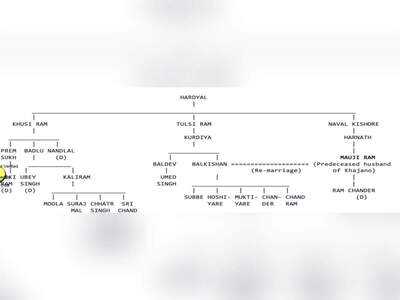
Mr Hardayal owned a land measuring 45 bigha in Bhawana Village, Delhi. Hardayal had three sons: Khushi Ram, Tulsi Ram, and Naval Kishore.
Tulsi Ram had a son named Kurdiya. Kurdiya had two sons named Baldev and Balkishan. Khusi Ram had two sons and a daughter.
Naval Kishore had a son named Harnath who is the father of Mauji Ram. Khajano is the wife of Mauji Ram (first marriage) and they had a son named Ram Chander. When Mauji Ram died, Khajano did a Karwa (re-marriage) with Balkishan (Kurdiya’s son and Tulsi Ram’s grandson).
At the time of Khajano’s marriage to Balkishan, he already had three sons from his own first marriage (Subbe, Hoshiyare, and Muktiyare) and later on from Khajano, he had two more sons- Chand Ram and Chander Bhan.
So the dispute was between Mauji Ram’s family and Chand Ram and Chander Bhan. Chand Ram and Chander Bhan wanted the 45 bigha land in Bawana village, Delhi, which Mauji Ram’s family wanted as well . Mauji Ram’s family claimed it was because both Mauji Ram and his son Ram Chander had died and under Hindu law, the husband’s family gets the wife's properties. However, Chand Ram and Chander Ram laid claim to the 45 bighas on the ground that instead of the Hindu Succession Act, the Delhi Land Reforms Act, 1954, would apply here and they would get the land.
Ultimately in the Supreme Court, Chand Ram and Chander Bhan (the children from the second marriage) won the case and got this land.
From July 20, 1954, Delhi Land Reforms Act, 1954 came into effect in the Union Territory of Delhi and Khajano, as Khudkhast in possession of the 45 bigha land, together with other interests vesting in her in 1954, claimed Bhumidhar status under Section 5 and everybody agreed on this. Chand Ram, Chander Bhan and Balkishan’s side also agreed that under Section 11, Khajano had been declared a Bhumidhar.
The Hindu Succession Act, 1956 came into force with effect from June 17, 1956.
Also read: Father bought 5-bigha land in elder brother’s name, other brothers claimed it was joint family land; M.P. High Court rules in elder brother’s favour, here's why
For easy reference the family tree is as follows:
Why did Chand Ram and Chander Bhan succeed in the 45-bigha land dispute?
Jahnavi Kohli, Partner and Head of Private Client Practice at ANB Legal said to ET Wealth Online: Chand Ram and Chander Bhan succeeded because they were entitled to succeed to Khajano's estate under the applicable succession provisions. While the earlier inheritance laws placed Khajano under Section 51(2) of Delhi Land Reforms Act, but the enactment of Hindu Succession Act changed it. When the Hindu Succession Act was enacted Khajano's limited interest in this land was converted into full ownership.
Kohli says that the main reason was that her limited interest in the property was later converted into absolute ownership under Section 14(1) of the Hindu Succession Act, 1956. Therefore, at the time of her death, she was the absolute owner of the property, and her sons, Chand Ram and Chander Bhan, were entitled to inherit it.
Justice S.V.N. Bhatti of the Supreme Court explicitly highlighted that if Khajano had died between July 20, 1954 and June 17, 1956 then the land would have gone to the male heirs but since this did not happen as Khajano died in 1973, which is after the enactment of Hindu Succession Act, 1956, this means that her limited interest in this land had already become her absolute ownership interest under Section 14(1) of Hindu Succession Act, 1956.
The flow of the inheritance can be understood as follows:
Kohli says that the explanation to Section 14(1) of Hindu Succession Act, 1956 includes any property which came by inheritance or any other way. This meant that Khajano's pre-existing right in this 45 bigha land became her absolute land. The Supreme Court clarified that Section 14(1) does not create a new right where no legal interest existed. The court explained that Section 14(1) enlarges an existing limited interest in land into full ownership.
Supreme Court discussion in brief
Kohli explains the important findings of the Supreme Court:
The Delhi Land Reforms Act is a complete code
The Supreme Court reaffirmed that the Delhi Land Reforms Act, 1954 is a complete code which governs the Bhumidhar rights and how an agricultural land in Delhi devolves. However, Section 51(2) itself refers to the expression "personal law applicable to her". Therefore, personal law must be considered to determine whether the female Bhumidhar held only a life estate or an absolute interest.
Personal law is determined on the date of death
The Court held that the expression "personal law applicable to her" is a general reference to personal law and is not frozen as on the date the Delhi Land Reforms Act came into force. Accordingly, the relevant personal law is the law applicable at the time of the female Bhumidhar's death, when succession opens. Since Khajano died in 1973, the Hindu Succession Act, 1956, was applicable.
Section 14(1) enlarged Khajano's limited interest
The Court held that Section 14(1), read with its Explanation, enlarged Khajano's limited estate into absolute ownership. Therefore, at the time of her death, she was entitled to the holding absolutely, attracting Section 51(2)(a)(ii) of the Delhi Land Reforms Act.
Judgement
The Supreme Court held that Khajano's limited right over this land converted into her absolute ownership under the Hindu Succession Act and since she became the land's absolute owner during her lifetime, the land will be inherited by following the Hindu succession rules applicable to a female Bhumidar. On this ground, the Supreme Court upheld the mutation of the land in Chand Ram and Chander Bhan's name.
The Supreme Court ruled that since the widow had inherited the land from her son from the first marriage, Section 15 of the Hindu Succession Act, 1956 was not applicable. This Section applies only to property inherited by a female from her father or mother. So the Supreme Court applied the Delhi Land Reforms Act, 1954 and held that her son from second marriage will get this land instead of her first husband’s family.
Also read: Father gave his share of joint family land to second son; first son lost challenge but got 1/8th share in father’s self-acquired land, know why
How did she inherit the land and became Bhumidar?
Mr Hardayal owned a land measuring 45 bigha in Bhawana Village, Delhi. Hardayal had three sons: Khushi Ram, Tulsi Ram, and Naval Kishore.
Tulsi Ram had a son named Kurdiya. Kurdiya had two sons named Baldev and Balkishan. Khusi Ram had two sons and a daughter.
Naval Kishore had a son named Harnath who is the father of Mauji Ram. Khajano is the wife of Mauji Ram (first marriage) and they had a son named Ram Chander. When Mauji Ram died, Khajano did a Karwa (re-marriage) with Balkishan (Kurdiya’s son and Tulsi Ram’s grandson).
At the time of Khajano’s marriage to Balkishan, he already had three sons from his own first marriage (Subbe, Hoshiyare, and Muktiyare) and later on from Khajano, he had two more sons- Chand Ram and Chander Bhan.
So the dispute was between Mauji Ram’s family and Chand Ram and Chander Bhan. Chand Ram and Chander Bhan wanted the 45 bigha land in Bawana village, Delhi, which Mauji Ram’s family wanted as well . Mauji Ram’s family claimed it was because both Mauji Ram and his son Ram Chander had died and under Hindu law, the husband’s family gets the wife's properties. However, Chand Ram and Chander Ram laid claim to the 45 bighas on the ground that instead of the Hindu Succession Act, the Delhi Land Reforms Act, 1954, would apply here and they would get the land.
Ultimately in the Supreme Court, Chand Ram and Chander Bhan (the children from the second marriage) won the case and got this land.
From July 20, 1954, Delhi Land Reforms Act, 1954 came into effect in the Union Territory of Delhi and Khajano, as Khudkhast in possession of the 45 bigha land, together with other interests vesting in her in 1954, claimed Bhumidhar status under Section 5 and everybody agreed on this. Chand Ram, Chander Bhan and Balkishan’s side also agreed that under Section 11, Khajano had been declared a Bhumidhar.
The Hindu Succession Act, 1956 came into force with effect from June 17, 1956.
Also read: Father bought 5-bigha land in elder brother’s name, other brothers claimed it was joint family land; M.P. High Court rules in elder brother’s favour, here's why
For easy reference the family tree is as follows:
Why did Chand Ram and Chander Bhan succeed in the 45-bigha land dispute?
Kohli says that the main reason was that her limited interest in the property was later converted into absolute ownership under Section 14(1) of the Hindu Succession Act, 1956. Therefore, at the time of her death, she was the absolute owner of the property, and her sons, Chand Ram and Chander Bhan, were entitled to inherit it.
Justice S.V.N. Bhatti of the Supreme Court explicitly highlighted that if Khajano had died between July 20, 1954 and June 17, 1956 then the land would have gone to the male heirs but since this did not happen as Khajano died in 1973, which is after the enactment of Hindu Succession Act, 1956, this means that her limited interest in this land had already become her absolute ownership interest under Section 14(1) of Hindu Succession Act, 1956.
The flow of the inheritance can be understood as follows:
- A. Khajano initially inherited a limited estate
- B. Khajano became a Bhumidhar under the Delhi Land Reforms Act, 1954
- C. Section 14(1) of the Hindu Succession Act converted her limited interest into absolute ownership
Kohli says that the explanation to Section 14(1) of Hindu Succession Act, 1956 includes any property which came by inheritance or any other way. This meant that Khajano's pre-existing right in this 45 bigha land became her absolute land. The Supreme Court clarified that Section 14(1) does not create a new right where no legal interest existed. The court explained that Section 14(1) enlarges an existing limited interest in land into full ownership.
Supreme Court discussion in brief
Kohli explains the important findings of the Supreme Court:
The Delhi Land Reforms Act is a complete code
The Supreme Court reaffirmed that the Delhi Land Reforms Act, 1954 is a complete code which governs the Bhumidhar rights and how an agricultural land in Delhi devolves. However, Section 51(2) itself refers to the expression "personal law applicable to her". Therefore, personal law must be considered to determine whether the female Bhumidhar held only a life estate or an absolute interest.
Personal law is determined on the date of death
The Court held that the expression "personal law applicable to her" is a general reference to personal law and is not frozen as on the date the Delhi Land Reforms Act came into force. Accordingly, the relevant personal law is the law applicable at the time of the female Bhumidhar's death, when succession opens. Since Khajano died in 1973, the Hindu Succession Act, 1956, was applicable.
Section 14(1) enlarged Khajano's limited interest
The Court held that Section 14(1), read with its Explanation, enlarged Khajano's limited estate into absolute ownership. Therefore, at the time of her death, she was entitled to the holding absolutely, attracting Section 51(2)(a)(ii) of the Delhi Land Reforms Act.
Judgement
The Supreme Court held that Khajano's limited right over this land converted into her absolute ownership under the Hindu Succession Act and since she became the land's absolute owner during her lifetime, the land will be inherited by following the Hindu succession rules applicable to a female Bhumidar. On this ground, the Supreme Court upheld the mutation of the land in Chand Ram and Chander Bhan's name.
Next Story