
India's semicon mkt to triple to $200bn by 2035: Report


Bengaluru: India’s semiconductor market is projected to more than triple from nearly $64 billion in 2026 to $200 billion by 2035, creating an opportunity to convert rising domestic demand into manufacturing, and greater supply-chain resilience, according to an EY–IESA report , Semicon India 2.0 : From capacity creation to ecosystem leadership.
The report said consumer electronics is the largest demand driver, accounting for 30% of India’s semiconductor market, followed by automotive at 16% and industrial applications at 15%. Artificial intelligence, data centres, telecommunications, electric mobility and advanced manufacturing are expected to create additional demand.
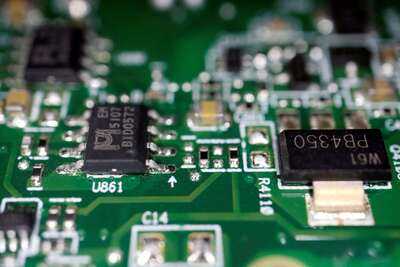
The opportunity is underscored by India’s growing dependence on semiconductor imports . Imports rose more than fivefold from $5.7 billion in FY17 to $30.3 billion in FY25, a CAGR of 23%. India also accounts for nearly 20% of the world’s chip design engineers, providing a talent base for scaling semiconductor manufacturing and innovation.
Ashok Chandak , president, India Electronics and Semiconductor Association (IESA), said, “India now has a unique opportunity to combine its strengths in engineering talent, electronics demand, design capabilities and emerging manufacturing capacity with resilient global supply-chain partnerships. The next phase will be defined by execution, innovation, technology commercialisation, indigenous IP, specialised talent and ecosystem depth. India has moved beyond semiconductor ambition. The opportunity now is to build an ecosystem that the world trusts, India owns and the next generation can scale.”
The report said India’s broader electronics ecosystem has also expanded rapidly. Electronics production increased sixfold from Rs 1.9 lakh crore in FY15 to Rs 11.3 lakh crore in FY25, while electronics manufacturing and exports grew sevenfold and elevenfold, respectively.
Aisha Ali Hussaini , partner and semiconductor tax leader at EY India, said, “India has a powerful combination of market scale, engineering talent and policy momentum. Its rapidly expanding electronics ecosystem adds to this opportunity; electronics production increased sixfold from Rs 1.9 lakh crore in FY15 to Rs 11.3 lakh crore in FY25, while electronics manufacturing and exports grew sevenfold and elevenfold, respectively. The priority now is to translate this scale into deeper semiconductor value addition by building a connected, innovation-led ecosystem that attracts sustained investment and creates more value domestically.”
The report said the next phase should focus on aligning state semiconductor policies with Semicon India 2.0, developing integrated semiconductor manufacturing clusters with shared infrastructure, and introducing dedicated talent-certification programmes covering semiconductor design, fabrication and advanced packaging.
The report said consumer electronics is the largest demand driver, accounting for 30% of India’s semiconductor market, followed by automotive at 16% and industrial applications at 15%. Artificial intelligence, data centres, telecommunications, electric mobility and advanced manufacturing are expected to create additional demand.
The opportunity is underscored by India’s growing dependence on semiconductor imports . Imports rose more than fivefold from $5.7 billion in FY17 to $30.3 billion in FY25, a CAGR of 23%. India also accounts for nearly 20% of the world’s chip design engineers, providing a talent base for scaling semiconductor manufacturing and innovation.
Ashok Chandak , president, India Electronics and Semiconductor Association (IESA), said, “India now has a unique opportunity to combine its strengths in engineering talent, electronics demand, design capabilities and emerging manufacturing capacity with resilient global supply-chain partnerships. The next phase will be defined by execution, innovation, technology commercialisation, indigenous IP, specialised talent and ecosystem depth. India has moved beyond semiconductor ambition. The opportunity now is to build an ecosystem that the world trusts, India owns and the next generation can scale.”
The report said India’s broader electronics ecosystem has also expanded rapidly. Electronics production increased sixfold from Rs 1.9 lakh crore in FY15 to Rs 11.3 lakh crore in FY25, while electronics manufacturing and exports grew sevenfold and elevenfold, respectively.
Aisha Ali Hussaini , partner and semiconductor tax leader at EY India, said, “India has a powerful combination of market scale, engineering talent and policy momentum. Its rapidly expanding electronics ecosystem adds to this opportunity; electronics production increased sixfold from Rs 1.9 lakh crore in FY15 to Rs 11.3 lakh crore in FY25, while electronics manufacturing and exports grew sevenfold and elevenfold, respectively. The priority now is to translate this scale into deeper semiconductor value addition by building a connected, innovation-led ecosystem that attracts sustained investment and creates more value domestically.”
The report said the next phase should focus on aligning state semiconductor policies with Semicon India 2.0, developing integrated semiconductor manufacturing clusters with shared infrastructure, and introducing dedicated talent-certification programmes covering semiconductor design, fabrication and advanced packaging.
Next Story