
Railways starts UPS pension scheme for its employees


The Ministry of Railways today (Wednesday, September 23, 2026) notified Unified Pension Scheme (UPS) rules for its employees who are covered under the National Pension System (NPS). The rules highlight the membership eligibility, lump sum and pension calculation methods, minimum and maximum pension amount, switch from the UPS to the NPS and other key information that Railway employees and pensioners may require from time to time.
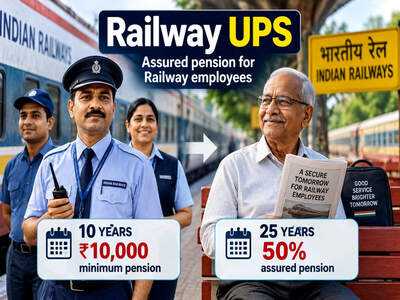
UPS subscribers from Railways will get a minimum pension of Rs 10,000 on completion of 10 years of service, and can get a full pension on completion of 25 years of service. They can also opt for the Voluntary Retirement Scheme (VRS) after completing 20 years of service.
The central government started the UPS scheme under the NPS on April 1, 2025. Many central government departments are implementing the UPS one by one, and now the Railways has also opened the pension scheme to its employees.
Also Read: 100% family pension and NPS-related benefits: Know who is eligible to get extraordinary pension benefits in Railways
Here, we take you through the key features of the UPS scheme for Railway employees-
Which railway employees will be covered under the UPS?
The UPS covers Railway employees who were appointed on or after January 1, 2004, and are covered under the NPS. As per the notification, casual or daily wage employees, contract employees and certain categories of employees governed by other pension rules can’t join the UPS.
Contribution to UPS corpus from employee and employer
A Railway UPS subscriber needs to contribute 10% of their basic salary and dearness allowance (DA) every month to their individual UPS account. The contribution will be continued even if the employee is on probation or deputation to a central or a state government department.
Railways will also contribute 10% of the employee’s basic pay and DA to their UPS corpus.
As per a Pension Fund Regulatory and Development Authority (PFRDA) rule, the government also contributes an estimated 8.5% of basic pay + DA towards the pool corpus that provides assured pension to employees on their retirement.
Also Read: 8th Pay Commission calculator: Can Level 8 employees get Rs 18 lakh in arrears for report implementation delay?
Quantum of pension for Railway employees under UPS
The notification says that on completion of 25 years of service, employees will get a full assured pension, which will be 50% of the average basic pay of the last 12 months before superannuation.
However, if service is between 10 and 25 years, the employee’s payout will be proportionately reduced.
Family pension for Railway employees under UPS
The notification says that the family pension will be provided to the legally wedded spouse as on the date of retirement or superannuation.
The admissible family pension payout will be 60% of the full pension.
Pension if Railway employees opt for Voluntary Retirement Scheme (VRS)
The UPS rules for Railway employees allow them to take voluntary retirement after completion of 20 years of service. The pension payout will depend on years of service.
If the employee takes the VRS after completing 25 years of service, the pension will be 50% of the average basic pay of the last 12 months before superannuation.
If the service period is less than 25 years, an employee will get a pro-rata assured payout.
Under the UPS, if someone takes a VRS, their annuity payout starts from the date on which the employee will reach superannuation, rather than immediately on voluntary retirement.
UPS pension if Railway employee resigns
A normal resignation will entail the forfeiture of assured pension under the UPS. The employee will get accumulated pension wealth in the individual corpus as a lump sum.
The same rule will apply in case of dismissal or removal of the employee.
In case of compulsory retirement, the payout cannot be less than two-thirds and not more than the full admissible payout.
However, a resignation will not entail the forfeiture of UPS benefits if it has been submitted to take up, with proper permission, another appointment under the central government.
UPS pension if Railway employee dies
In this case, the applicable UPS benefits will depend on the option chosen and circumstances.
However, if the employee dies after completing 15 years of service without opting for the UPS option, the family can get pension benefits under the applicable Railway pension rules in specified circumstances.
Switch from UPS to NPS for Railway employees
If a Railway employee wants to switch from the UPS to the NPS, they can do it once during their service. However, once they opt for the NPS, they can’t switch back to the UPS. If they opt for the NPS, the government contribution to their NPS corpus will be 14% of their basic pay.
The switch from the UPS to the NPS cannot be exercised:
·During the 12 months before superannuation
·During the three months before deemed voluntary retirement
·In certain resignation/compulsory retirement situations
·While departmental or judicial proceedings are pending/under consideration.
Dearness relief will be available on UPS pension
The UPS will not be a fixed pension scheme for Railway employees as the UPS subscribers also get dearness relief (DR) on their basic pension. The DR is also available on family pension.
Individual vs benchmark corpus under UPS for Railway employees
The individual corpus in the UPS is defined as the investment by the employer and the return on it. An individual corpus is the net asset value of the units held in an employee’s Permanent Retirement Account Number-linked UPS account.
Benchmark Corpus is a notional reference corpus calculated using the default investment pattern and assuming regular UPS contributions without certain withdrawals.
The PFRDA says that if an employee's individual corpus is below the benchmark corpus at the time of retirement, the assured payout can be proportionately reduced. In such a condition, the employee can replenish the shortfall subject to the regulations.
Lump sum benefit and withdrawal of corpus
UPS subscribers get a lump sum benefit at the time of retirement.
Lump sum benefit= 1/10th of the last drawn basic pay + DA for every completed six months of qualifying service.
This lump sum benefit is in addition to the assured payout and doesn’t impact the pension.
The UPS also allows a final withdrawal of up to 60% of the individual corpus or the benchmark corpus, whichever is lower. However, a lower withdrawal means a higher monthly payout as the PFRDA says that the assured payout will be proportionately reduced if the employee makes the permitted final withdrawal.
UPS subscribers from Railways will get a minimum pension of Rs 10,000 on completion of 10 years of service, and can get a full pension on completion of 25 years of service. They can also opt for the Voluntary Retirement Scheme (VRS) after completing 20 years of service.
The central government started the UPS scheme under the NPS on April 1, 2025. Many central government departments are implementing the UPS one by one, and now the Railways has also opened the pension scheme to its employees.
Also Read: 100% family pension and NPS-related benefits: Know who is eligible to get extraordinary pension benefits in Railways
Here, we take you through the key features of the UPS scheme for Railway employees-
Which railway employees will be covered under the UPS?
The UPS covers Railway employees who were appointed on or after January 1, 2004, and are covered under the NPS. As per the notification, casual or daily wage employees, contract employees and certain categories of employees governed by other pension rules can’t join the UPS.
Contribution to UPS corpus from employee and employer
A Railway UPS subscriber needs to contribute 10% of their basic salary and dearness allowance (DA) every month to their individual UPS account. The contribution will be continued even if the employee is on probation or deputation to a central or a state government department.
Railways will also contribute 10% of the employee’s basic pay and DA to their UPS corpus.
As per a Pension Fund Regulatory and Development Authority (PFRDA) rule, the government also contributes an estimated 8.5% of basic pay + DA towards the pool corpus that provides assured pension to employees on their retirement.
Also Read: 8th Pay Commission calculator: Can Level 8 employees get Rs 18 lakh in arrears for report implementation delay?
Quantum of pension for Railway employees under UPS
The notification says that on completion of 25 years of service, employees will get a full assured pension, which will be 50% of the average basic pay of the last 12 months before superannuation.
However, if service is between 10 and 25 years, the employee’s payout will be proportionately reduced.
Family pension for Railway employees under UPS
The notification says that the family pension will be provided to the legally wedded spouse as on the date of retirement or superannuation.
The admissible family pension payout will be 60% of the full pension.
Pension if Railway employees opt for Voluntary Retirement Scheme (VRS)
The UPS rules for Railway employees allow them to take voluntary retirement after completion of 20 years of service. The pension payout will depend on years of service.
If the employee takes the VRS after completing 25 years of service, the pension will be 50% of the average basic pay of the last 12 months before superannuation.
If the service period is less than 25 years, an employee will get a pro-rata assured payout.
Under the UPS, if someone takes a VRS, their annuity payout starts from the date on which the employee will reach superannuation, rather than immediately on voluntary retirement.
UPS pension if Railway employee resigns
A normal resignation will entail the forfeiture of assured pension under the UPS. The employee will get accumulated pension wealth in the individual corpus as a lump sum.
The same rule will apply in case of dismissal or removal of the employee.
In case of compulsory retirement, the payout cannot be less than two-thirds and not more than the full admissible payout.
However, a resignation will not entail the forfeiture of UPS benefits if it has been submitted to take up, with proper permission, another appointment under the central government.
UPS pension if Railway employee dies
In this case, the applicable UPS benefits will depend on the option chosen and circumstances.
However, if the employee dies after completing 15 years of service without opting for the UPS option, the family can get pension benefits under the applicable Railway pension rules in specified circumstances.
Switch from UPS to NPS for Railway employees
If a Railway employee wants to switch from the UPS to the NPS, they can do it once during their service. However, once they opt for the NPS, they can’t switch back to the UPS. If they opt for the NPS, the government contribution to their NPS corpus will be 14% of their basic pay.
The switch from the UPS to the NPS cannot be exercised:
·During the 12 months before superannuation
·During the three months before deemed voluntary retirement
·In certain resignation/compulsory retirement situations
·While departmental or judicial proceedings are pending/under consideration.
Dearness relief will be available on UPS pension
The UPS will not be a fixed pension scheme for Railway employees as the UPS subscribers also get dearness relief (DR) on their basic pension. The DR is also available on family pension.
Individual vs benchmark corpus under UPS for Railway employees
The individual corpus in the UPS is defined as the investment by the employer and the return on it. An individual corpus is the net asset value of the units held in an employee’s Permanent Retirement Account Number-linked UPS account.
Benchmark Corpus is a notional reference corpus calculated using the default investment pattern and assuming regular UPS contributions without certain withdrawals.
The PFRDA says that if an employee's individual corpus is below the benchmark corpus at the time of retirement, the assured payout can be proportionately reduced. In such a condition, the employee can replenish the shortfall subject to the regulations.
Lump sum benefit and withdrawal of corpus
UPS subscribers get a lump sum benefit at the time of retirement.
Lump sum benefit= 1/10th of the last drawn basic pay + DA for every completed six months of qualifying service.
This lump sum benefit is in addition to the assured payout and doesn’t impact the pension.
The UPS also allows a final withdrawal of up to 60% of the individual corpus or the benchmark corpus, whichever is lower. However, a lower withdrawal means a higher monthly payout as the PFRDA says that the assured payout will be proportionately reduced if the employee makes the permitted final withdrawal.
Next Story