
73 elephants put 24 paddy procurement centres on alert in Chhattisgarh's Korba


Raipur: As paddy procurement gathers pace in Chhattisgarh, an unusual challenge has emerged in Korba — protecting freshly procured grain from 73 wild elephants roaming the Korba and Katghora forest divisions. With more than two dozen procurement centres considered vulnerable to elephant incursions, the district administration is preparing a massive storage facility capable of holding 10 lakh quintals of paddy.
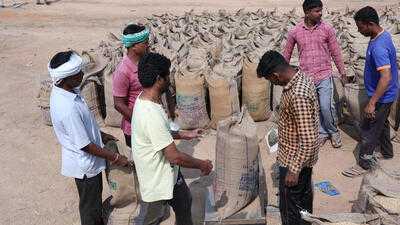
Officials fear the smell of stored grain could attract elephants to procurement centres, potentially triggering dangerous encounters with workers and farmers while damaging stocks and infrastructure.
The administration has identified the Labed region in Korba forest division for the proposed storage facility, where paddy from 24 elephant-affected procurement centres will be shifted.
A similar facility is being considered in Katghora forest division, where officials are searching for a suitable location.
The Labed centre will also accommodate grain from procurement centres facing space constraints or delays in transportation. High-mast lights, wire fencing and deployment of forest personnel are planned to protect the stocks.
The threat is not hypothetical. During the previous procurement season, elephants entered several centres, consumed stored paddy and damaged sheds and fencing.
This year, with elephant herds already active in the region, authorities have identified procurement centres in Pasan, Kendai, Etma Nagar, Kudmura and neighbouring areas as particularly vulnerable.
Watchtowers have been established in more than half a dozen elephant-affected forest areas to monitor herd movements round the clock.
Forest personnel had been alerted about elephant movement near procurement centres.
Patrolling teams and Hathi Mitras, local volunteers assisting in elephant monitoring, have also been mobilised.
Procurement centre managers have been instructed to maintain adequate lighting at night, avoid unnecessary accumulation of paddy and ensure timely movement of stocks to reduce the risk of attracting elephants.
District food officer Ghanshyam Singh Kanwar told reporters that the proposed Labed storage centre would help address both the elephant threat and congestion at procurement centres.
"Arrangements are being made to store paddy from 24 elephant-affected centres at Labed. Forest personnel will also be deployed for protection," he said.
The challenge comes as Korba targets procurement of 31 lakh quintals of paddy this season, with eight additional procurement centres becoming operational following an increase in registered farmers and cultivated acreage.
Procurement is scheduled to continue until January 15.
Meanwhile, farmers and villagers have been advised not to approach elephants or attempt to drive them away and to immediately inform forest officials about herd movements.
With elephant activity coinciding with peak paddy procurement, officials face the twin challenge of protecting government grain stocks and preventing potentially dangerous human-elephant encounters.
Next Story