
Buxar AQI deteriorates post Diwali


Buxar : Air quality in Buxar deteriorated after Diwali , with the Air Quality Index (AQI) crossing 202 on Monday morning due to a spike in air pollution attributed to extensive firecracker bursting.
According to Bihar State Pollution Control Board (BSPCB) monitoring data at 4pm on Monday, Patna City recorded the highest AQI of 356 in very poor zone. The pollution spike was not confined to the state capital. Several other districts also reported alarming air quality levels on Monday. Hajipur recorded an AQI of 335, followed by Bettiah at 304, Ara at 290 and Muzaffarpur at 286. Siwan also reported a high reading of 256, while Begusarai stood at 228 and Buxar at 202.
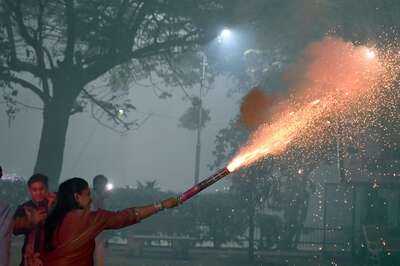
Chest specialist Dr Shailesh Kumar Srivastava said firecrackers emit fine particulate matter such as PM2.5 and PM10 , which can penetrate deep into the respiratory system and cause breathing difficulties. Harmful gases, including sulphur dioxide and nitrogen oxides, released during the burning of crackers further worsen air pollution and affect lung health.
Environmental expert Raj Kumar Jha expressed concern over rising firecracker-related pollution and urged parents to discourage children from bursting crackers. He also advised people to minimise outdoor exposure, particularly during the morning hours when pollution levels remain high.
Jha said public participation was crucial in tackling air pollution, adding that administrative measures alone would not be sufficient unless people adopted environment-friendly practices during festivals and other celebrations.
According to Bihar State Pollution Control Board (BSPCB) monitoring data at 4pm on Monday, Patna City recorded the highest AQI of 356 in very poor zone. The pollution spike was not confined to the state capital. Several other districts also reported alarming air quality levels on Monday. Hajipur recorded an AQI of 335, followed by Bettiah at 304, Ara at 290 and Muzaffarpur at 286. Siwan also reported a high reading of 256, while Begusarai stood at 228 and Buxar at 202.
Chest specialist Dr Shailesh Kumar Srivastava said firecrackers emit fine particulate matter such as PM2.5 and PM10 , which can penetrate deep into the respiratory system and cause breathing difficulties. Harmful gases, including sulphur dioxide and nitrogen oxides, released during the burning of crackers further worsen air pollution and affect lung health.
Environmental expert Raj Kumar Jha expressed concern over rising firecracker-related pollution and urged parents to discourage children from bursting crackers. He also advised people to minimise outdoor exposure, particularly during the morning hours when pollution levels remain high.
Jha said public participation was crucial in tackling air pollution, adding that administrative measures alone would not be sufficient unless people adopted environment-friendly practices during festivals and other celebrations.
Next Story