
Coimbatore APWs Urge More Staff, Smaller Beats to Boost Forest Patrols


There are days anti-poaching watcher (APW) S Angakumar walks through more than 15km of forest, checking for snares and traps, environmental hazards and signs of smuggling.
“Our monthly target to cover is 2,000 hectares but in several ranges, the beat size exceeds this limit,” says the state APW president. “Teams walk an average of 15km a day.”
Coimbatore’s APWs say distances are getting harder to cover because of shortage of people. “Sometimes, it is seven days before frontline staff returns to a patch. An injured animal, or a carcass may remain unnoticed until the next patrol,” says Angakumar. “We need more staff or a reduction in the area assigned to each beat to improve surveillance and emergency response.”
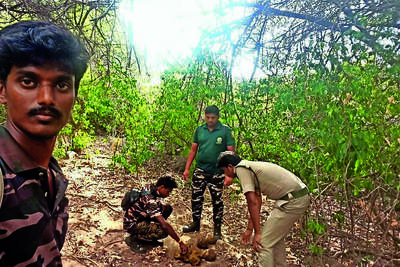
A typical patrol team includes a forest guard, a forest watcher, and two APWs. “We only have 75 APWs now. We used to have 160 in 2023. There is a vacancy of 15% statewide. If the area assigned to each patrol team be reduced by 1,000 hectares, APWs would be able to revisit locations more frequently,” says Angakumar.
Staff say human-wildlife conflict calls add to the pressure. “When elephants enter human habitation, morning shift staff may be needed to rescue the animals,” says a forest staffer. This leaves them with little rest.
Forest officials say Coimbatore forest division covers about 69,700 hectares and is divided into seven territorial ranges. “The sanctioned strength of APWs is 256. There is no staff shortage ,” says N Vengadesh Prabhu , Coimbatore district forest officer. “About 100 vacancies in forest guard and watcher categories have been filled. Staff patrol with GPS devices, record direct and indirect animal signs, cover 10km a day. They cover 2,000 hectares a month, conducting reviews every 14 days to identify areas needing increased patrolling.”
“Increasing strength alone would not reduce workload. We need to create a separate wildlife ranger system similar to the one in Gujarat to handle rescues, human-animal conflict, and other operations in revenue lands along forest fringes. That way frontline staff can focus on patrolling,” says a forest official.
“Our monthly target to cover is 2,000 hectares but in several ranges, the beat size exceeds this limit,” says the state APW president. “Teams walk an average of 15km a day.”
Coimbatore’s APWs say distances are getting harder to cover because of shortage of people. “Sometimes, it is seven days before frontline staff returns to a patch. An injured animal, or a carcass may remain unnoticed until the next patrol,” says Angakumar. “We need more staff or a reduction in the area assigned to each beat to improve surveillance and emergency response.”
A typical patrol team includes a forest guard, a forest watcher, and two APWs. “We only have 75 APWs now. We used to have 160 in 2023. There is a vacancy of 15% statewide. If the area assigned to each patrol team be reduced by 1,000 hectares, APWs would be able to revisit locations more frequently,” says Angakumar.
Staff say human-wildlife conflict calls add to the pressure. “When elephants enter human habitation, morning shift staff may be needed to rescue the animals,” says a forest staffer. This leaves them with little rest.
Forest officials say Coimbatore forest division covers about 69,700 hectares and is divided into seven territorial ranges. “The sanctioned strength of APWs is 256. There is no staff shortage ,” says N Vengadesh Prabhu , Coimbatore district forest officer. “About 100 vacancies in forest guard and watcher categories have been filled. Staff patrol with GPS devices, record direct and indirect animal signs, cover 10km a day. They cover 2,000 hectares a month, conducting reviews every 14 days to identify areas needing increased patrolling.”
“Increasing strength alone would not reduce workload. We need to create a separate wildlife ranger system similar to the one in Gujarat to handle rescues, human-animal conflict, and other operations in revenue lands along forest fringes. That way frontline staff can focus on patrolling,” says a forest official.
Next Story