
Delhi Air Pollution: Why AQI Readings Can Differ Across Neighbourhoods

Delhi's air quality can change significantly from one neighbourhood to another, particularly during the post-monsoon months. As temperatures fall, winds weaken and atmospheric conditions change, pollutants can remain trapped close to the ground. This can make pollution levels rise rapidly near busy roads, construction areas and densely populated locations. Checking a single city-wide number may therefore not give residents a complete picture of the air they breathe. Understanding the Air Quality Index , monitoring station differences and official pollution advisories can help people make better decisions about outdoor activities and daily travel.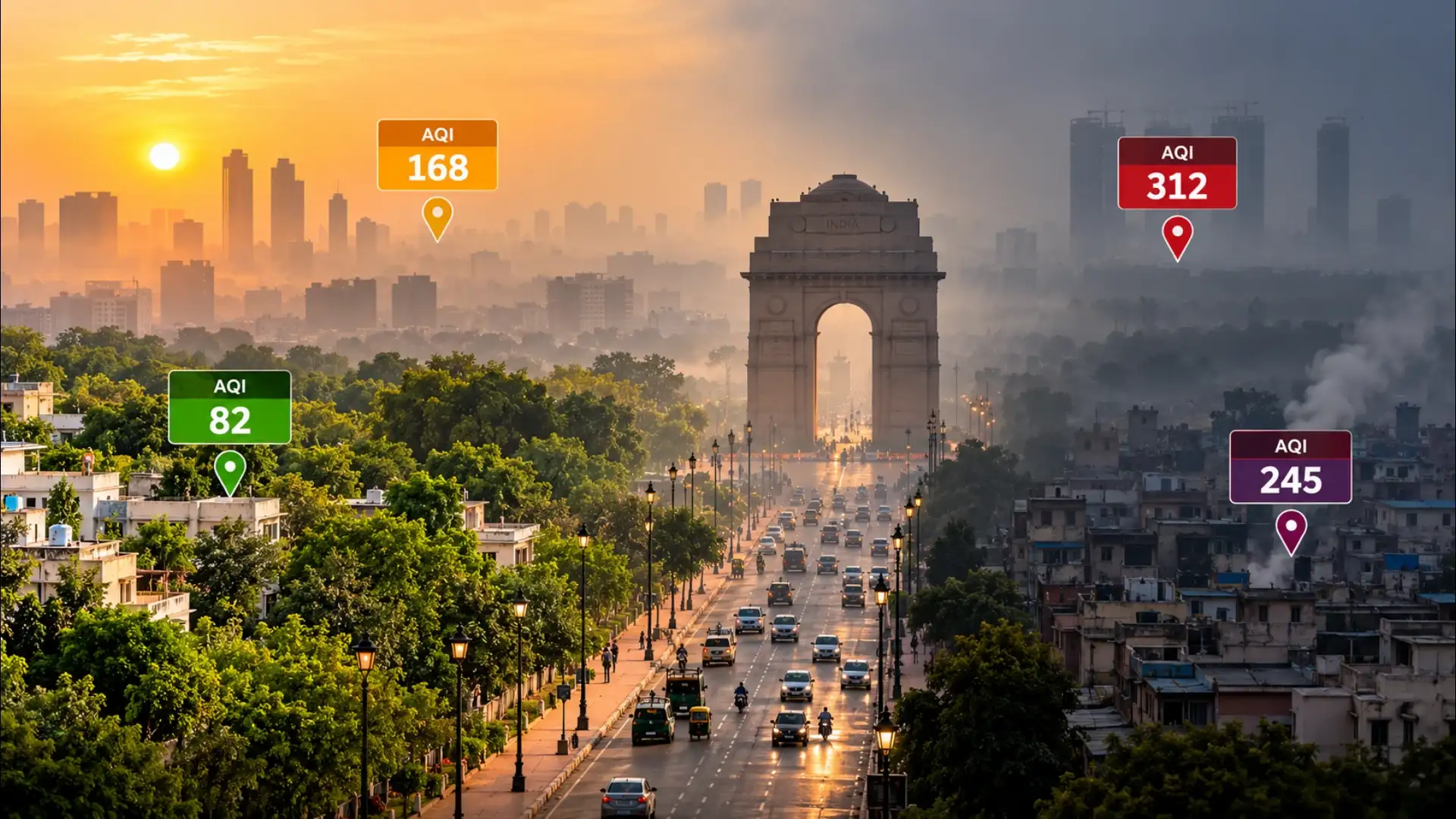
Readings may differ because monitoring stations measure conditions in particular locations. Traffic density, construction dust, nearby industrial activity, weather and local emissions can influence the results. A busy road may record worse air quality than a less congested area several kilometres away.
A report published on 19 October cited an AQI reading of 430 at Delhi's ITO area. The CAQM website, meanwhile, displayed a Delhi AQI of 185 with a timestamp of 18 October. These figures refer to different reporting times and should not be treated as a direct comparison of simultaneous conditions.
Check the latest GRAP announcements as well. Restrictions depend on the applicable official orders, not simply on rumours that a particular stage may be introduced.
People with asthma or other respiratory conditions should follow their clinician's advice and any official health guidance. Seek medical attention for severe breathing difficulty or other urgent symptoms.
Why Delhi AQI readings can vary
The Air Quality Index, or AQI, converts measurements of several air pollutants into a scale that is easier to understand. India's AQI categories range from good and satisfactory to moderate, poor, very poor and severe.Readings may differ because monitoring stations measure conditions in particular locations. Traffic density, construction dust, nearby industrial activity, weather and local emissions can influence the results. A busy road may record worse air quality than a less congested area several kilometres away.
You may also like
- Mumbai woman threatened to circulate video recordings, extorted Rs 4 crore from jeweller
- Mumbai court grants bail to ex-bank manager in Rs 29.83 lakh fraud case
- Uttam Kumar's iconic films meet Durga Puja celebrations in Belgium as Bengali community builds cultural bridges in Switzerland
- Tiger Shroff firing: Accused shooter's mother claims son was drugged, taken away
- Minor girl dragged out of garba pandal, assaulted near Mumbai; accused arrested
A report published on 19 October cited an AQI reading of 430 at Delhi's ITO area. The CAQM website, meanwhile, displayed a Delhi AQI of 185 with a timestamp of 18 October. These figures refer to different reporting times and should not be treated as a direct comparison of simultaneous conditions.
How to check local air quality
Residents should check the latest available readings from official monitoring sources, including the Central Pollution Control Board and the Commission for Air Quality Management. Look for the station name, observation time and AQI category instead of relying only on a headline or social media screenshot.Check the latest GRAP announcements as well. Restrictions depend on the applicable official orders, not simply on rumours that a particular stage may be introduced.
Practical precautions during polluted days
When air quality deteriorates, consider moving outdoor exercise indoors, reducing strenuous activity near busy roads and keeping windows closed during periods of particularly poor outdoor air. If ventilation is needed, choose a period when outdoor pollution is lower, based on local readings.People with asthma or other respiratory conditions should follow their clinician's advice and any official health guidance. Seek medical attention for severe breathing difficulty or other urgent symptoms.
What residents should remember
AQI is a useful indicator, but it is not a guarantee that every street has identical conditions. Check the latest station-level data and official advisories before making decisions about outdoor activities.





Loving Newspoint? Download the app now
