
Diwali crackers: From palace courtyards to crowded streets


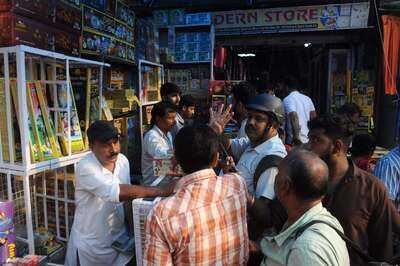
Patna : Once reserved for royal celebrations, fireworks have become a Diwali staple, but their growing popularity has brought a difficult question: can the festival of lights remain bright without adding to air and noise pollution ?
Ahead of Diwali, the Centre has urged people to avoid crackers, while Bihar district administrations have imposed restrictions on licences, sales and bursting hours. However, no fresh blanket ban has been announced.
The Centre’s Green Diwali campaign , launched on Oct 20, is an awareness initiative, not a nationwide prohibition. Bhagalpur and Sheohar issued orders on Nov 3 regarding temporary licences. Saran permits approved green crackers between 8pm and 10pm, while banning online sales and polluting cracker strings. Patna officials have also been directed to enforce restrictions after 10pm. Additional air and noise monitoring is planned from Nov 1 to Nov 15.
Former head of Patna University’s ancient Indian history and archaeology department Jayadeo Mishra said fireworks once entertained royal courts during festivals and weddings. Their high cost restricted their use to rulers and wealthy patrons.
History teacher Sanjay Jha traced their wider popularity to princely households and the expansion of production in Sivakasi , Tamil Nadu.
Economist N K Chaudhary flagged the environmental cost and harmful chemicals, stressing effective enforcement.
The challenge is to balance a popular tradition with cleaner air and quieter neighbourhoods. “The journey from palace courtyards to crowded streets has made fireworks accessible; it has also made their consequences everybody’s concern,” Chaudhary said.
Ahead of Diwali, the Centre has urged people to avoid crackers, while Bihar district administrations have imposed restrictions on licences, sales and bursting hours. However, no fresh blanket ban has been announced.
The Centre’s Green Diwali campaign , launched on Oct 20, is an awareness initiative, not a nationwide prohibition. Bhagalpur and Sheohar issued orders on Nov 3 regarding temporary licences. Saran permits approved green crackers between 8pm and 10pm, while banning online sales and polluting cracker strings. Patna officials have also been directed to enforce restrictions after 10pm. Additional air and noise monitoring is planned from Nov 1 to Nov 15.
Former head of Patna University’s ancient Indian history and archaeology department Jayadeo Mishra said fireworks once entertained royal courts during festivals and weddings. Their high cost restricted their use to rulers and wealthy patrons.
History teacher Sanjay Jha traced their wider popularity to princely households and the expansion of production in Sivakasi , Tamil Nadu.
Economist N K Chaudhary flagged the environmental cost and harmful chemicals, stressing effective enforcement.
The challenge is to balance a popular tradition with cleaner air and quieter neighbourhoods. “The journey from palace courtyards to crowded streets has made fireworks accessible; it has also made their consequences everybody’s concern,” Chaudhary said.
Next Story