
Hosur workshop showcases zero-wastage water hyacinth model


KRISHNAGIRI: A dissemination workshop on the “Waste to Wealth – Zero Wastage Water Hyacinth Model” was jointly conducted in Hosur on Monday by College of Poultry Production and Management (CPPM) of the Tamil Nadu University of Veterinary and Animal Sciences and HOPE Puducherry.
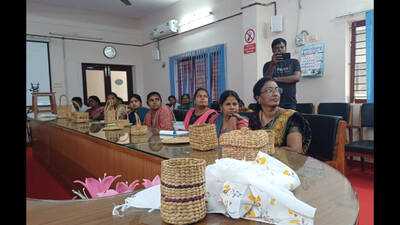
Faculty members, researchers and representatives of academic institutions and non-governmental organisations attended the programme, which examined the conversion of invasive water hyacinth into handicrafts, organic bio-compost and livestock feed .
CPPM dean AK Thiruvenkadan, who inaugurated the workshop, said the waste-to-wealth concept demonstrated that invasive plants could be converted into useful products. “Hosur’s lakes had abundant water hyacinth, making the zero-wastage model relevant,” he said. However, he cautioned that chemical effluents absorbed by water hyacinth must be considered before it was used as livestock fodder.
P Joseph Victor Raj, director of HOPE Puducherry, presented the model and outlined the organisation’s work. “Following training programmes in Puducherry in 2023 and Ariyalur and Cuddalore districts in 2025, the initiative was being expanded to other Tamil Nadu districts and eastern India,” he said.
Raj said the model addressed ecological degradation caused by water hyacinth and the economic vulnerability of rural households while creating sustainable enterprises for grassroots women.
He said agricultural and veterinary colleges could provide scientific expertise in composting and fodder development, while corporate spending on waterbody rejuvenation could become social investment. Govt departments could link the model with rural livelihood and welfare schemes, and NGOs could support community mobilisation and monitoring.
Faculty members, researchers and representatives of academic institutions and non-governmental organisations attended the programme, which examined the conversion of invasive water hyacinth into handicrafts, organic bio-compost and livestock feed .
CPPM dean AK Thiruvenkadan, who inaugurated the workshop, said the waste-to-wealth concept demonstrated that invasive plants could be converted into useful products. “Hosur’s lakes had abundant water hyacinth, making the zero-wastage model relevant,” he said. However, he cautioned that chemical effluents absorbed by water hyacinth must be considered before it was used as livestock fodder.
P Joseph Victor Raj, director of HOPE Puducherry, presented the model and outlined the organisation’s work. “Following training programmes in Puducherry in 2023 and Ariyalur and Cuddalore districts in 2025, the initiative was being expanded to other Tamil Nadu districts and eastern India,” he said.
Raj said the model addressed ecological degradation caused by water hyacinth and the economic vulnerability of rural households while creating sustainable enterprises for grassroots women.
He said agricultural and veterinary colleges could provide scientific expertise in composting and fodder development, while corporate spending on waterbody rejuvenation could become social investment. Govt departments could link the model with rural livelihood and welfare schemes, and NGOs could support community mobilisation and monitoring.
Next Story