
In 2016, a water leak repair in Bengaluru uncovered 5 stone implements that an archaeologist linked to the Palaeolithic age, suggesting humans may have lived in the city around 4 lakh years ago


Could humans have lived in what is now Bengaluru around four lakh years ago? A discovery of five stone implements near Banashankari in 2016 led an archaeologist to make that claim, potentially pushing the history of human presence in the city far beyond its recorded urban past.
A water leak unearthed an unexpected findThe implements were found in May 2016 near the Kadirenahalli underpass at Bendrenagar in Banashankari II Stage, where the Bangalore Water Supply and Sewerage Board had dug up a road to repair a water leak. Retired professor of ancient history and archaeology K B Shivatarak , who lived nearby, became curious after noticing stones collected by workers during the digging. He picked up some of them, washed them and compared them with implements he had previously collected while researching prehistoric sites in Tumakuru, Mandya and Chitradurga districts.
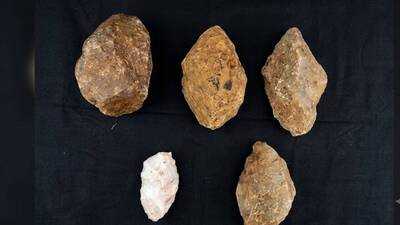
According to Shivatarak, the objects resembled tools associated with the Palaeolithic, or Old Stone Age. The five implements he collected included a hand-axe, a scraper, a leaf-like implement, a hammer stone and a miniature hand axe. The objects were made of quartzite and quartz and measured between 7cm and 11cm in length and 4cm and 7cm in breadth, according to the TOI report.
Five stones, and a claim about 4 lakh years of historyShivatarak said the implements appeared to have been made for different purposes by early humans. He linked some of them to activities such as hunting and processing animal remains, including removing animal skin. For him, the discovery was significant because it could indicate prehistoric human activity in an area that would eventually become Bengaluru.
Shivatarak described the finds as the first Palaeolithic cultural remains discovered in the city and suggested they could point to human presence around four lakh years ago. He also identified another location where similar-looking stones had been found, near Abhimaan Studio in the Kengeri area. At the time of the report, however, he was still studying those findings. The Banashankari objects were particularly intriguing because they were not discovered during a planned archaeological excavation. They came to light during routine civic work, after workers dug into the ground to fix a leaking water pipeline.
Another archaeologist questioned the theoryThe four-lakh-year claim was not universally accepted. Prof Ravi Kori Settar, a retired professor of archaeology at Karnatak University, questioned whether the stones were actually Palaeolithic tools . He pointed out that quartzite quarries had not been found around Bengaluru and said Palaeolithic tools in Karnataka were generally associated with areas in the north and with places such as Kibbanahalli near Tumakuru. Settar suggested the Banashankari stones could have acquired their shapes naturally or might simply resemble prehistoric implements without actually having been fashioned by humans. That disagreement is crucial to understanding the discovery. The 2016 report presented the four-lakh-year timeline as an archaeologist's claim, rather than established evidence that humans definitely lived in Bengaluru at that time.
Still, the find raised an unusual possibility about the city's past. Beneath a neighbourhood now filled with apartment buildings, roads and busy traffic, five stones had prompted a question reaching hundreds of thousands of years into history. If Shivatarak's interpretation were eventually established, the discovery would push the story of Bengaluru far beyond its familiar historical timeline. Instead of beginning with the city's better-known settlements and rulers, its human history could extend deep into the Palaeolithic age. But as of the report, that remained a question rather than a settled fact — one sparked by five stones discovered beside a road during a water-pipeline repair.
A water leak unearthed an unexpected findThe implements were found in May 2016 near the Kadirenahalli underpass at Bendrenagar in Banashankari II Stage, where the Bangalore Water Supply and Sewerage Board had dug up a road to repair a water leak. Retired professor of ancient history and archaeology K B Shivatarak , who lived nearby, became curious after noticing stones collected by workers during the digging. He picked up some of them, washed them and compared them with implements he had previously collected while researching prehistoric sites in Tumakuru, Mandya and Chitradurga districts.
According to Shivatarak, the objects resembled tools associated with the Palaeolithic, or Old Stone Age. The five implements he collected included a hand-axe, a scraper, a leaf-like implement, a hammer stone and a miniature hand axe. The objects were made of quartzite and quartz and measured between 7cm and 11cm in length and 4cm and 7cm in breadth, according to the TOI report.
Five stones, and a claim about 4 lakh years of historyShivatarak said the implements appeared to have been made for different purposes by early humans. He linked some of them to activities such as hunting and processing animal remains, including removing animal skin. For him, the discovery was significant because it could indicate prehistoric human activity in an area that would eventually become Bengaluru.
Shivatarak described the finds as the first Palaeolithic cultural remains discovered in the city and suggested they could point to human presence around four lakh years ago. He also identified another location where similar-looking stones had been found, near Abhimaan Studio in the Kengeri area. At the time of the report, however, he was still studying those findings. The Banashankari objects were particularly intriguing because they were not discovered during a planned archaeological excavation. They came to light during routine civic work, after workers dug into the ground to fix a leaking water pipeline.
Another archaeologist questioned the theoryThe four-lakh-year claim was not universally accepted. Prof Ravi Kori Settar, a retired professor of archaeology at Karnatak University, questioned whether the stones were actually Palaeolithic tools . He pointed out that quartzite quarries had not been found around Bengaluru and said Palaeolithic tools in Karnataka were generally associated with areas in the north and with places such as Kibbanahalli near Tumakuru. Settar suggested the Banashankari stones could have acquired their shapes naturally or might simply resemble prehistoric implements without actually having been fashioned by humans. That disagreement is crucial to understanding the discovery. The 2016 report presented the four-lakh-year timeline as an archaeologist's claim, rather than established evidence that humans definitely lived in Bengaluru at that time.
Still, the find raised an unusual possibility about the city's past. Beneath a neighbourhood now filled with apartment buildings, roads and busy traffic, five stones had prompted a question reaching hundreds of thousands of years into history. If Shivatarak's interpretation were eventually established, the discovery would push the story of Bengaluru far beyond its familiar historical timeline. Instead of beginning with the city's better-known settlements and rulers, its human history could extend deep into the Palaeolithic age. But as of the report, that remained a question rather than a settled fact — one sparked by five stones discovered beside a road during a water-pipeline repair.
Next Story