
PUC validity changed: What people of Delhi need to know about three-year certificates for newer BS-VI cars, six-month renewals for older vehicles, entry curbs and the crackdown on end-of-life vehicles


NEW DELHI: If you drive in Delhi, your Pollution Under Control (PUC) certificate just got more important to understand. The Centre has overhauled how long these certificates remain valid, giving newer BS-VI vehicles a much longer gap between renewals while keeping shorter cycles for older, more polluting ones.
The change, notified by the Ministry of Road Transport and Highways on November 13, also settles a common question: when does a renewed certificate actually start?
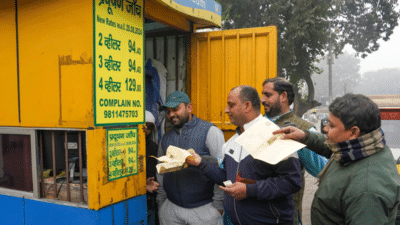
The rules arrive as the capital tightens its grip on vehicular pollution. Delhi Traffic Police are continuing their drive against end-of-life vehicles , and entry curbs for non-BS-VI vehicles are in force under the revised Graded Response Action Plan (GRAP). Here is what it all means for you.
New PUC validity : age and emission norms decideThe revised schedule, notified under the Central Motor Vehicles (Sixteenth Amendment) Rules, 2026, came into force on publication in the Official Gazette.
Already have a PUC? No immediate changeCertificates issued before the new rules took effect keep their existing validity. The revised schedule applies only when you first renew after the change.
No PUC, no entry, even for BS-VIEarlier in October, Delhi Traffic Police issued an advisory on restrictions under the revised GRAP, which the Delhi government’s Environment Department issued on June 23, 2026. From November 1, 2026 to January 31, 2027, vehicles below BS-VI standards registered outside Delhi are barred from entering the capital. CNG, electric and BS-VI vehicles are allowed, but even a BS-VI vehicle will not be let in without a valid PUC certificate .
Trucks, buses and tractorsInterstate diesel buses that do not meet BS-VI standards cannot enter Delhi. Tractors and jugaad vehicles are also barred. Truck operators whose vehicles do not need to enter the city have been advised to use the Eastern or Western Peripheral Expressways or other alternative routes.
GRAP-3 curbs lifted, with a catchOn November 17, as the city’s air quality improved, the Commission for Air Quality Management (CAQM) revoked the GRAP-3 restrictions. BS-3 petrol and BS-4 diesel or older light motor vehicles, including four-wheelers, can ply again if registered in Delhi. The curb has also been lifted in the high-vehicle-density districts of Gurgaon, Faridabad, Sonipat, Ghaziabad and Gautam Budh Nagar.
The catch: non-Delhi-registered BS-4 or older vehicles will continue to stay out of the capital under the Delhi government’s new winter pollution framework.
Old vehicles are still being impoundedDelhi Traffic Police have impounded 9,016 end-of-life vehicles so far, and 240 were seized in a five-day campaign from November 12 to 16. “The strictness will continue in the national capital,” a senior police officer said. Police are also working with Resident Welfare Associations and Market Welfare Associations, and residents are being encouraged to help remove abandoned vehicles from colonies, markets and public spaces, where they obstruct traffic and raise safety and cleanliness concerns.
What you should do
The change, notified by the Ministry of Road Transport and Highways on November 13, also settles a common question: when does a renewed certificate actually start?
The rules arrive as the capital tightens its grip on vehicular pollution. Delhi Traffic Police are continuing their drive against end-of-life vehicles , and entry curbs for non-BS-VI vehicles are in force under the revised Graded Response Action Plan (GRAP). Here is what it all means for you.
New PUC validity : age and emission norms decideThe revised schedule, notified under the Central Motor Vehicles (Sixteenth Amendment) Rules, 2026, came into force on publication in the Official Gazette.
- Private BS-VI vehicles, up to 6 years old: once every three years
- Private BS-VI vehicles, 6 to 10 years old: every year
- Private BS-VI vehicles, older than 10 years: every six months
- BS-VI transport vehicles, up to 6 years old: once every two years
- BS-VI transport vehicles, 6 to 10 years old: every year
- BS-VI transport vehicles, older than 10 years: every six months
- BS-I, II and III vehicles: every three months
- BS-IV vehicles: every six months
Already have a PUC? No immediate changeCertificates issued before the new rules took effect keep their existing validity. The revised schedule applies only when you first renew after the change.
No PUC, no entry, even for BS-VIEarlier in October, Delhi Traffic Police issued an advisory on restrictions under the revised GRAP, which the Delhi government’s Environment Department issued on June 23, 2026. From November 1, 2026 to January 31, 2027, vehicles below BS-VI standards registered outside Delhi are barred from entering the capital. CNG, electric and BS-VI vehicles are allowed, but even a BS-VI vehicle will not be let in without a valid PUC certificate .
Trucks, buses and tractorsInterstate diesel buses that do not meet BS-VI standards cannot enter Delhi. Tractors and jugaad vehicles are also barred. Truck operators whose vehicles do not need to enter the city have been advised to use the Eastern or Western Peripheral Expressways or other alternative routes.
GRAP-3 curbs lifted, with a catchOn November 17, as the city’s air quality improved, the Commission for Air Quality Management (CAQM) revoked the GRAP-3 restrictions. BS-3 petrol and BS-4 diesel or older light motor vehicles, including four-wheelers, can ply again if registered in Delhi. The curb has also been lifted in the high-vehicle-density districts of Gurgaon, Faridabad, Sonipat, Ghaziabad and Gautam Budh Nagar.
The catch: non-Delhi-registered BS-4 or older vehicles will continue to stay out of the capital under the Delhi government’s new winter pollution framework.
Old vehicles are still being impoundedDelhi Traffic Police have impounded 9,016 end-of-life vehicles so far, and 240 were seized in a five-day campaign from November 12 to 16. “The strictness will continue in the national capital,” a senior police officer said. Police are also working with Resident Welfare Associations and Market Welfare Associations, and residents are being encouraged to help remove abandoned vehicles from colonies, markets and public spaces, where they obstruct traffic and raise safety and cleanliness concerns.
What you should do
- Check your PUC expiry date and renew within the 10-day window.
- If you are driving into Delhi from another state, make sure your vehicle is BS-VI, CNG or electric, with a valid PUC.
- If you have an old vehicle, check its status before taking it on the road.
Next Story