
Retired banker loses ₹95L in 'digital arrest'


Lucknow: For eight days, a retired bank official in Lucknow was made to believe that he was under the watch of law enforcement agencies. His every move was allegedly monitored through video calls, a fake arrest warrant was sent to him on WhatsApp and he was threatened with arrest in a ransom case.
By the time the retired banker realised he had been trapped in an elaborate ‘digital arrest’ scam, cyber fraudsters had allegedly siphoned off ₹95.65 lakh from his savings. Victim Adesh Kumar Singh , a resident of Indiranagar , has now approached the cyber crime police station , which has registered a case and launched an investigation.
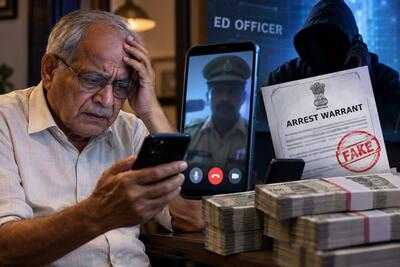
According to Singh’s complaint, the nightmare began around 1 pm on Sept 17, when he received a WhatsApp call from an unknown number. The caller introduced himself as an enforcement directorate (ED) officer and told Singh that a SIM card had been issued in Mumbai using his Aadhaar details. The caller claimed that the number was being used to make ransom demands.
The fraudster then allegedly turned the conversation into a threat. Singh was told that he could be arrested in connection with the alleged ransom case and that he would have to obtain a “no objection certificate” to avoid arrest.
Soon afterwards, another video call came from the same number. This time, a man appeared on screen wearing a police uniform, apparently to give the entire operation an air of authenticity. The fraudsters allegedly sent Singh a fake arrest warrant bearing his name over WhatsApp and instructed him to cooperate with the purported investigation. What followed was an extended period of psychological pressure.
Singh was allegedly told that he was under ‘digital arrest’ and was required to remain available on video calls while the supposed investigation continued. The fraudsters then shifted their focus to his finances.
On Sept 19, they allegedly told him that his bank deposits and savings needed to be verified as part of the investigation. Singh was instructed to transfer money to bank accounts provided by them. Under pressure, he allegedly broke his fixed deposits and began transferring his savings.
Between Sept 19 and 24, the fraudsters allegedly managed to get Singh to transfer a total of ₹95.65 lakh into different bank accounts. The deception continued until Sept 24, when the callers allegedly demanded even more money. That demand finally triggered Singh’s suspicion. He disconnected the call and rushed to an Indian Bank branch in Indiranagar, hoping that the transactions could still be stopped and the money placed on hold.
But the fraudsters had already moved the money, police said. Even after Singh realised that he had been cheated, one of the suspected associates allegedly continued calling him.
The caller reportedly introduced himself as ED Inspector Vijay Khanna and continued demanding money, according to the complaint Singh subsequently approached the cyber crime police station and reported the fraud.
Cyber crime inspector Alok Rai said police were tracing the phone numbers used to contact Singh. Investigators have also contacted the concerned banks to trace the movement of the money and examine the accounts into which the funds were transferred.
ADCP, crime, Kiran Yadav warned people against falling for such scams and made it clear that govt agencies do not conduct ‘digital arrests’ through video calls. Police said people should immediately disconnect if someone claiming to be from the police, ED, customs or another govt agency threatens them with arrest over a phone or video call.
Do not transfer money to “verify” your bank account or prove your innocence. Do not share banking credentials or OTPs. Inform family members and contact the police immediately. Police also stressed that victims of cyber financial fraud should report the incident without delay, as prompt reporting can help investigators initiate steps to freeze or recover the transferred funds. Police also stressed that victims of cyber financial fraud should report the incident without delay, as prompt reporting can help investigators initiate steps to freeze or recover the transferred funds.
By the time the retired banker realised he had been trapped in an elaborate ‘digital arrest’ scam, cyber fraudsters had allegedly siphoned off ₹95.65 lakh from his savings. Victim Adesh Kumar Singh , a resident of Indiranagar , has now approached the cyber crime police station , which has registered a case and launched an investigation.
According to Singh’s complaint, the nightmare began around 1 pm on Sept 17, when he received a WhatsApp call from an unknown number. The caller introduced himself as an enforcement directorate (ED) officer and told Singh that a SIM card had been issued in Mumbai using his Aadhaar details. The caller claimed that the number was being used to make ransom demands.
The fraudster then allegedly turned the conversation into a threat. Singh was told that he could be arrested in connection with the alleged ransom case and that he would have to obtain a “no objection certificate” to avoid arrest.
Soon afterwards, another video call came from the same number. This time, a man appeared on screen wearing a police uniform, apparently to give the entire operation an air of authenticity. The fraudsters allegedly sent Singh a fake arrest warrant bearing his name over WhatsApp and instructed him to cooperate with the purported investigation. What followed was an extended period of psychological pressure.
Singh was allegedly told that he was under ‘digital arrest’ and was required to remain available on video calls while the supposed investigation continued. The fraudsters then shifted their focus to his finances.
On Sept 19, they allegedly told him that his bank deposits and savings needed to be verified as part of the investigation. Singh was instructed to transfer money to bank accounts provided by them. Under pressure, he allegedly broke his fixed deposits and began transferring his savings.
Between Sept 19 and 24, the fraudsters allegedly managed to get Singh to transfer a total of ₹95.65 lakh into different bank accounts. The deception continued until Sept 24, when the callers allegedly demanded even more money. That demand finally triggered Singh’s suspicion. He disconnected the call and rushed to an Indian Bank branch in Indiranagar, hoping that the transactions could still be stopped and the money placed on hold.
But the fraudsters had already moved the money, police said. Even after Singh realised that he had been cheated, one of the suspected associates allegedly continued calling him.
The caller reportedly introduced himself as ED Inspector Vijay Khanna and continued demanding money, according to the complaint Singh subsequently approached the cyber crime police station and reported the fraud.
Cyber crime inspector Alok Rai said police were tracing the phone numbers used to contact Singh. Investigators have also contacted the concerned banks to trace the movement of the money and examine the accounts into which the funds were transferred.
ADCP, crime, Kiran Yadav warned people against falling for such scams and made it clear that govt agencies do not conduct ‘digital arrests’ through video calls. Police said people should immediately disconnect if someone claiming to be from the police, ED, customs or another govt agency threatens them with arrest over a phone or video call.
Do not transfer money to “verify” your bank account or prove your innocence. Do not share banking credentials or OTPs. Inform family members and contact the police immediately. Police also stressed that victims of cyber financial fraud should report the incident without delay, as prompt reporting can help investigators initiate steps to freeze or recover the transferred funds. Police also stressed that victims of cyber financial fraud should report the incident without delay, as prompt reporting can help investigators initiate steps to freeze or recover the transferred funds.
Next Story