
Tihar has seen escapes since 1965: How Delhi's prisons are trying to keep inmates from breaking out


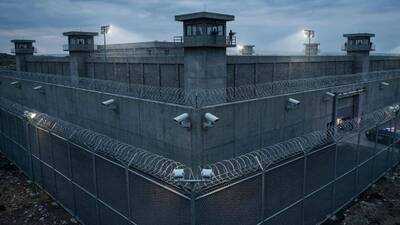
The great escapeThe daring jailbreak by 17 undertrials from Thekkam patti prison in Tamil Nadu's Theni district this week has brought prison security into focus. In Delhi, jail officials maintain that security measures across the capital’s three prison complexes are already stringent, with multiple layers of security and surveillance in place. TOI’s Abhay takes a closer look at the arrangements and the lessons from past jailbreaks
Delhi's three prisons can house over 20K inmatesTihar
14,500
Rohini
2,000 (approx)
Mandoli
4,000+
From Sobhraj to Phoolan’s killer, Tihar no stranger to jailbreaks2015
Two inmates fled. One was held, while the other managed to escape but was caught later
2013
A prisoner died after falling from a moving truck while trying to escape from inside the prison
2011
Two undertrial drug addicts made a dash for Gate No. 3 along with eight other inmates while being transported in a van. They escaped but were caught
2004
MP Phoolan Devi’s killer, Sher Singh Rana, escaped from prison after getting his aide to pose as a cop. His friend, Sandeep Thakur, came to the jail disguised as a policeman to take him for his trial hearing
1986
Charles Sobhraj, lodged in Tihar for allegedly committing 20 murders, escaped after drugging security guards on his birthday
1983
Several students, arrested for arson and rioting, escaped from Tihar by exploiting its visitor identification system. Visitors bore stamps on their wrists, which the students transferred onto their own wrists in the May heat. Jail authorities failed to notice that three times as many visitors left as had entered
1976
Thirteen prisoners escaped by digging a tunnel near the prison's wall
1965
The first person to make an unauthorised exit from Tihar was an American smuggler, Daniel Walcott
What expert saysSunil Kumar Gupta, former spokesperson and legal advisor to Tihar Jail, offered insights into the reasons behind several prison escapes:
Reasons behind escapesGupta explained that, in one case, inmates wanted to meet their families. In the 2015 escape, the two inmates reportedly wanted to break free from the restrictions of prison life and live without its rules and constraints
In his book, Gupta also discusses two other prison escapes, one in 1981 and another in 2004. In the 1981 incident, an inmate escaped on the pretext of receiving medical treatment. In the 2004 incident, an escaped inmate reportedly asked a jail official for directions to a bus stop while outside the prison
What prisons are doing to strengthen security Extensive security deploymentMore than 5,000 personnel, including prison staff and external security forces, are deployed across Delhi’s three prison complexes
Four-layer security systemSecurity is organised into four layers: prison staff in the first, Tamil Nadu Special Police (TSP) in the second, Indo-Tibetan Border Police (ITBP) in the third and Central Reserve Police Force (CRPF) in the fourth
Defined responsibilitiesTihar Jail staff manage internal prison operations; TSP personnel guard watchtowers and high-security areas; ITBP personnel handle day-to-day patrolling; and CRPF personnel guard the gates
Extensive CCTV surveillanceMore than 7,000 cameras are installed across the three prison complexes, with dedicated rooms for monitoring the footage
Regular security assessmentsRoutine inspections and day-to-day security assessments are conducted to identify and address potential vulnerabilities
Mobile jammersTihar and Mandoli prison complexes have large-scale mobile signal jammers, while Rohini Jail also has jamming systems to restrict unauthorised mobile phone use
Cell searches and surprise inspectionsPrison authorities conduct thorough cell searches and unannounced checks to detect prohibited items and prevent security breaches
Security during prisoner movementDelhi Armed Police personnel escort inmates when they are taken outside prison premises
Restricted access for maintenance workInmates are not permitted to clean sewers. Instead, the relevant agency is called in to carry out the work. Its personnel are subject to security checks and are required to enter and exit through a designated gate
Routine staff transfersPrison staff are periodically transferred to prevent them from developing overly close relationships with inmates and to reduce the risk of collusion
Deployment of Tamil Nadu Special Police (TSP)The deployment at Tihar began in Aug 1980, following security concerns raised by the 1976 jailbreak. The rationale was to bring in personnel from another state to reduce the risk of local connections and potential collusion between prisoners and prison staff
Delhi's three prisons can house over 20K inmatesTihar
14,500
Rohini
2,000 (approx)
Mandoli
4,000+
From Sobhraj to Phoolan’s killer, Tihar no stranger to jailbreaks2015
Two inmates fled. One was held, while the other managed to escape but was caught later
2013
A prisoner died after falling from a moving truck while trying to escape from inside the prison
2011
2004
MP Phoolan Devi’s killer, Sher Singh Rana, escaped from prison after getting his aide to pose as a cop. His friend, Sandeep Thakur, came to the jail disguised as a policeman to take him for his trial hearing
1986
1983
Several students, arrested for arson and rioting, escaped from Tihar by exploiting its visitor identification system. Visitors bore stamps on their wrists, which the students transferred onto their own wrists in the May heat. Jail authorities failed to notice that three times as many visitors left as had entered
1976
Thirteen prisoners escaped by digging a tunnel near the prison's wall
1965
The first person to make an unauthorised exit from Tihar was an American smuggler, Daniel Walcott
What expert saysSunil Kumar Gupta, former spokesperson and legal advisor to Tihar Jail, offered insights into the reasons behind several prison escapes:
Reasons behind escapesGupta explained that, in one case, inmates wanted to meet their families. In the 2015 escape, the two inmates reportedly wanted to break free from the restrictions of prison life and live without its rules and constraints
In his book, Gupta also discusses two other prison escapes, one in 1981 and another in 2004. In the 1981 incident, an inmate escaped on the pretext of receiving medical treatment. In the 2004 incident, an escaped inmate reportedly asked a jail official for directions to a bus stop while outside the prison
What prisons are doing to strengthen security Extensive security deploymentMore than 5,000 personnel, including prison staff and external security forces, are deployed across Delhi’s three prison complexes
Four-layer security systemSecurity is organised into four layers: prison staff in the first, Tamil Nadu Special Police (TSP) in the second, Indo-Tibetan Border Police (ITBP) in the third and Central Reserve Police Force (CRPF) in the fourth
Defined responsibilitiesTihar Jail staff manage internal prison operations; TSP personnel guard watchtowers and high-security areas; ITBP personnel handle day-to-day patrolling; and CRPF personnel guard the gates
Extensive CCTV surveillanceMore than 7,000 cameras are installed across the three prison complexes, with dedicated rooms for monitoring the footage
Regular security assessmentsRoutine inspections and day-to-day security assessments are conducted to identify and address potential vulnerabilities
Mobile jammersTihar and Mandoli prison complexes have large-scale mobile signal jammers, while Rohini Jail also has jamming systems to restrict unauthorised mobile phone use
Cell searches and surprise inspectionsPrison authorities conduct thorough cell searches and unannounced checks to detect prohibited items and prevent security breaches
Security during prisoner movementDelhi Armed Police personnel escort inmates when they are taken outside prison premises
Restricted access for maintenance workInmates are not permitted to clean sewers. Instead, the relevant agency is called in to carry out the work. Its personnel are subject to security checks and are required to enter and exit through a designated gate
Routine staff transfersPrison staff are periodically transferred to prevent them from developing overly close relationships with inmates and to reduce the risk of collusion
Deployment of Tamil Nadu Special Police (TSP)The deployment at Tihar began in Aug 1980, following security concerns raised by the 1976 jailbreak. The rationale was to bring in personnel from another state to reduce the risk of local connections and potential collusion between prisoners and prison staff
Next Story