
Why Delhi’s Firecracker Rules Keep Changing Every Diwali

If it feels as though firecracker rules change just when you have got used to them, you are not imagining it. Over the past several years, the Supreme Court has moved between restriction and relaxation, trying to balance a much-loved tradition against some of the worst winter air in the world. Families, shopkeepers and manufacturers in Sivakasi have all been forced to adapt each time. To understand why this year’s rules look the way they do, it helps to retrace the steps that brought us here.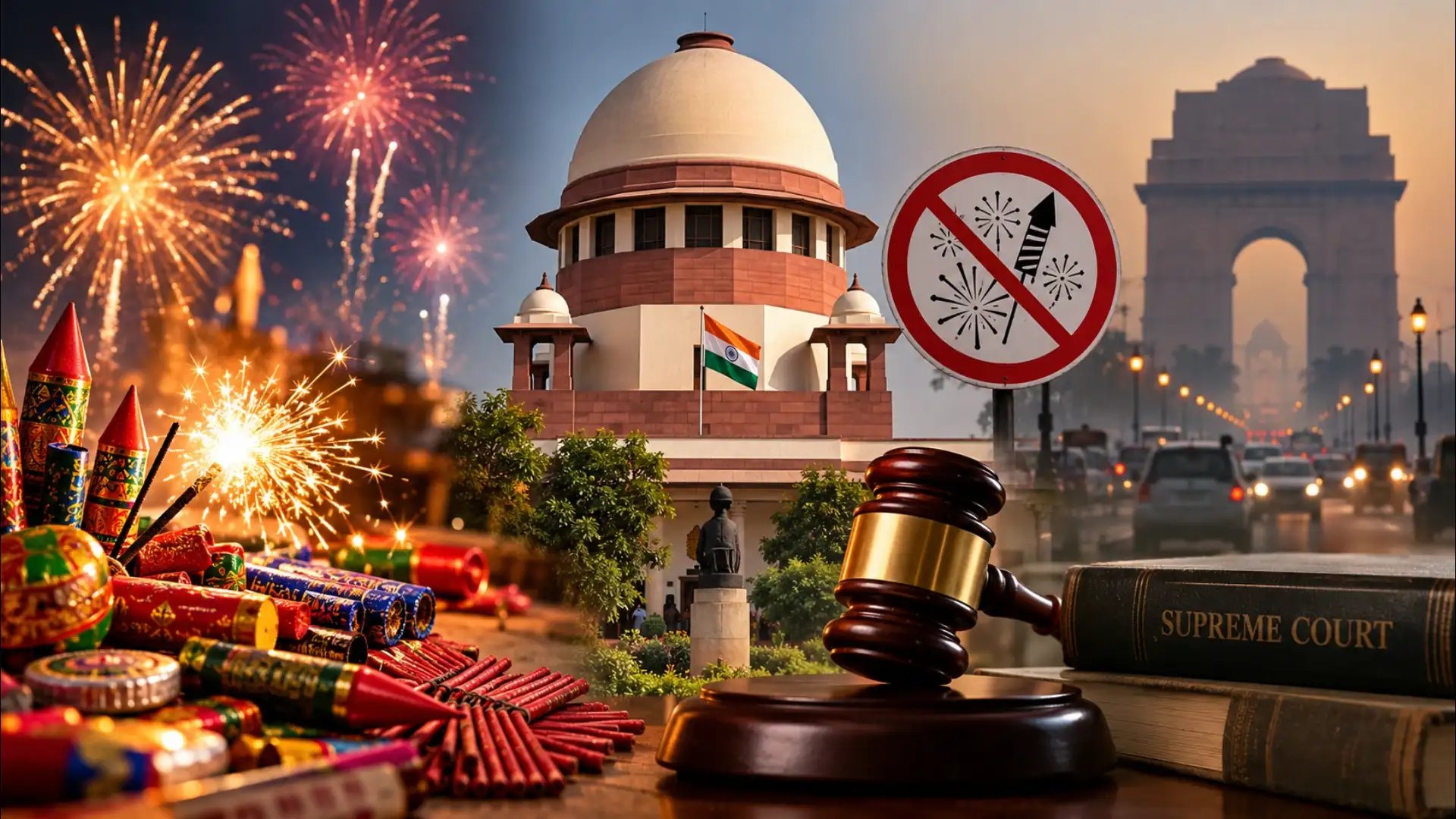
The 2018 turning point
The modern framework began with the Arjun Gopal case. The court ruled against a complete ban, allowed less polluting crackers sold only through licensed traders, banned online sales and fixed how long crackers could be burst during Diwali. That ruling set the template that courts still return to.The year-long ban of 2025
Things tightened sharply in 2025. On 3 April, a two-judge bench imposed a year-long blanket ban on firecrackers in the Delhi-NCR region, including green crackers. The Centre, the Delhi government and manufacturers all asked for the order to be reconsidered. Ahead of Diwali, the court reserved its verdict and hinted that the ban could be lifted for the festival.The October 2025 relaxation
On 15 October, the court relented with conditions. Green crackers could be sold and used in Delhi-NCR, but only in two daily windows on the day before Diwali and on Diwali itself, and only if certified by NEERI. The bench spoke of a balanced approach, allowing bursting in moderation without compromising the environment.Where things stand now
The debate has not gone quiet. In October, the Supreme Court backed regulated use of green crackers while rejecting a blanket ban, indicating that the workable solution lay in specifying both permissible categories and hours. The bench deliberately held back on the separate question of Delhi-NCR restrictions.What the pattern tells us
Each year has become a negotiation between sentiment and public health, and the likely outcome is conditional permission rather than a free-for-all or a flat ban. The sensible assumption for any family is that rules will arrive late and come with strings attached. Perhaps the more interesting question is whether a tradition that has lasted centuries can learn to be a little quieter.Next Story