
'Bhonkna hai ya kaat-na hai?' Father's innocent fork question leaves lasting lesson for Class 8 boy decades later


A Class 8 boy accompanying his father to Patna during his sister's wedding could not have known that a simple plate of petha and an unfamiliar fork would become a memory he would carry for decades.
In a post shared on X on September 26, Parimal recalled visiting the homes of village elders who had settled in Patna. For someone who had grown up in a village, the polished living rooms, marble floors and unfamiliar city etiquette felt like another world. But the most memorable moment came when his father was handed a fork for the first time.
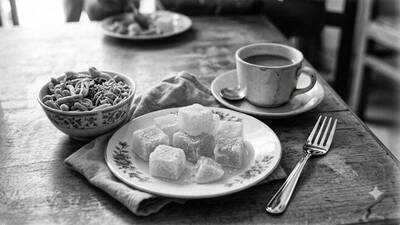
A fork became an unfamiliar lesson in city etiquetteThe family was offered tea, namkeen and glossy pieces of petha. A stainless-steel fork was placed beside the plate.
Parimal's father picked it up carefully and quietly asked his son, “Bhonkna hai ya kaat-na hai?”
The question reflected something much bigger than not knowing how to use cutlery. His father had simply never needed one in his everyday life.
Still, he decided to follow the etiquette of the unfamiliar setting. He tried to pick up a firm piece of petha with the fork.
The utensil slipped.
The petha flew across the coffee table and landed near the host's feet.
The moment could have been embarrassing, but it wasn'tParimal recalled being worried that his father would feel embarrassed. Instead, his father looked at the runaway sweet, then at the fork and smiled.
He put the fork down, picked up another piece of petha with his fingers and said, “Apna haath hi sahi hai.”
The host laughed, the awkwardness disappeared and the room returned to its earlier warmth.
For a Class 8 student watching the episode, the moment offered an unexpected lesson in navigating an unfamiliar environment without losing one's sense of self.
What a childhood memory says about education and exposureThe story also highlights how much of a child's understanding of the world comes from exposure beyond textbooks.
For children growing up in different social and geographical settings, everyday experiences can vary widely. Something completely ordinary in one environment can be unfamiliar in another.
A fork, a formal living room or city etiquette may seem insignificant to someone accustomed to them. For someone encountering them for the first time, however, they can become moments of uncertainty.
Parimal's childhood memory shows that such differences do not necessarily have to become sources of embarrassment. His father's response was simple: if the unfamiliar way did not work, he could return to what he knew.
Decades later, the lesson remainsAccording to Parimal, that was the first and last time his father touched a fork.
Decades later, he continues to eat with his hands, whether at home or at a grand banquet.
What began as an awkward moment during a Class 8 student's visit to Patna eventually became a lasting memory about confidence, familiarity and the way people adapt when they enter environments different from their own.
For Parimal, it is also a reminder of his father's ability to remain completely comfortable with who he was, even when everything around him seemed unfamiliar.
Disclaimer: This article is based on a public post shared on X by Parimal. TOI Education has not independently verified the personal account.
In a post shared on X on September 26, Parimal recalled visiting the homes of village elders who had settled in Patna. For someone who had grown up in a village, the polished living rooms, marble floors and unfamiliar city etiquette felt like another world. But the most memorable moment came when his father was handed a fork for the first time.
A fork became an unfamiliar lesson in city etiquetteThe family was offered tea, namkeen and glossy pieces of petha. A stainless-steel fork was placed beside the plate.
Parimal's father picked it up carefully and quietly asked his son, “Bhonkna hai ya kaat-na hai?”
The question reflected something much bigger than not knowing how to use cutlery. His father had simply never needed one in his everyday life.
Still, he decided to follow the etiquette of the unfamiliar setting. He tried to pick up a firm piece of petha with the fork.
The utensil slipped.
The petha flew across the coffee table and landed near the host's feet.
The moment could have been embarrassing, but it wasn'tParimal recalled being worried that his father would feel embarrassed. Instead, his father looked at the runaway sweet, then at the fork and smiled.
He put the fork down, picked up another piece of petha with his fingers and said, “Apna haath hi sahi hai.”
The host laughed, the awkwardness disappeared and the room returned to its earlier warmth.
For a Class 8 student watching the episode, the moment offered an unexpected lesson in navigating an unfamiliar environment without losing one's sense of self.
What a childhood memory says about education and exposureThe story also highlights how much of a child's understanding of the world comes from exposure beyond textbooks.
For children growing up in different social and geographical settings, everyday experiences can vary widely. Something completely ordinary in one environment can be unfamiliar in another.
A fork, a formal living room or city etiquette may seem insignificant to someone accustomed to them. For someone encountering them for the first time, however, they can become moments of uncertainty.
Parimal's childhood memory shows that such differences do not necessarily have to become sources of embarrassment. His father's response was simple: if the unfamiliar way did not work, he could return to what he knew.
Decades later, the lesson remainsAccording to Parimal, that was the first and last time his father touched a fork.
Decades later, he continues to eat with his hands, whether at home or at a grand banquet.
What began as an awkward moment during a Class 8 student's visit to Patna eventually became a lasting memory about confidence, familiarity and the way people adapt when they enter environments different from their own.
For Parimal, it is also a reminder of his father's ability to remain completely comfortable with who he was, even when everything around him seemed unfamiliar.
Disclaimer: This article is based on a public post shared on X by Parimal. TOI Education has not independently verified the personal account.
Next Story