
India Expands Global Reach of Education with New Initiatives for Foreign Universities


New Delhi, November 25 (Daily Kiran) : The Indian education system is set to broaden its global footprint as the government issues letters of intent to 17 foreign universities, including institutions from the UK, USA, Australia, and Italy, for establishing campuses in India. On November 25, during the first meeting of the advisory committee on education, Union Education Minister Prakash Javadekar shared this development.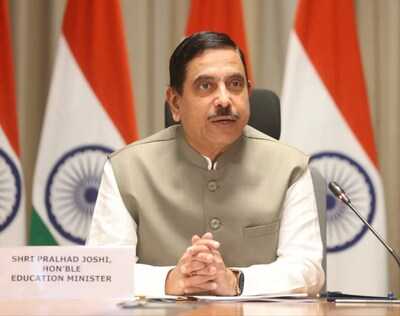 Currently, there are about 21 foreign higher education institutions operating in India. The government is encouraging not only the establishment of Indian campuses abroad but also the setting up of foreign university branches within India. The meeting, attended by Minister of State for Education Jayant Chaudhary, Secretary of Higher Education Deepti Gaur Mukherjee, and other senior officials, focused on expanding the international reach of Indian education.Javadekar emphasized the long-standing influence of Indian knowledge traditions globally and outlined the government's ambition to further promote this legacy. He noted the increasing demand for schools under the Central Board of Secondary Education (CBSE) abroad as a testament to the credibility of Indian education. The meeting provided insights into ongoing efforts to enhance the international recognition of Indian education through various strategies.The Higher Education Department highlighted four key strategies: fostering partnerships between foreign universities and Indian institutions, attracting international students to India, allowing foreign universities to set up campuses in India, and encouraging Indian universities to establish branches overseas. Additionally, initiatives such as India Innovates, SPARK, Gyaan, and Direct Admission of Students Abroad are being utilized to promote international academic collaboration.The 'Study in India' portal has also been revamped to provide prospective students with updated information on studying in India. In line with the National Education Policy 2020 and the vision for a developed India by 2047, the School Education and Literacy Department is implementing changes in the education system. These include aligning curricula with global standards, promoting multilingual education, and facilitating exchanges between students and teachers.The National Assessment Center is also focused on standardizing academic quality and evaluation metrics. Currently, there are 268 CBSE schools operating in 26 countries, including a regional office in Dubai. To maintain educational and assessment quality across affiliated schools abroad, a uniform evaluation system has been implemented. Several MPs present at the meeting praised the government's efforts to elevate Indian education on the global stage. They also offered significant suggestions, including promoting vocational education and expanding the network of Indian educational institutions internationally.
Next Story