
'It is my form of torture': Nvidia CEO Jensen Huang says criticism is meant to make employees better


Kahlil Gibran once wrote, in The Prophet, that pain is merely the breaking of the shell that encloses one's understanding. It is a line more commonly invoked at failed relationships, yet it might be the closest thing to a mission statement for Nvidia , the chipmaker whose market capitalisation recently crossed five trillion dollars and whose chief executive officer (CEO) has built a management style around a single, unfashionable premise: that discomfort, not comfort, is what produces greatness.
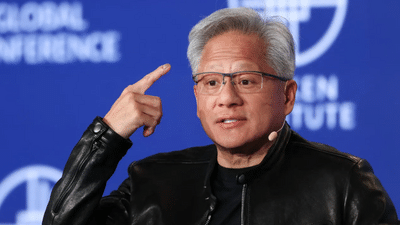
Jensen Huang calls this style torture. He does not say it with embarrassment. He says it the way a man describes a family recipe.
A Taiwanese parent's love
Speaking to Singapore's CNA in May, Huang traced his management philosophy back to his upbringing. "To a Taiwanese parent, nothing is ever good enough, and you can't go a day without some criticism," he said. "And I'm kind of the same way. You can't show me something without me giving you some criticism. And I guess in a lot of ways that's my form of torture."
The comparison is deliberate rather than throwaway. Huang has framed relentless critique as an act of care, not cruelty, insisting that feedback should arrive immediately and be aimed at improvement rather than punishment. "Just like a Taiwanese parent, once the feedback is given, you're back to loving the person again," he told CNA, adding that his criticism exists so he "can help them be better."
It is a philosophy that would sound alarming coming from most employers. It sounds almost tender coming from Huang, largely because he insists the criticism ends the moment it is delivered. There is no lingering grudge, only the expectation of a better draft tomorrow.
The numbers behind the torture
Whether one finds this admirable or unsettling, the results are difficult to dismiss. According to Nvidia's own sustainability report, the company's overall staff turnover for fiscal year 2025 stood at just 2.5 percent, a figure most chief executives would frame in a glass box. Roughly one in five employees has stayed at the company for a decade or longer. Two in five have stayed for at least five years.
Huang treats this loyalty as vindication. "People don't quit easily from Nvidia," he said, framing the purpose of leadership not as command but as creating the conditions for others to convert a job into what he called their life's work.
There is something almost paternal in that framing too, a continuation of the same Taiwanese-parent logic applied at scale. Criticise constantly, but build something people do not want to leave.
Seven days a week, by choice
Huang holds himself to a standard he admits is harsher than the one he sets for anyone else. Now 63, he has been open about his indifference to work-life balance, working all seven days of the week, holidays included, driven partly by a fear that Nvidia, a company he cofounded at a Denny's booth in 1993, could still collapse at any moment.
Retirement is not part of his plans. "I would like to work as long as I can," he told CNA. "I hope to die on the job. That would be a dream come true."
Coming from a man worth an estimated 181 billion dollars, the line reads less like ambition and more like devotion, the kind usually reserved for causes rather than companies.
Nvidia's most recent results suggest the devotion is paying dividends beyond his own bank balance. In its second-quarter fiscal 2027 earnings report, the company posted revenue of 96.2 billion dollars, up 18 percent from the previous quarter and 106 percent from a year earlier. Its data centre business alone climbed to 89 billion dollars, a 117 percent jump year over year, fuelled by the broader boom in artificial intelligence (AI) infrastructure.
A rival preaches the same gospel
Huang is not the only Silicon Valley executive selling discomfort as strategy. Lisa Su , chief executive of Advanced Micro Devices (AMD) and, curiously, a distant cousin of Huang's, has built her own reputation on a near-identical instinct: seek out the hardest problem in the room and walk directly towards it.
"Run towards the hardest problems, not walk, run, and that's where you find the biggest opportunities, where you learn the most, where you set yourself apart, and most importantly, where you grow," Su told graduates in a 2025 commencement address, recalling it as the best career advice she had ever received. "When you choose the hardest challenges, you choose the fastest path to growth and the greatest chance to make a difference."
Two rival chip companies, two cousins, one shared conviction: that ease is not where careers, or industries, are built.
The shell and the understanding
Gibran was writing about grief, not quarterly earnings, when he described pain as the thing that cracks open understanding. But the metaphor travels further than he might have intended. Nvidia's employees are not being tortured in any literal sense, and Huang is careful to frame his criticism as love rather than punishment. Still, the premise underneath both his philosophy and Su's is the same: that the shell has to break before anything worth having can get out.
Jensen Huang calls this style torture. He does not say it with embarrassment. He says it the way a man describes a family recipe.
A Taiwanese parent's love
Speaking to Singapore's CNA in May, Huang traced his management philosophy back to his upbringing. "To a Taiwanese parent, nothing is ever good enough, and you can't go a day without some criticism," he said. "And I'm kind of the same way. You can't show me something without me giving you some criticism. And I guess in a lot of ways that's my form of torture."
The comparison is deliberate rather than throwaway. Huang has framed relentless critique as an act of care, not cruelty, insisting that feedback should arrive immediately and be aimed at improvement rather than punishment. "Just like a Taiwanese parent, once the feedback is given, you're back to loving the person again," he told CNA, adding that his criticism exists so he "can help them be better."
It is a philosophy that would sound alarming coming from most employers. It sounds almost tender coming from Huang, largely because he insists the criticism ends the moment it is delivered. There is no lingering grudge, only the expectation of a better draft tomorrow.
The numbers behind the torture
Whether one finds this admirable or unsettling, the results are difficult to dismiss. According to Nvidia's own sustainability report, the company's overall staff turnover for fiscal year 2025 stood at just 2.5 percent, a figure most chief executives would frame in a glass box. Roughly one in five employees has stayed at the company for a decade or longer. Two in five have stayed for at least five years.
Huang treats this loyalty as vindication. "People don't quit easily from Nvidia," he said, framing the purpose of leadership not as command but as creating the conditions for others to convert a job into what he called their life's work.
There is something almost paternal in that framing too, a continuation of the same Taiwanese-parent logic applied at scale. Criticise constantly, but build something people do not want to leave.
Seven days a week, by choice
Huang holds himself to a standard he admits is harsher than the one he sets for anyone else. Now 63, he has been open about his indifference to work-life balance, working all seven days of the week, holidays included, driven partly by a fear that Nvidia, a company he cofounded at a Denny's booth in 1993, could still collapse at any moment.
Retirement is not part of his plans. "I would like to work as long as I can," he told CNA. "I hope to die on the job. That would be a dream come true."
Coming from a man worth an estimated 181 billion dollars, the line reads less like ambition and more like devotion, the kind usually reserved for causes rather than companies.
Nvidia's most recent results suggest the devotion is paying dividends beyond his own bank balance. In its second-quarter fiscal 2027 earnings report, the company posted revenue of 96.2 billion dollars, up 18 percent from the previous quarter and 106 percent from a year earlier. Its data centre business alone climbed to 89 billion dollars, a 117 percent jump year over year, fuelled by the broader boom in artificial intelligence (AI) infrastructure.
A rival preaches the same gospel
Huang is not the only Silicon Valley executive selling discomfort as strategy. Lisa Su , chief executive of Advanced Micro Devices (AMD) and, curiously, a distant cousin of Huang's, has built her own reputation on a near-identical instinct: seek out the hardest problem in the room and walk directly towards it.
"Run towards the hardest problems, not walk, run, and that's where you find the biggest opportunities, where you learn the most, where you set yourself apart, and most importantly, where you grow," Su told graduates in a 2025 commencement address, recalling it as the best career advice she had ever received. "When you choose the hardest challenges, you choose the fastest path to growth and the greatest chance to make a difference."
Two rival chip companies, two cousins, one shared conviction: that ease is not where careers, or industries, are built.
The shell and the understanding
Gibran was writing about grief, not quarterly earnings, when he described pain as the thing that cracks open understanding. But the metaphor travels further than he might have intended. Nvidia's employees are not being tortured in any literal sense, and Huang is careful to frame his criticism as love rather than punishment. Still, the premise underneath both his philosophy and Su's is the same: that the shell has to break before anything worth having can get out.
Next Story