
Why is Mars Known as the Red Planet? Science Behind Its Red Colour and Fascinating Facts

Why is Mars known as the Red Planet? The answer lies in its striking reddish glow, visible even from Earth. The surface of Mars is covered with iron oxide - commonly known as rust - which gives it a unique red appearance. This fascinating feature has intrigued astronomers for centuries and continues to inspire modern space missions led by NASA.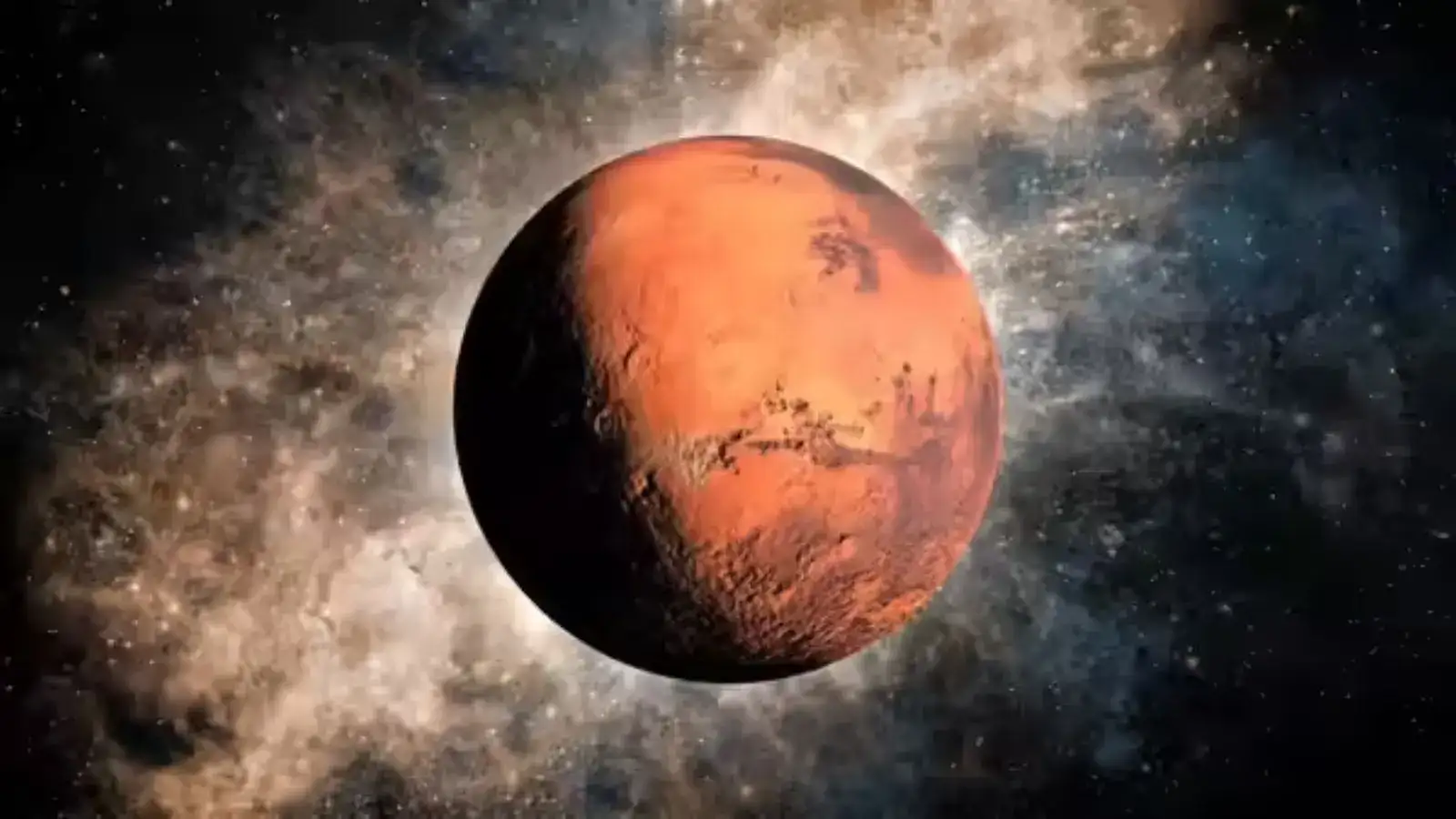
Why is Mars Called the Red Planet ?
The nickname “Red Planet” comes from the abundance of iron-rich minerals on Mars’ surface. When iron reacts with oxygen - a process called oxidation - it forms iron oxide, creating the planet’s signature rusty red colour.
Massive dust storms on Mars often lift this red dust into the atmosphere, making the entire planet appear even more vividly red when observed through telescopes.
The Science Behind Mars’ Red Appearance
Mars’ thin atmosphere is made mostly of carbon dioxide, with traces of water vapour. When iron minerals come into contact with this environment, they oxidise - similar to how iron rusts on Earth.
Key elements contributing to its colour include:
This combination creates the iconic red hue that sets Mars apart from all other planets in the solar system.
Is Mars Named After the God of War?
Yes, Mars is named after the Roman god of war due to its blood-like red colour. Ancient civilisations associated this hue with conflict and destruction.
The planet’s colour played a major role in shaping its mythological identity across cultures.
5 Fascinating Facts About Mars
Why Mars Continues to Fascinate Scientists
Mars is more than just its red colour - it’s a key focus in the search for extraterrestrial life. Missions by NASA, including advanced rovers, are exploring its surface for signs of past water and microbial life.
Its Earth-like features, such as seasons, polar ice caps, and a day length similar to ours, make it one of the most promising planets for future exploration.
The answer to why is Mars known as the Red Planet lies in its iron oxide-rich surface, which gives it a distinctive rusty glow. From ancient mythology to modern space exploration, Mars continues to capture human imagination. Next time you look up at the night sky, try spotting that tiny red dot - it’s our fascinating planetary neighbour.
Why is Mars Called the Red Planet ?
The nickname “Red Planet” comes from the abundance of iron-rich minerals on Mars’ surface. When iron reacts with oxygen - a process called oxidation - it forms iron oxide, creating the planet’s signature rusty red colour.
- Fine dust particles rich in iron oxide blanket the planet
- These particles reflect red light and absorb blue light
- The thin atmosphere helps spread this dust across the surface
Massive dust storms on Mars often lift this red dust into the atmosphere, making the entire planet appear even more vividly red when observed through telescopes.
The Science Behind Mars’ Red Appearance
Mars’ thin atmosphere is made mostly of carbon dioxide, with traces of water vapour. When iron minerals come into contact with this environment, they oxidise - similar to how iron rusts on Earth.
Key elements contributing to its colour include:
- Iron oxide minerals like hematite and ferrihydrite
- Global dust layers covering the surface
- Sunlight reflecting off the oxidised particles
This combination creates the iconic red hue that sets Mars apart from all other planets in the solar system.
Is Mars Named After the God of War?
Yes, Mars is named after the Roman god of war due to its blood-like red colour. Ancient civilisations associated this hue with conflict and destruction.
- Romans named it after Mars, their war god
- Greeks linked it to Ares, their equivalent deity
- Babylonians called it Nergal, the god of death
- Egyptians referred to it as “Her Desher,” meaning “the red one”
The planet’s colour played a major role in shaping its mythological identity across cultures.
5 Fascinating Facts About Mars
1. Home to the Tallest Volcano
Mars features Olympus Mons, the tallest volcano in the solar system, nearly three times the height of Mount Everest.2. A Giant Canyon System
Valles Marineris stretches over 2,500 miles, making it far longer than the Grand Canyon on Earth.3. A Thin and Harsh Atmosphere
Mars has only about 1% of Earth’s atmospheric pressure, leading to extreme conditions and frequent dust storms.4. Ice Caps Made of CO₂ and Water
The planet’s polar caps contain frozen carbon dioxide and water ice - enough to potentially cover the entire planet if melted.5. A Day Similar to Earth
A single day on Mars lasts approximately 24.6 hours, making it surprisingly similar to Earth’s daily cycle.Why Mars Continues to Fascinate Scientists
Mars is more than just its red colour - it’s a key focus in the search for extraterrestrial life. Missions by NASA, including advanced rovers, are exploring its surface for signs of past water and microbial life.
Its Earth-like features, such as seasons, polar ice caps, and a day length similar to ours, make it one of the most promising planets for future exploration.
The answer to why is Mars known as the Red Planet lies in its iron oxide-rich surface, which gives it a distinctive rusty glow. From ancient mythology to modern space exploration, Mars continues to capture human imagination. Next time you look up at the night sky, try spotting that tiny red dot - it’s our fascinating planetary neighbour.
Next Story