
Loved Fullmetal Alchemist? These 10 Anime Deliver the Same Mix of Dark Secrets, Powerful Bonds and High-Stakes Storytelling

Fullmetal Alchemist has earned a lasting reputation for combining thrilling battles with political conspiracies, philosophical questions and deeply emotional character arcs. The journey of Edward and Alphonse Elric is as much about sacrifice and the limits of human ambition as it is about alchemy. For viewers looking for another series with that same depth, several anime offer compelling combinations of intricate world-building, moral uncertainty and high-stakes storytelling. Here are 10 worth adding to the watchlist.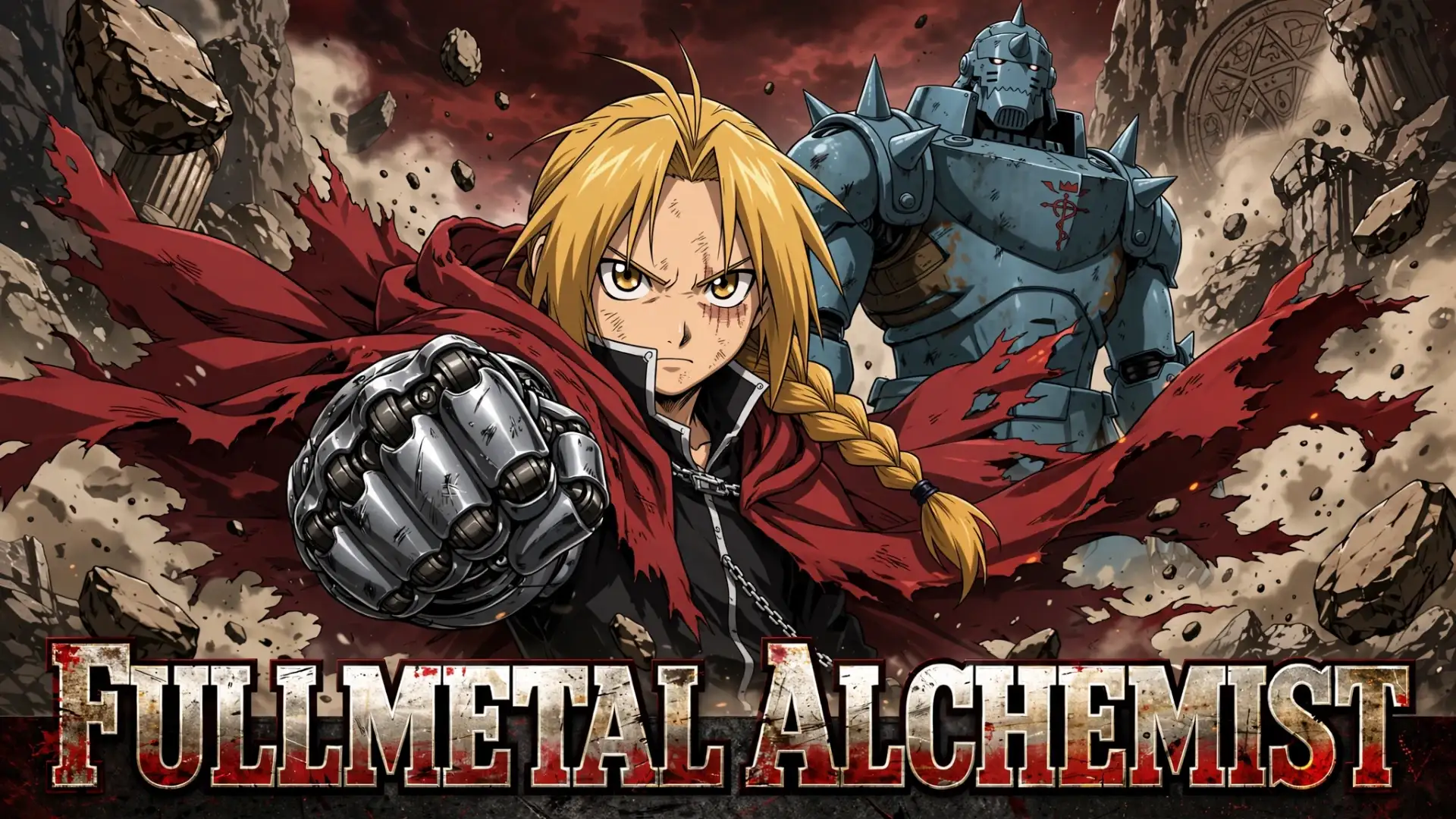
appears to be a classic adventure story. Gon Freecss sets out to become a licensed Hunter while hoping to find his absent father. Yet the series gradually moves into far more complicated territory, introducing political manipulation, corruption, ruthless organisations and characters whose decisions rarely fit neatly into categories of good and evil.
One of its biggest strengths is the Nen system. Its carefully defined rules and limitations give battles a strategic quality that may appeal to fans who enjoyed the disciplined logic behind alchemy and Equivalent Exchange in
.
The emotional centre is also familiar territory for fans of the Elric brothers. Gon's friendship with Killua becomes one of the show's defining relationships, with loyalty repeatedly tested by danger and personal ambition. Madhouse's animation and inventive battle choreography further strengthen its appeal.
takes a very different route to the idea of using knowledge as power. After a mysterious event turns humanity to stone for thousands of years, teenage scientist Senku Ishigami awakens in a world where modern civilisation has disappeared.
Rather than relying on conventional magical abilities, Senku uses chemistry, physics and experimentation to recreate technology from almost nothing. That methodical approach gives the series a scientific flavour that should resonate with viewers who enjoyed Edward Elric's analytical mindset.
The story also goes beyond experiments and inventions. Senku eventually faces competing factions with very different ideas about what the rebuilt world should look like. According to the series' central themes, scientific progress can create hope and improve lives, but it can also become a means of control when placed in the wrong hands.
initially looks like a bright fantasy adventure inspired by the stories of
. Aladdin and Alibaba travel through mysterious dungeons, encounter powerful magic and become caught up in conflicts between kingdoms.
Beneath that colourful exterior, however, the series tackles considerably heavier subjects. Economic inequality, slavery, discrimination and international power struggles all become important parts of its larger narrative.
Its world-building is another major attraction. Multiple empires, elaborate magical systems and ancient mysteries gradually connect across the story. The friendship between Aladdin and Alibaba also provides an emotional foundation similar to the bond between Edward and Alphonse. Fans who want fantasy with political depth rather than a straightforward good-versus-evil plot may find plenty to enjoy.
,
offers a more gothic alternative. The story takes place in an alternate version of 19th-century Europe and follows Allen Walker, a young exorcist fighting the Millennium Earl and the demonic Akuma created under his influence.
Allen possesses a cursed eye and a weaponised arm powered by Innocence, placing him at the centre of a conflict involving religion, warfare and supernatural forces.
The similarities extend beyond its visual atmosphere. Both series give considerable attention to grief, death, suffering and painful personal histories. The Black Order, a secretive military organisation, also raises questions about authority and the motives of those supposedly fighting for the greater good.
As the story develops, the distinction between heroes and villains becomes increasingly complicated. Hidden truths about the world and Allen's own fate add another layer of mystery.
begins with humanity trapped behind three enormous walls, supposedly protected from giant humanoid Titans. Eren Yeager's life changes completely when his home is destroyed and his mother is killed during a Titan attack, driving him towards a single-minded desire to eliminate the creatures.
The series eventually becomes far more than a survival story. Like
, it gradually reveals layers of military conspiracy, historical manipulation and secrets that transform the audience's understanding of earlier events.
Both anime also refuse to present war in simple terms. Characters on opposing sides have competing motivations, while governments and military organisations hide information that could change everything. Human experimentation, inherited hatred and the consequences of prolonged conflict become central to the narrative.
Its large-scale action is another attraction, with cinematic combat and dramatic musical scoring helping give major revelations considerable impact.
follows Lelouch vi Britannia, an exiled prince living in a world where the Holy Britannian Empire has conquered Japan. After receiving the mysterious power known as Geass, he adopts the identity of Zero and launches a rebellion against the empire ruled by his father.
The series is particularly well suited to viewers who enjoyed the political and military elements of
. Lelouch is an exceptionally calculating protagonist who relies on intelligence and strategy to overcome opponents with greater military resources.
His methods, however, become increasingly difficult to justify. The pursuit of revenge forces him to make choices that affect friends, family members and entire populations. The anime repeatedly examines what someone is willing to sacrifice when fighting an oppressive system.
Its combination of political manoeuvring, emotional drama, giant robots and cliff-hanger-heavy storytelling gives it a very different setting while retaining several of the narrative qualities that made
so compelling.
moves the conversation from fantasy and military drama into cyberpunk territory. In its futuristic version of Japan, the Sibyl System evaluates citizens' psychological states and calculates their potential for criminal behaviour.
Akane Tsunemori joins the Public Safety Bureau and works alongside latent criminals as they track people whose threat levels have crossed the system's accepted limits.
The premise allows the series to explore questions surrounding justice, freedom, surveillance and institutional power. Akane's conflict with the intelligent and nihilistic Shogo Makishima also creates an ideological battle rather than a simple physical confrontation.
As Akane learns more about the system she serves, the central question becomes increasingly uncomfortable: should an apparently stable society be protected at any cost, even when its foundations are oppressive? That philosophical tension makes
a strong choice for mature viewers who enjoyed the ethical conflicts running through
.
begins with an unusual reincarnation premise. After a cynical Japanese salaryman dies, a confrontational deity reincarnates him as Tanya Degurechaff, an orphan girl in an alternate world resembling Europe during the First World War.
Tanya retains her previous memories and highly pragmatic outlook. Determined to secure a comfortable existence away from the battlefield, she joins the Imperial Army and attempts to climb its ranks.
The result is a distinctive combination of military history, magic and ruthless strategy. Tanya approaches magical abilities almost like a technical discipline, relying on logic and efficiency rather than treating magic as something mystical or sacred.
That structured approach can appeal to fans of the rule-based nature of alchemy. The series also delivers large-scale aerial battles and explosive magical warfare, while Tanya's cold calculations provide a deliberately unsettling contrast to more traditional heroic protagonists.
centres on Shigeo Kageyama, better known as Mob, a quiet schoolboy with extraordinary psychic abilities. Despite possessing powers capable of overwhelming almost anyone around him, Mob wants little more than an ordinary life.
He receives guidance from Reigen Arataka, a charismatic mentor whose own abilities are considerably less impressive than he suggests. Together, they encounter dangerous spirits and other psychics while Mob gradually learns to understand and control his emotions.
Underneath the comedy and spectacular action, the series focuses heavily on emotional development, self-improvement and what genuine strength means. Mob's humility and kindness make him especially compelling because his immense abilities never become the foundation of his identity.
That idea echoes one of the important lessons found in
: possessing extraordinary power does not automatically make someone more valuable than everyone else. Studio BONES combines that message with inventive animation and substantial emotional payoffs.
starts with Rintaro Okabe, a self-proclaimed mad scientist who discovers that a modified microwave can send messages into the past. What begins as an eccentric experiment soon develops into something much more dangerous when mysterious organisations become interested in the technology.
The series gradually turns its playful opening into a tense story about cause and effect. Attempts to alter history carry serious consequences, and Okabe is forced to confront the human cost of decisions that initially seem harmless.
That emphasis on rules and consequences makes
particularly interesting for
fans. Just as Edward's attempt to break the laws of nature carries devastating consequences, Okabe discovers that changing the past comes with a price.
The emotional connections between the central characters are equally important. As timelines shift and lives are placed at risk, Okabe's struggle becomes increasingly personal. Its combination of science-fiction mechanics, psychological tension and character-driven drama makes it a fitting final recommendation for viewers searching for another anime with genuine emotional weight.
For fans of
, the closest replacement may ultimately depend on which part of the series mattered most. Those drawn to friendship and adventure may prefer
, while viewers seeking military intrigue could gravitate towards
or
.
offers a scientific angle,
leans into philosophy, and
builds its drama around cause and effect. Together, these 10 series show just how many different ways anime can deliver the combination of compelling characters, complex worlds and difficult choices that made
so memorable.
1. Hunter x Hunter Balances Adventure With Dark Moral Questions
At first glance,appears to be a classic adventure story. Gon Freecss sets out to become a licensed Hunter while hoping to find his absent father. Yet the series gradually moves into far more complicated territory, introducing political manipulation, corruption, ruthless organisations and characters whose decisions rarely fit neatly into categories of good and evil.
One of its biggest strengths is the Nen system. Its carefully defined rules and limitations give battles a strategic quality that may appeal to fans who enjoyed the disciplined logic behind alchemy and Equivalent Exchange in
.
The emotional centre is also familiar territory for fans of the Elric brothers. Gon's friendship with Killua becomes one of the show's defining relationships, with loyalty repeatedly tested by danger and personal ambition. Madhouse's animation and inventive battle choreography further strengthen its appeal.
2. Dr. Stone Turns Scientific Thinking Into an Adventure
takes a very different route to the idea of using knowledge as power. After a mysterious event turns humanity to stone for thousands of years, teenage scientist Senku Ishigami awakens in a world where modern civilisation has disappeared.
Rather than relying on conventional magical abilities, Senku uses chemistry, physics and experimentation to recreate technology from almost nothing. That methodical approach gives the series a scientific flavour that should resonate with viewers who enjoyed Edward Elric's analytical mindset.
The story also goes beyond experiments and inventions. Senku eventually faces competing factions with very different ideas about what the rebuilt world should look like. According to the series' central themes, scientific progress can create hope and improve lives, but it can also become a means of control when placed in the wrong hands.
3. Magi: The Labyrinth of Magic Goes Deeper Than Its Colourful World
initially looks like a bright fantasy adventure inspired by the stories of
. Aladdin and Alibaba travel through mysterious dungeons, encounter powerful magic and become caught up in conflicts between kingdoms.
Beneath that colourful exterior, however, the series tackles considerably heavier subjects. Economic inequality, slavery, discrimination and international power struggles all become important parts of its larger narrative.
Its world-building is another major attraction. Multiple empires, elaborate magical systems and ancient mysteries gradually connect across the story. The friendship between Aladdin and Alibaba also provides an emotional foundation similar to the bond between Edward and Alphonse. Fans who want fantasy with political depth rather than a straightforward good-versus-evil plot may find plenty to enjoy.
4. D.Gray-man Brings Gothic Horror and Tragic Characters Together
For viewers who particularly enjoyed the darker side of,
offers a more gothic alternative. The story takes place in an alternate version of 19th-century Europe and follows Allen Walker, a young exorcist fighting the Millennium Earl and the demonic Akuma created under his influence.
Allen possesses a cursed eye and a weaponised arm powered by Innocence, placing him at the centre of a conflict involving religion, warfare and supernatural forces.
The similarities extend beyond its visual atmosphere. Both series give considerable attention to grief, death, suffering and painful personal histories. The Black Order, a secretive military organisation, also raises questions about authority and the motives of those supposedly fighting for the greater good.
As the story develops, the distinction between heroes and villains becomes increasingly complicated. Hidden truths about the world and Allen's own fate add another layer of mystery.
5. Attack on Titan Makes Military Conspiracy a Central Mystery
begins with humanity trapped behind three enormous walls, supposedly protected from giant humanoid Titans. Eren Yeager's life changes completely when his home is destroyed and his mother is killed during a Titan attack, driving him towards a single-minded desire to eliminate the creatures.
The series eventually becomes far more than a survival story. Like
, it gradually reveals layers of military conspiracy, historical manipulation and secrets that transform the audience's understanding of earlier events.
Both anime also refuse to present war in simple terms. Characters on opposing sides have competing motivations, while governments and military organisations hide information that could change everything. Human experimentation, inherited hatred and the consequences of prolonged conflict become central to the narrative.
Its large-scale action is another attraction, with cinematic combat and dramatic musical scoring helping give major revelations considerable impact.
6. Code Geass Puts Strategy and Political Power Centre Stage
follows Lelouch vi Britannia, an exiled prince living in a world where the Holy Britannian Empire has conquered Japan. After receiving the mysterious power known as Geass, he adopts the identity of Zero and launches a rebellion against the empire ruled by his father.
The series is particularly well suited to viewers who enjoyed the political and military elements of
. Lelouch is an exceptionally calculating protagonist who relies on intelligence and strategy to overcome opponents with greater military resources.
His methods, however, become increasingly difficult to justify. The pursuit of revenge forces him to make choices that affect friends, family members and entire populations. The anime repeatedly examines what someone is willing to sacrifice when fighting an oppressive system.
Its combination of political manoeuvring, emotional drama, giant robots and cliff-hanger-heavy storytelling gives it a very different setting while retaining several of the narrative qualities that made
so compelling.
7. Psycho-Pass Questions Whether a Perfect Society Can Be Trusted
moves the conversation from fantasy and military drama into cyberpunk territory. In its futuristic version of Japan, the Sibyl System evaluates citizens' psychological states and calculates their potential for criminal behaviour.
Akane Tsunemori joins the Public Safety Bureau and works alongside latent criminals as they track people whose threat levels have crossed the system's accepted limits.
The premise allows the series to explore questions surrounding justice, freedom, surveillance and institutional power. Akane's conflict with the intelligent and nihilistic Shogo Makishima also creates an ideological battle rather than a simple physical confrontation.
As Akane learns more about the system she serves, the central question becomes increasingly uncomfortable: should an apparently stable society be protected at any cost, even when its foundations are oppressive? That philosophical tension makes
a strong choice for mature viewers who enjoyed the ethical conflicts running through
.
8. Saga of Tanya the Evil Turns Military Fantasy Into Something Much Darker
begins with an unusual reincarnation premise. After a cynical Japanese salaryman dies, a confrontational deity reincarnates him as Tanya Degurechaff, an orphan girl in an alternate world resembling Europe during the First World War.
Tanya retains her previous memories and highly pragmatic outlook. Determined to secure a comfortable existence away from the battlefield, she joins the Imperial Army and attempts to climb its ranks.
The result is a distinctive combination of military history, magic and ruthless strategy. Tanya approaches magical abilities almost like a technical discipline, relying on logic and efficiency rather than treating magic as something mystical or sacred.
You may also like
- American woman goes gaga over $15 'chrome plates'; Indians ask, 'Who's gonna tell her they're basic steel thalis?'
- After Shah Rukh Khan, AR Rahman thanks Salman Khan for joining Asha Bhosle's tribute music video
- “You'll not be able to dance”: Bipasha Basu opens up about her osteoarthritis battle
- Hayden Panettiere hid reunion with ex Brian Hickerson from friends?
- Niki Walia reveals she was first approached for Shefali Shah's role in 'Dil Dhadakne Do': 'Zoya Akhtar ne mujhe UK se khaas fly karke bulaya tha'
That structured approach can appeal to fans of the rule-based nature of alchemy. The series also delivers large-scale aerial battles and explosive magical warfare, while Tanya's cold calculations provide a deliberately unsettling contrast to more traditional heroic protagonists.
9. Mob Psycho 100 Shows That Extraordinary Power Does Not Make Someone Superior
Created by ONE,centres on Shigeo Kageyama, better known as Mob, a quiet schoolboy with extraordinary psychic abilities. Despite possessing powers capable of overwhelming almost anyone around him, Mob wants little more than an ordinary life.
He receives guidance from Reigen Arataka, a charismatic mentor whose own abilities are considerably less impressive than he suggests. Together, they encounter dangerous spirits and other psychics while Mob gradually learns to understand and control his emotions.
Underneath the comedy and spectacular action, the series focuses heavily on emotional development, self-improvement and what genuine strength means. Mob's humility and kindness make him especially compelling because his immense abilities never become the foundation of his identity.
That idea echoes one of the important lessons found in
: possessing extraordinary power does not automatically make someone more valuable than everyone else. Studio BONES combines that message with inventive animation and substantial emotional payoffs.
10. Steins;Gate Builds a Thriller Around the Consequences of Changing Time
starts with Rintaro Okabe, a self-proclaimed mad scientist who discovers that a modified microwave can send messages into the past. What begins as an eccentric experiment soon develops into something much more dangerous when mysterious organisations become interested in the technology.
The series gradually turns its playful opening into a tense story about cause and effect. Attempts to alter history carry serious consequences, and Okabe is forced to confront the human cost of decisions that initially seem harmless.
That emphasis on rules and consequences makes
particularly interesting for
fans. Just as Edward's attempt to break the laws of nature carries devastating consequences, Okabe discovers that changing the past comes with a price.
The emotional connections between the central characters are equally important. As timelines shift and lives are placed at risk, Okabe's struggle becomes increasingly personal. Its combination of science-fiction mechanics, psychological tension and character-driven drama makes it a fitting final recommendation for viewers searching for another anime with genuine emotional weight.
For fans of
, the closest replacement may ultimately depend on which part of the series mattered most. Those drawn to friendship and adventure may prefer
, while viewers seeking military intrigue could gravitate towards
or
.
offers a scientific angle,
leans into philosophy, and
builds its drama around cause and effect. Together, these 10 series show just how many different ways anime can deliver the combination of compelling characters, complex worlds and difficult choices that made
so memorable.






Loving Newspoint? Download the app now
