
10 Most Powerful Superheroes in Anime History, Ranked

Anime's take on superheroes often goes far beyond the familiar Western formula of secret identities and flashy costumes. From heroes who spend years mastering their craft to characters whose overwhelming abilities become a source of fear, Japanese series frequently ask what it really means to be powerful. Across different stories, strength can come from preparation, experience, technology, collective belief or sheer physical ability, but each hero reveals a different cost of having extraordinary power.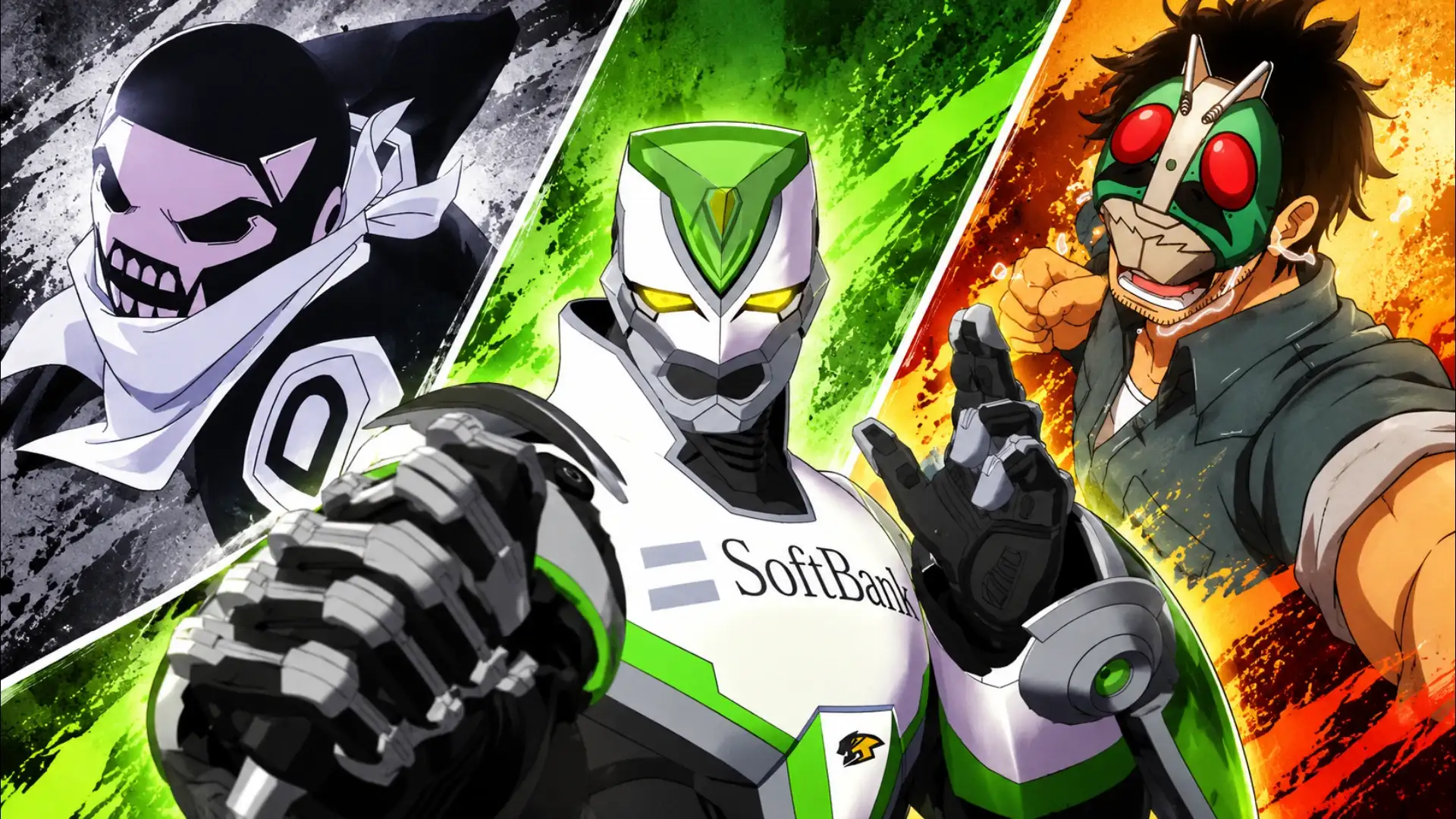
Years of studying the series have effectively turned that fandom into a form of combat training. Tojima knows the familiar poses and techniques, but more importantly, he understands how opponents tend to behave. That knowledge allows him to anticipate attacks instead of relying entirely on instinct once a fight begins.
His abilities therefore represent something different from the inherited powers often seen in superhero anime. Tojima demonstrates how dedication can become a weapon in its own right. His familiarity with Kamen Rider lore becomes practical battlefield knowledge, allowing him to recognise patterns that another fighter might overlook.
The character also reflects one of the recurring ideas behind Kamen Rider itself: discipline matters. Rather than making strength solely about possessing the biggest attack, Tojima's story gives preparation and commitment genuine value.
Instead of receiving power because he is destined to become a hero, D survives by learning. He studies the Rangers, paying attention to their combat methods, vulnerabilities and behaviour. His experience on the losing side gives him information that a conventional hero would struggle to acquire.
That knowledge gradually develops into genuine combat expertise. D understands what his opponents expect a low-level footsoldier to do, allowing him to exploit their assumptions against them.
His strength consequently comes from necessity rather than destiny. The character challenges the familiar chosen-one formula by suggesting that someone forced to survive at the bottom can eventually understand a powerful system better than those born to lead it.
That limitation becomes increasingly significant as his career progresses. While younger heroes may possess greater physical advantages and stronger public profiles, Wild Tiger relies on experience to make every moment count.
He has spent years working as a professional hero and has developed the ability to assess a situation almost immediately. He can read an opponent, recognise potential danger to civilians and position himself effectively without wasting precious time.
The contrast becomes particularly noticeable alongside his younger partner, Barnaby Brooks Jr. Wild Tiger may not represent the newest generation of heroes, but his accumulated experience compensates for the decline in his physical capabilities.
Tiger & Bunny also uses his career to examine the relationship between heroism and commercialisation. In a world where heroes are heavily associated with sponsorship and image, Wild Tiger's effectiveness demonstrates that reputation and presentation are not the same thing as genuine ability.
Her greatest challenge is not simply defeating opponents. It is controlling what happens when her power exceeds what she can comfortably manage. During moments of crisis, her emotions can push her abilities far beyond their normal limits, giving her potentially devastating strength.
That makes confidence both an advantage and a danger. Greater belief can unlock more power, but fear and emotional instability can make that power difficult to control.
Teru's reluctance to unleash her full potential separates her from heroes who confidently use everything at their disposal. She understands that overwhelming force can carry consequences, which creates a constant tension between what she is capable of doing and what she is willing to unleash.
SHY therefore presents extraordinary strength as something that can frighten its owner. Teru's greatest challenge is not discovering how powerful she can become, but learning how to live with that power without allowing it to overwhelm her.
Heroman's scale of power creates an immediate imbalance. Joey is still a young person learning how to deal with responsibility, yet he suddenly has access to a weapon capable of confronting threats on a massive scale.
That contrast drives much of the story. Possessing an incredibly powerful machine does not automatically make Joey an experienced hero. He initially struggles to use Heroman's abilities effectively and must gradually learn how to direct that strength with greater accuracy.
The robot's capabilities can match enormous threats, but Joey's development is equally important. His journey shows that technology can provide extraordinary power without providing the judgement needed to use it properly.
Heroman ultimately combines two elements of heroism: the scale of the weapon and the determination of the person controlling it.
Yet his importance extends beyond what he can do in battle. All Might's presence as the Symbol of Peace creates a psychological deterrent. His reputation alone helps keep criminals at bay, making his influence almost as important as his physical strength.
Behind that seemingly invincible public image, however, is Toshinori Yagi, whose body has been severely damaged by years of fighting. His injuries eventually reduce the amount of time he can remain in his heroic form.
That physical decline forces All Might to confront the limits of his own career. One For All eventually passes to Izuku Midoriya earlier than might otherwise have been expected, turning All Might's power into both a legacy and a responsibility.
My Hero Academia uses his story to question the personal price of maintaining an ideal. All Might may appear almost unstoppable, but the person behind the symbol pays a considerable physical cost for carrying that image.
Through the GALAX application, ordinary members of the public can become involved in responding to crises. Hajime's role is therefore less about overpowering every threat herself and more about creating a system in which thousands of people can contribute.
The results demonstrate the potential of coordinated action. Rescue and defensive efforts can be handled by a network of participants rather than depending entirely on one superhero arriving to save everyone.
Hajime effectively transforms communication, organisation and public participation into tools of heroism. Her strength comes from understanding that a large group working together can accomplish things that even a powerful individual cannot manage alone.
Gatchaman Crowds consequently challenges the traditional image of the lone superhero. Leadership becomes the defining ability, while cooperation replaces physical dominance as the central measure of effectiveness.
The result is a striking contrast between appearance and capability. Ichiro still looks like a frail older man, yet his new mechanical body gives him destructive power that far exceeds conventional military technology and can cause devastation on the scale of city blocks.
What makes his character especially compelling is how he chooses to use that strength. Instead of allowing his extraordinary abilities to become an excuse for destruction, Ichiro repeatedly uses them to protect people and respond to those in need.
His story is placed in direct contrast with Hiro Shishigami, another character who receives comparable power but makes radically different choices.
That difference forms one of the central ideas of Inuyashiki: Last Hero. Extraordinary abilities do not automatically determine whether someone becomes a hero or a threat. The character's decisions and intentions remain crucial.
That makes reputation more than a matter of popularity. Rumours, public sentiment and changing opinions can affect X's actual ability to fight. Social perception effectively becomes another battlefield.
Unlike a character whose strength remains relatively fixed, X can experience enormous changes in power depending on the level of confidence people place in him. His potential is theoretically enormous because collective belief does not have a straightforward physical ceiling.
At the same time, that system creates a serious vulnerability. A sudden loss of public confidence can undermine the very power that makes X formidable.
To Be Hero X consequently turns the relationship between superheroes and their audiences into part of the action. X's abilities are powerful precisely because they are connected to other people, but that connection also leaves him dangerously exposed to changes in public opinion.
His defining ability is brutally simple. He can defeat his opponents with a single punch, regardless of how dangerous or powerful they are supposed to be.
That makes traditional power scaling almost meaningless. In most action anime, a stronger enemy creates a new challenge that requires the protagonist to improve. Saitama reverses the formula because his strength has already surpassed the need for that progression.
His real problem is therefore not physical. It is boredom.
Because fights end almost immediately, Saitama struggles to experience the excitement and sense of achievement that other heroes associate with combat. His overwhelming ability becomes a source of dissatisfaction rather than fulfilment.
One-Punch Man uses that contradiction to satirise the familiar escalation of shonen storytelling. Saitama is not simply another character at the top of a power hierarchy; his existence questions whether such a hierarchy has any meaning when one fighter is already beyond comparison.
Image Courtesy: ChatGPT
Tojima Shows Why Preparation Can Become Power
Tojima's journey in Tojima Wants to Be a Kamen Rider is unusual because his greatest advantage begins long before he receives genuine superpowers. His lifelong obsession with Kamen Rider gives him an extraordinary understanding of the franchise's heroes, villains, transformations and weaknesses.Years of studying the series have effectively turned that fandom into a form of combat training. Tojima knows the familiar poses and techniques, but more importantly, he understands how opponents tend to behave. That knowledge allows him to anticipate attacks instead of relying entirely on instinct once a fight begins.
His abilities therefore represent something different from the inherited powers often seen in superhero anime. Tojima demonstrates how dedication can become a weapon in its own right. His familiarity with Kamen Rider lore becomes practical battlefield knowledge, allowing him to recognise patterns that another fighter might overlook.
The character also reflects one of the recurring ideas behind Kamen Rider itself: discipline matters. Rather than making strength solely about possessing the biggest attack, Tojima's story gives preparation and commitment genuine value.
Footsoldier D Turns Experience From The Enemy Into An Advantage
Go! Go! Loser Ranger! approaches superhero storytelling from the opposite direction by putting a former enemy grunt at its centre. Footsoldier D begins as one of the disposable members of the organisation fighting against the Dragon Keepers, but his understanding of their world eventually becomes his greatest advantage.Instead of receiving power because he is destined to become a hero, D survives by learning. He studies the Rangers, paying attention to their combat methods, vulnerabilities and behaviour. His experience on the losing side gives him information that a conventional hero would struggle to acquire.
That knowledge gradually develops into genuine combat expertise. D understands what his opponents expect a low-level footsoldier to do, allowing him to exploit their assumptions against them.
His strength consequently comes from necessity rather than destiny. The character challenges the familiar chosen-one formula by suggesting that someone forced to survive at the bottom can eventually understand a powerful system better than those born to lead it.
Wild Tiger Proves Experience Still Matters
Kotetsu Kaburagi, better known as Wild Tiger in Tiger & Bunny, faces a very different problem. His ability gives him a major physical boost, but he can sustain that enhanced power for only five minutes.That limitation becomes increasingly significant as his career progresses. While younger heroes may possess greater physical advantages and stronger public profiles, Wild Tiger relies on experience to make every moment count.
He has spent years working as a professional hero and has developed the ability to assess a situation almost immediately. He can read an opponent, recognise potential danger to civilians and position himself effectively without wasting precious time.
The contrast becomes particularly noticeable alongside his younger partner, Barnaby Brooks Jr. Wild Tiger may not represent the newest generation of heroes, but his accumulated experience compensates for the decline in his physical capabilities.
Tiger & Bunny also uses his career to examine the relationship between heroism and commercialisation. In a world where heroes are heavily associated with sponsorship and image, Wild Tiger's effectiveness demonstrates that reputation and presentation are not the same thing as genuine ability.
Shy Struggles With Power That Can Become Too Much
Teru Momijiyama, who operates under the superhero name Shy, represents Japan in SHY and possesses an ability that becomes stronger through emotional intensity and public confidence.Her greatest challenge is not simply defeating opponents. It is controlling what happens when her power exceeds what she can comfortably manage. During moments of crisis, her emotions can push her abilities far beyond their normal limits, giving her potentially devastating strength.
That makes confidence both an advantage and a danger. Greater belief can unlock more power, but fear and emotional instability can make that power difficult to control.
Teru's reluctance to unleash her full potential separates her from heroes who confidently use everything at their disposal. She understands that overwhelming force can carry consequences, which creates a constant tension between what she is capable of doing and what she is willing to unleash.
SHY therefore presents extraordinary strength as something that can frighten its owner. Teru's greatest challenge is not discovering how powerful she can become, but learning how to live with that power without allowing it to overwhelm her.
Heroman Combines Advanced Technology With Human Determination
In Heroman, teenager Joey Jones becomes connected to a giant robot after an ordinary toy is transformed by an extraordinary lightning strike. The resulting machine possesses technology and destructive capabilities far beyond anything Joey could have imagined.Heroman's scale of power creates an immediate imbalance. Joey is still a young person learning how to deal with responsibility, yet he suddenly has access to a weapon capable of confronting threats on a massive scale.
That contrast drives much of the story. Possessing an incredibly powerful machine does not automatically make Joey an experienced hero. He initially struggles to use Heroman's abilities effectively and must gradually learn how to direct that strength with greater accuracy.
The robot's capabilities can match enormous threats, but Joey's development is equally important. His journey shows that technology can provide extraordinary power without providing the judgement needed to use it properly.
Heroman ultimately combines two elements of heroism: the scale of the weapon and the determination of the person controlling it.
All Might Defines The Burden Of Being A Symbol
Few anime superheroes have become as closely associated with overwhelming strength as All Might from My Hero Academia. Through One For All, he possesses enough physical power to produce spectacular effects, including punches capable of dramatically changing the surrounding weather.Yet his importance extends beyond what he can do in battle. All Might's presence as the Symbol of Peace creates a psychological deterrent. His reputation alone helps keep criminals at bay, making his influence almost as important as his physical strength.
Behind that seemingly invincible public image, however, is Toshinori Yagi, whose body has been severely damaged by years of fighting. His injuries eventually reduce the amount of time he can remain in his heroic form.
That physical decline forces All Might to confront the limits of his own career. One For All eventually passes to Izuku Midoriya earlier than might otherwise have been expected, turning All Might's power into both a legacy and a responsibility.
My Hero Academia uses his story to question the personal price of maintaining an ideal. All Might may appear almost unstoppable, but the person behind the symbol pays a considerable physical cost for carrying that image.
Hajime Shows How A Crowd Can Become A Superpower
Gatchaman Crowds offers perhaps the clearest example of strength that does not depend on a single physically dominant hero. Hajime Ichinose's greatest contribution comes from her ability to connect people and turn collective participation into an effective force.Through the GALAX application, ordinary members of the public can become involved in responding to crises. Hajime's role is therefore less about overpowering every threat herself and more about creating a system in which thousands of people can contribute.
The results demonstrate the potential of coordinated action. Rescue and defensive efforts can be handled by a network of participants rather than depending entirely on one superhero arriving to save everyone.
Hajime effectively transforms communication, organisation and public participation into tools of heroism. Her strength comes from understanding that a large group working together can accomplish things that even a powerful individual cannot manage alone.
Gatchaman Crowds consequently challenges the traditional image of the lone superhero. Leadership becomes the defining ability, while cooperation replaces physical dominance as the central measure of effectiveness.
Ichiro Inuyashiki Hides Extraordinary Power Behind An Ordinary Appearance
Ichiro Inuyashiki begins his story as an elderly man dealing with a terminal cancer diagnosis. An unexpected encounter with an alien force completely changes his circumstances, rebuilding his body with incredibly advanced technology.The result is a striking contrast between appearance and capability. Ichiro still looks like a frail older man, yet his new mechanical body gives him destructive power that far exceeds conventional military technology and can cause devastation on the scale of city blocks.
What makes his character especially compelling is how he chooses to use that strength. Instead of allowing his extraordinary abilities to become an excuse for destruction, Ichiro repeatedly uses them to protect people and respond to those in need.
His story is placed in direct contrast with Hiro Shishigami, another character who receives comparable power but makes radically different choices.
That difference forms one of the central ideas of Inuyashiki: Last Hero. Extraordinary abilities do not automatically determine whether someone becomes a hero or a threat. The character's decisions and intentions remain crucial.
X Shows How Public Opinion Can Create And Destroy Power
To Be Hero X presents perhaps one of the most unstable power systems in this group. X draws strength from public trust, meaning his capabilities are directly connected to how people perceive him.That makes reputation more than a matter of popularity. Rumours, public sentiment and changing opinions can affect X's actual ability to fight. Social perception effectively becomes another battlefield.
Unlike a character whose strength remains relatively fixed, X can experience enormous changes in power depending on the level of confidence people place in him. His potential is theoretically enormous because collective belief does not have a straightforward physical ceiling.
At the same time, that system creates a serious vulnerability. A sudden loss of public confidence can undermine the very power that makes X formidable.
To Be Hero X consequently turns the relationship between superheroes and their audiences into part of the action. X's abilities are powerful precisely because they are connected to other people, but that connection also leaves him dangerously exposed to changes in public opinion.
Saitama Makes Conventional Power Scaling Irrelevant
One-Punch Man takes the superhero power fantasy and pushes it to an absurd extreme through Saitama. After following a simple training routine for three years, he becomes so overwhelmingly strong that ordinary battles cease to offer him any real challenge.His defining ability is brutally simple. He can defeat his opponents with a single punch, regardless of how dangerous or powerful they are supposed to be.
That makes traditional power scaling almost meaningless. In most action anime, a stronger enemy creates a new challenge that requires the protagonist to improve. Saitama reverses the formula because his strength has already surpassed the need for that progression.
His real problem is therefore not physical. It is boredom.
Because fights end almost immediately, Saitama struggles to experience the excitement and sense of achievement that other heroes associate with combat. His overwhelming ability becomes a source of dissatisfaction rather than fulfilment.
One-Punch Man uses that contradiction to satirise the familiar escalation of shonen storytelling. Saitama is not simply another character at the top of a power hierarchy; his existence questions whether such a hierarchy has any meaning when one fighter is already beyond comparison.
Image Courtesy: ChatGPT
Next Story