
9 Dark Fantasy Anime Where Every Victory Comes With A Price And The Darkness Never Truly Fades

Dark fantasy anime can use monsters and supernatural powers to create spectacle, but the strongest stories make those elements mean something more. Fear can change an entire community, power can threaten a character's humanity, and survival can come with an emotional cost. The nine series below approach darkness in very different ways, yet each builds its story around consequences that matter. None relies entirely on shock value; instead, their characters and worlds are shaped by the dangers they face.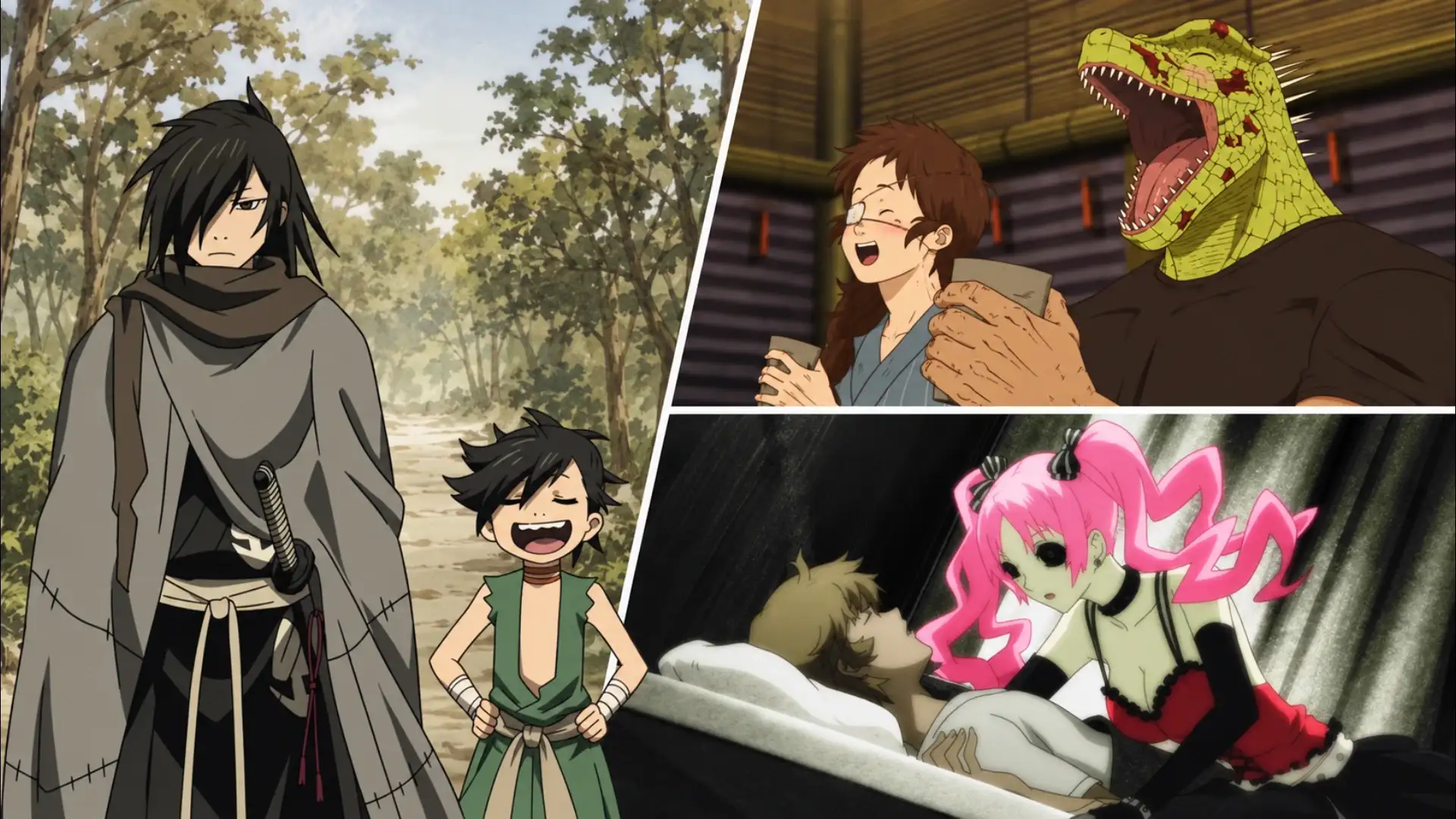
What begins as a mysterious sequence of deaths gradually becomes a conflict in which neither side can easily claim the moral high ground. The humans are frightened, the vampires are fighting for their own survival, and the line separating victim from aggressor becomes increasingly difficult to recognise.
Toshio Ozaki becomes particularly important as the crisis develops. His efforts to stop the outbreak become progressively more extreme, preventing him from fitting neatly into the role of a conventional protagonist.
Natsuno Yuuki's transformation adds another layer to that uncertainty. His fate, alongside the villagers' increasingly violent response, demonstrates how quickly fear can strip away ordinary moral restraints.
The series does not use its conclusion to make those uncomfortable questions disappear. Instead, the damage caused by the outbreak remains central to the ending.
That is what gives Shiki its distinctive form of horror. The vampires are frightening, but the reactions they provoke in ordinary people can be just as disturbing.
That premise could have produced a straightforward revenge adventure. Dororo instead keeps returning to the consequences of the bargain and what Hyakkimaru's recovery means for everyone around him.
Every demon he faces represents more than another enemy. Reclaiming his body gradually changes his experience of the world and his understanding of himself.
Dororo becomes essential to that journey because the relationship between the two characters brings emotional warmth to an otherwise brutal setting. Their travels also expose them to people whose lives have been shaped by war, poverty and violence.
The story's moral questions become increasingly complicated as Hyakkimaru gets closer to achieving his goal. What was taken from him matters, but restoring his humanity does not exist in isolation from the people affected by his actions.
The 2019 adaptation ultimately gives those ideas an emotional resolution rather than relying solely on another spectacular battle. Its ending feels significant because the story has consistently treated humanity as something far more complicated than physical survival.
The setting is filled with signs of deterioration, and that sense of collapse follows the characters wherever they go. The wolves' search for Paradise therefore carries a different tone from the typical fantasy quest.
Kiba's determination gives the group something to believe in, but the journey repeatedly challenges whether their idealised destination can actually deliver what they want.
The contrast between hope and decay is one of the series' strongest features. The characters form relationships and find moments of companionship, yet the wider world continues moving towards destruction.
That makes the landscape an important part of the storytelling. The ruined surroundings reflect the uncertainty surrounding the wolves themselves.
Rather than turning the search into a simple tale of heroes reaching a promised paradise, the later part of the story continues to explore sacrifice, loss and renewal. The four concluding OVAs complete the anime's 26-episode television run.
The result is a dark fantasy story where beauty and despair exist side by side.
Its characters enter a dangerous world without overwhelming abilities. They have to learn through experience, and even relatively small encounters can become frighteningly serious.
That decision gives the story a different emotional rhythm. Combat is exhausting rather than glamorous, while victories do not erase the fear surrounding the next battle.
The death of a companion changes the group rather than being treated as a minor setback. Haruhiro, in particular, has to grow into responsibility while coping with grief and uncertainty.
The anime also gives its characters time away from combat. Those quieter moments reveal how differently people respond to pressure and loss.
That balance makes the series' fantasy world feel unusually vulnerable. The characters do not have unlimited protection from the consequences of their decisions, and their gradual development comes from dealing with those consequences.
The series then systematically challenges those expectations.
Power is not presented as a free gift. Wishes have consequences, and becoming a magical girl introduces sacrifices that the characters cannot simply walk away from.
Sayaka Miki's story becomes one of the clearest examples of how good intentions can lead somewhere tragic. Homura Akemi provides a different perspective, with her determination becoming one of the story's central emotional forces.
Kyubey's detached approach makes the system itself feel sinister. The characters are not simply fighting an enemy they can defeat; they are trapped within rules that have consequences they initially do not understand.
Madoka's final choice changes the system, but the importance of the sacrifices leading to it remains intact.
That is why the series' ending works so well within its own framework. It changes the circumstances without pretending that everything that happened before it can simply be undone.
Caiman's strange condition gives the story its central mystery. His search for answers gradually opens up a much larger world filled with sorcerers, transformations and bizarre personalities.
Yet the series is not interested only in making its setting shocking. The relationship between Caiman and Nikaido provides an emotional anchor, giving the story genuine warmth amid its chaos.
The sorcerer characters also receive enough attention to make the conflict less predictable. Instead of functioning purely as faceless enemies, they have personalities and relationships of their own.
Even the humour contributes to the characterisation. Jokes and absurd situations often reveal how people interact with one another.
This combination gives Dorohedoro its unusual appeal. Its darkness never becomes completely oppressive because the story constantly finds strange ways to break the tension without destroying the danger surrounding its characters.
That risk changes how the battles feel. A victory is never just about defeating the enemy because Clare must also consider what using her abilities could do to herself.
Her motivation is rooted in Teresa's death, which gives the revenge storyline an emotional foundation that extends beyond simple hatred.
The women fighting the yoma therefore face a particularly grim contradiction. They need supernatural strength to survive, yet that same strength can threaten the humanity they are trying to protect.
The anime eventually moves away from the manga's continuing storyline and creates its own climax. Clare's animated journey therefore reaches a more immediate conclusion than the larger manga narrative.
Rather than ending with a clean reset, the anime resolves her central conflict through a decisive confrontation. The result preserves the series' emphasis on sacrifice, revenge and the danger attached to power.
Goblins exploit mistakes. They use numbers, ambushes and their surroundings, meaning adventurers who approach them carelessly can find themselves in serious trouble.
That changes the usual fantasy formula. The important question is not always who has the strongest ability. Sometimes it is who has prepared properly.
Goblin Slayer's approach reflects that philosophy. He studies his enemies and develops practical methods for dealing with them rather than treating every encounter as a demonstration of superior strength.
Priestess' development offers a useful contrast. She gains confidence and experience without losing her compassion.
Other members of the cast bring their own ideas about courage, danger and responsibility, making the fantasy world broader than the protagonist's single-minded mission.
The result is a series in which experience has real value. Winning depends on understanding the threat, preparing for it and avoiding unnecessary risks.
Night Raid operates in a world of rebellion and political violence, and even experienced members of the group can become casualties.
The Imperial Arms give the fighters distinctive capabilities, creating different approaches to combat while keeping the battles from becoming entirely dependent on one escalating measure of strength.
What matters more is the emotional consequence of losing people. Death changes the survivors and alters the atmosphere of later confrontations.
Akame's own path becomes increasingly isolated, while the relationships within Night Raid give the group an identity beyond its role in the rebellion.
The anime does not suddenly abandon that darker approach when it reaches its final stretch. The losses and sacrifices accumulated throughout the story continue to shape its conclusion.
That consistency is important. The series establishes a world where rebellion carries a genuine price and then allows that principle to remain relevant through the ending.
Shiki makes fear itself destructive. Dororo connects supernatural battles to the recovery of humanity. Wolf's Rain finds melancholy in a dying world, while Grimgar Of Fantasy And Ash makes ordinary survival feel frighteningly difficult.
Puella Magi Madoka Magica turns the promise of magical power into a source of despair. Dorohedoro mixes grotesque imagery with humour and friendship. Claymore makes supernatural strength dangerous because it can destroy the person using it.
Goblin Slayer takes a more tactical approach, making preparation essential to survival. Akame Ga Kill! raises the stakes by ensuring that even major characters can pay the ultimate price.
What ultimately separates these stories from darker anime that rely mainly on atmosphere is the way their themes influence the characters. The supernatural elements are not simply decoration. They force decisions, create consequences and change the people caught inside these worlds.
That is why these nine dark fantasy anime continue to stand out: their darkness is built into the stories themselves, not simply added for shock.
1. Shiki Makes The Real Horror A Question Of Who Deserves To Survive
The most disturbing part of Shiki is not simply the appearance of vampires. It is the way the threat changes the people living in the village.What begins as a mysterious sequence of deaths gradually becomes a conflict in which neither side can easily claim the moral high ground. The humans are frightened, the vampires are fighting for their own survival, and the line separating victim from aggressor becomes increasingly difficult to recognise.
Toshio Ozaki becomes particularly important as the crisis develops. His efforts to stop the outbreak become progressively more extreme, preventing him from fitting neatly into the role of a conventional protagonist.
Natsuno Yuuki's transformation adds another layer to that uncertainty. His fate, alongside the villagers' increasingly violent response, demonstrates how quickly fear can strip away ordinary moral restraints.
The series does not use its conclusion to make those uncomfortable questions disappear. Instead, the damage caused by the outbreak remains central to the ending.
That is what gives Shiki its distinctive form of horror. The vampires are frightening, but the reactions they provoke in ordinary people can be just as disturbing.
2. Dororo Makes Reclaiming A Stolen Body A Question Of What Humanity Costs
Hyakkimaru's journey begins with something profoundly unfair: his own body has been taken from him as part of his father's bargain for power.That premise could have produced a straightforward revenge adventure. Dororo instead keeps returning to the consequences of the bargain and what Hyakkimaru's recovery means for everyone around him.
Every demon he faces represents more than another enemy. Reclaiming his body gradually changes his experience of the world and his understanding of himself.
Dororo becomes essential to that journey because the relationship between the two characters brings emotional warmth to an otherwise brutal setting. Their travels also expose them to people whose lives have been shaped by war, poverty and violence.
The story's moral questions become increasingly complicated as Hyakkimaru gets closer to achieving his goal. What was taken from him matters, but restoring his humanity does not exist in isolation from the people affected by his actions.
The 2019 adaptation ultimately gives those ideas an emotional resolution rather than relying solely on another spectacular battle. Its ending feels significant because the story has consistently treated humanity as something far more complicated than physical survival.
3. Wolf's Rain Turns The End Of The World Into A Search For Hope
In Wolf's Rain, the journey begins in a world that already feels as though it has passed its best days.The setting is filled with signs of deterioration, and that sense of collapse follows the characters wherever they go. The wolves' search for Paradise therefore carries a different tone from the typical fantasy quest.
Kiba's determination gives the group something to believe in, but the journey repeatedly challenges whether their idealised destination can actually deliver what they want.
The contrast between hope and decay is one of the series' strongest features. The characters form relationships and find moments of companionship, yet the wider world continues moving towards destruction.
That makes the landscape an important part of the storytelling. The ruined surroundings reflect the uncertainty surrounding the wolves themselves.
Rather than turning the search into a simple tale of heroes reaching a promised paradise, the later part of the story continues to explore sacrifice, loss and renewal. The four concluding OVAs complete the anime's 26-episode television run.
The result is a dark fantasy story where beauty and despair exist side by side.
4. Grimgar Of Fantasy And Ash Shows What Happens When Fantasy Heroes Are Not Invincible
Grimgar Of Fantasy And Ash strips away one of the most familiar conveniences of fantasy adventure: the certainty that the protagonists will eventually become powerful enough to handle whatever comes next.Its characters enter a dangerous world without overwhelming abilities. They have to learn through experience, and even relatively small encounters can become frighteningly serious.
That decision gives the story a different emotional rhythm. Combat is exhausting rather than glamorous, while victories do not erase the fear surrounding the next battle.
The death of a companion changes the group rather than being treated as a minor setback. Haruhiro, in particular, has to grow into responsibility while coping with grief and uncertainty.
The anime also gives its characters time away from combat. Those quieter moments reveal how differently people respond to pressure and loss.
That balance makes the series' fantasy world feel unusually vulnerable. The characters do not have unlimited protection from the consequences of their decisions, and their gradual development comes from dealing with those consequences.
5. Puella Magi Madoka Magica Hides Its Darkest Ideas Behind A Familiar Fantasy
At first glance, Puella Magi Madoka Magica appears to belong comfortably within the magical-girl tradition. Its colourful presentation and young protagonists create expectations of a familiar kind of heroic adventure.The series then systematically challenges those expectations.
Power is not presented as a free gift. Wishes have consequences, and becoming a magical girl introduces sacrifices that the characters cannot simply walk away from.
Sayaka Miki's story becomes one of the clearest examples of how good intentions can lead somewhere tragic. Homura Akemi provides a different perspective, with her determination becoming one of the story's central emotional forces.
Kyubey's detached approach makes the system itself feel sinister. The characters are not simply fighting an enemy they can defeat; they are trapped within rules that have consequences they initially do not understand.
Madoka's final choice changes the system, but the importance of the sacrifices leading to it remains intact.
That is why the series' ending works so well within its own framework. It changes the circumstances without pretending that everything that happened before it can simply be undone.
6. Dorohedoro Uses Absurdity To Make Its Dark World Even Stranger
Dorohedoro does not behave like a conventional dark fantasy series. It can move from grotesque body horror to ridiculous comedy and then return to brutal violence without treating those elements as contradictions.Caiman's strange condition gives the story its central mystery. His search for answers gradually opens up a much larger world filled with sorcerers, transformations and bizarre personalities.
Yet the series is not interested only in making its setting shocking. The relationship between Caiman and Nikaido provides an emotional anchor, giving the story genuine warmth amid its chaos.
The sorcerer characters also receive enough attention to make the conflict less predictable. Instead of functioning purely as faceless enemies, they have personalities and relationships of their own.
Even the humour contributes to the characterisation. Jokes and absurd situations often reveal how people interact with one another.
This combination gives Dorohedoro its unusual appeal. Its darkness never becomes completely oppressive because the story constantly finds strange ways to break the tension without destroying the danger surrounding its characters.
7. Claymore Makes Power Dangerous By Putting Humanity At Risk
Clare does not simply become stronger throughout Claymore. Every increase in power carries the possibility that she could lose control and cross the boundary between warrior and monster.That risk changes how the battles feel. A victory is never just about defeating the enemy because Clare must also consider what using her abilities could do to herself.
Her motivation is rooted in Teresa's death, which gives the revenge storyline an emotional foundation that extends beyond simple hatred.
The women fighting the yoma therefore face a particularly grim contradiction. They need supernatural strength to survive, yet that same strength can threaten the humanity they are trying to protect.
The anime eventually moves away from the manga's continuing storyline and creates its own climax. Clare's animated journey therefore reaches a more immediate conclusion than the larger manga narrative.
Rather than ending with a clean reset, the anime resolves her central conflict through a decisive confrontation. The result preserves the series' emphasis on sacrifice, revenge and the danger attached to power.
8. Goblin Slayer Makes Preparation More Important Than Raw Strength
Goblin Slayer's central idea is simple: an enemy does not have to be overwhelmingly powerful to be extremely dangerous.Goblins exploit mistakes. They use numbers, ambushes and their surroundings, meaning adventurers who approach them carelessly can find themselves in serious trouble.
That changes the usual fantasy formula. The important question is not always who has the strongest ability. Sometimes it is who has prepared properly.
Goblin Slayer's approach reflects that philosophy. He studies his enemies and develops practical methods for dealing with them rather than treating every encounter as a demonstration of superior strength.
Priestess' development offers a useful contrast. She gains confidence and experience without losing her compassion.
Other members of the cast bring their own ideas about courage, danger and responsibility, making the fantasy world broader than the protagonist's single-minded mission.
The result is a series in which experience has real value. Winning depends on understanding the threat, preparing for it and avoiding unnecessary risks.
9. Akame Ga Kill! Makes The Danger Feel Real By Letting Important Characters Fall
Akame Ga Kill! establishes its stakes by refusing to give its central fighters complete protection.Night Raid operates in a world of rebellion and political violence, and even experienced members of the group can become casualties.
The Imperial Arms give the fighters distinctive capabilities, creating different approaches to combat while keeping the battles from becoming entirely dependent on one escalating measure of strength.
What matters more is the emotional consequence of losing people. Death changes the survivors and alters the atmosphere of later confrontations.
Akame's own path becomes increasingly isolated, while the relationships within Night Raid give the group an identity beyond its role in the rebellion.
The anime does not suddenly abandon that darker approach when it reaches its final stretch. The losses and sacrifices accumulated throughout the story continue to shape its conclusion.
That consistency is important. The series establishes a world where rebellion carries a genuine price and then allows that principle to remain relevant through the ending.
Why These 9 Series Work As Dark Fantasy
These anime demonstrate that darkness does not have to mean constant violence or horror. It can come from moral uncertainty, grief, isolation, sacrifice or the knowledge that a character cannot return to the person they were before.Shiki makes fear itself destructive. Dororo connects supernatural battles to the recovery of humanity. Wolf's Rain finds melancholy in a dying world, while Grimgar Of Fantasy And Ash makes ordinary survival feel frighteningly difficult.
Puella Magi Madoka Magica turns the promise of magical power into a source of despair. Dorohedoro mixes grotesque imagery with humour and friendship. Claymore makes supernatural strength dangerous because it can destroy the person using it.
Goblin Slayer takes a more tactical approach, making preparation essential to survival. Akame Ga Kill! raises the stakes by ensuring that even major characters can pay the ultimate price.
What ultimately separates these stories from darker anime that rely mainly on atmosphere is the way their themes influence the characters. The supernatural elements are not simply decoration. They force decisions, create consequences and change the people caught inside these worlds.
That is why these nine dark fantasy anime continue to stand out: their darkness is built into the stories themselves, not simply added for shock.
Next Story