
5 Anime Series With Almost No Weak Story Arcs

Long-running anime have a difficult balancing act. A series that runs for hundreds of episodes has plenty of room to develop its characters, expand its world and experiment with new ideas. But that same freedom can also become a weakness when stories begin repeating themselves.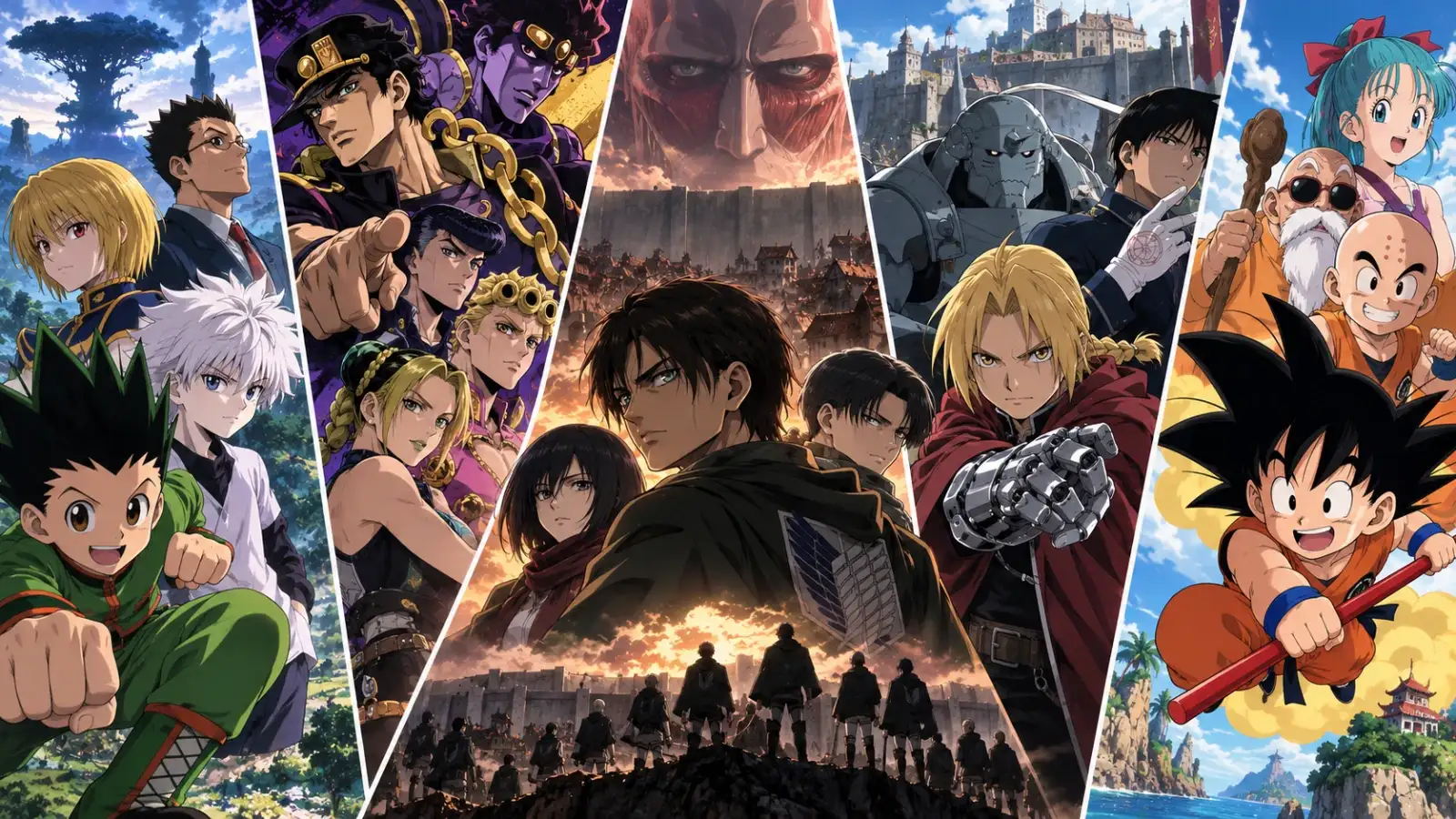
The safest approach is often to recreate whatever worked previously: introduce a new enemy, raise the stakes and send the heroes into another battle. While this formula can be entertaining, relying on it too heavily can eventually make even a beloved anime feel predictable.
The best long-running series find ways to reinvent themselves without losing what made them special in the first place. They can change their setting, tone, characters or even entire storytelling approach while still feeling like the same series.
These anime stand out because their major story arcs consistently bring something worthwhile to the table.
At first, the series appears to be preparing for a conventional adventure story. It quickly becomes clear, however, that Yoshihiro Togashi has little interest in following the standard battle-shonen playbook.
Each major arc introduces a noticeably different experience. The Hunter Exam focuses on survival and strategy, while Heaven's Arena turns towards combat and introduces the series' intricate Nen system.
The Yorknew City storyline takes on a darker crime-thriller atmosphere, particularly through the Phantom Troupe, while Greed Island transforms the adventure into something resembling a dangerous video game.
Then comes the Chimera Ant arc, which dramatically expands the series' scope and becomes one of its most ambitious and emotionally complex storylines.
The remarkable thing is that these shifts rarely feel random. Despite changing genres and pacing, Hunter x Hunter maintains strong character development and an underlying sense of unpredictability.
Hirohiko Araki's long-running franchise follows different members of the Joestar family across generations. Each part introduces a new protagonist, setting, supporting cast and central conflict.
The transition happens almost immediately. Phantom Blood establishes Jonathan Joestar and his rivalry with Dio Brando, but the story then moves on after Jonathan's death, introducing a new generation in Battle Tendency.
Later parts continue to reinvent the formula.
Diamond is Unbreakable mixes supernatural battles with the atmosphere of a strange small-town mystery. Golden Wind moves into the world of organised crime in Italy, while Stone Ocean centres much of its story around a prison setting.
The introduction of Stands also completely changes how battles work. Instead of relying on the earlier Hamon system, JoJo develops a power system capable of supporting wildly imaginative abilities.
Some parts may be more popular than others, but the series' willingness to take risks prevents its story from becoming stale.
Eren Yeager and his companions join the military, determined to fight these creatures and reclaim their freedom.
But the story gradually reveals that the Titans are only one piece of a much larger puzzle.
Each major arc provides another revelation about the world, the Titans and the characters themselves. Information that initially seems insignificant can become crucial much later, giving the series an unusually strong sense of foreshadowing.
The pacing also changes considerably throughout the story. Early sections spend time establishing the setting and characters, while later arcs become increasingly political, philosophical and morally complicated.
The shift towards Marley fundamentally changes the audience's understanding of the conflict. Characters who once seemed unquestionably heroic become much harder to categorise, while supposed enemies receive greater context.
By the final chapters, Attack on Titan is dealing with ideas that extend far beyond simply defeating monsters.
Edward and Alphonse Elric's search for a way to restore their bodies provides the central motivation, but the series continually expands beyond their personal journey.
Different arcs introduce new locations, enemies and political conflicts without feeling disconnected from the larger narrative.
The story moves between military conspiracies, supernatural threats, personal tragedies and large-scale battles, while information introduced earlier frequently becomes important later.
Another advantage is the show's relatively compact structure. Rather than allowing individual conflicts to continue indefinitely, Brotherhood tends to give its major ideas enough time to develop before moving forward.
Its villains are also connected to the larger mythology, meaning that individual confrontations gradually contribute towards the central conflict.
The result is a tightly constructed story where seemingly separate plotlines eventually converge.
Goku's early adventures combine martial arts, comedy, fantasy and treasure-hunting as he travels in search of the Dragon Balls.
The series gradually expands its world through training adventures, tournaments and encounters with increasingly dangerous opponents.
The martial arts tournaments could easily have become repetitive, particularly because they appear several times throughout the series. Instead, each tournament introduces different competitors, techniques and character developments.
The villains also help keep the story fresh. The Red Ribbon Army offers a different kind of threat from King Piccolo, while later opponents introduce new challenges for Goku.
This variety makes the original series feel like an adventure first and a battle anime second.
Hunter x Hunter constantly experiments with genre and structure. JoJo's Bizarre Adventure essentially rebuilds itself with every part. Attack on Titan continually expands the audience's understanding of its world. Fullmetal Alchemist: Brotherhood connects its arcs into one carefully constructed narrative, while Dragon Ball balances adventure, comedy and martial arts.
None of these shows simply repeats the same story with a different villain.
That is particularly important for long-running anime. Audiences can tolerate familiar elements when those elements are placed in fresh circumstances. What becomes exhausting is the feeling that a series is simply recycling its previous success.
The strongest anime understand that keeping viewers interested does not necessarily mean constantly making everything bigger. Sometimes, the smartest way to maintain excitement is to make the next story different.
The safest approach is often to recreate whatever worked previously: introduce a new enemy, raise the stakes and send the heroes into another battle. While this formula can be entertaining, relying on it too heavily can eventually make even a beloved anime feel predictable.
The best long-running series find ways to reinvent themselves without losing what made them special in the first place. They can change their setting, tone, characters or even entire storytelling approach while still feeling like the same series.
These anime stand out because their major story arcs consistently bring something worthwhile to the table.
Hunter x Hunter Reinvents Its Formula Again and Again
Hunter x Hunter begins in familiar shonen territory. Gon Freecss sets out to become a Hunter, eventually meeting Killua, Kurapika and Leorio during the demanding Hunter Exam.At first, the series appears to be preparing for a conventional adventure story. It quickly becomes clear, however, that Yoshihiro Togashi has little interest in following the standard battle-shonen playbook.
Each major arc introduces a noticeably different experience. The Hunter Exam focuses on survival and strategy, while Heaven's Arena turns towards combat and introduces the series' intricate Nen system.
The Yorknew City storyline takes on a darker crime-thriller atmosphere, particularly through the Phantom Troupe, while Greed Island transforms the adventure into something resembling a dangerous video game.
Then comes the Chimera Ant arc, which dramatically expands the series' scope and becomes one of its most ambitious and emotionally complex storylines.
The remarkable thing is that these shifts rarely feel random. Despite changing genres and pacing, Hunter x Hunter maintains strong character development and an underlying sense of unpredictability.
JoJo's Bizarre Adventure Treats Every Part Like a New Beginning
Few anime embrace change as enthusiastically as JoJo's Bizarre Adventure.Hirohiko Araki's long-running franchise follows different members of the Joestar family across generations. Each part introduces a new protagonist, setting, supporting cast and central conflict.
The transition happens almost immediately. Phantom Blood establishes Jonathan Joestar and his rivalry with Dio Brando, but the story then moves on after Jonathan's death, introducing a new generation in Battle Tendency.
Later parts continue to reinvent the formula.
Diamond is Unbreakable mixes supernatural battles with the atmosphere of a strange small-town mystery. Golden Wind moves into the world of organised crime in Italy, while Stone Ocean centres much of its story around a prison setting.
The introduction of Stands also completely changes how battles work. Instead of relying on the earlier Hamon system, JoJo develops a power system capable of supporting wildly imaginative abilities.
Some parts may be more popular than others, but the series' willingness to take risks prevents its story from becoming stale.
Attack on Titan Keeps Expanding Its World
Attack on Titan initially appears deceptively straightforward. Humanity is trapped behind enormous walls, while giant Titans roam outside and threaten its survival.Eren Yeager and his companions join the military, determined to fight these creatures and reclaim their freedom.
But the story gradually reveals that the Titans are only one piece of a much larger puzzle.
Each major arc provides another revelation about the world, the Titans and the characters themselves. Information that initially seems insignificant can become crucial much later, giving the series an unusually strong sense of foreshadowing.
The pacing also changes considerably throughout the story. Early sections spend time establishing the setting and characters, while later arcs become increasingly political, philosophical and morally complicated.
The shift towards Marley fundamentally changes the audience's understanding of the conflict. Characters who once seemed unquestionably heroic become much harder to categorise, while supposed enemies receive greater context.
By the final chapters, Attack on Titan is dealing with ideas that extend far beyond simply defeating monsters.
Fullmetal Alchemist: Brotherhood Keeps Its Story Moving
Fullmetal Alchemist: Brotherhood benefits from something many lengthy anime struggle to maintain: discipline.Edward and Alphonse Elric's search for a way to restore their bodies provides the central motivation, but the series continually expands beyond their personal journey.
Different arcs introduce new locations, enemies and political conflicts without feeling disconnected from the larger narrative.
The story moves between military conspiracies, supernatural threats, personal tragedies and large-scale battles, while information introduced earlier frequently becomes important later.
Another advantage is the show's relatively compact structure. Rather than allowing individual conflicts to continue indefinitely, Brotherhood tends to give its major ideas enough time to develop before moving forward.
Its villains are also connected to the larger mythology, meaning that individual confrontations gradually contribute towards the central conflict.
The result is a tightly constructed story where seemingly separate plotlines eventually converge.
Original Dragon Ball Offers More Variety Than Its Reputation Suggests
When people think of Dragon Ball, enormous battles and increasingly powerful transformations are usually the first things that come to mind. However, the original Dragon Ball is considerably more varied than its later reputation might suggest.Goku's early adventures combine martial arts, comedy, fantasy and treasure-hunting as he travels in search of the Dragon Balls.
The series gradually expands its world through training adventures, tournaments and encounters with increasingly dangerous opponents.
The martial arts tournaments could easily have become repetitive, particularly because they appear several times throughout the series. Instead, each tournament introduces different competitors, techniques and character developments.
The villains also help keep the story fresh. The Red Ribbon Army offers a different kind of threat from King Piccolo, while later opponents introduce new challenges for Goku.
This variety makes the original series feel like an adventure first and a battle anime second.
What Makes These Anime Arcs So Consistently Good?
The biggest strength shared by these series is their willingness to change without abandoning their identity.Hunter x Hunter constantly experiments with genre and structure. JoJo's Bizarre Adventure essentially rebuilds itself with every part. Attack on Titan continually expands the audience's understanding of its world. Fullmetal Alchemist: Brotherhood connects its arcs into one carefully constructed narrative, while Dragon Ball balances adventure, comedy and martial arts.
None of these shows simply repeats the same story with a different villain.
That is particularly important for long-running anime. Audiences can tolerate familiar elements when those elements are placed in fresh circumstances. What becomes exhausting is the feeling that a series is simply recycling its previous success.
The strongest anime understand that keeping viewers interested does not necessarily mean constantly making everything bigger. Sometimes, the smartest way to maintain excitement is to make the next story different.
Next Story