
10 Dark Fantasy Anime That Never Lose Their Grim Edge

Dark fantasy anime are at their best when they refuse to make the world comfortable for their characters. Heroes can lose everything, victories can carry devastating consequences and supernatural powers often come with a price that cannot simply be ignored.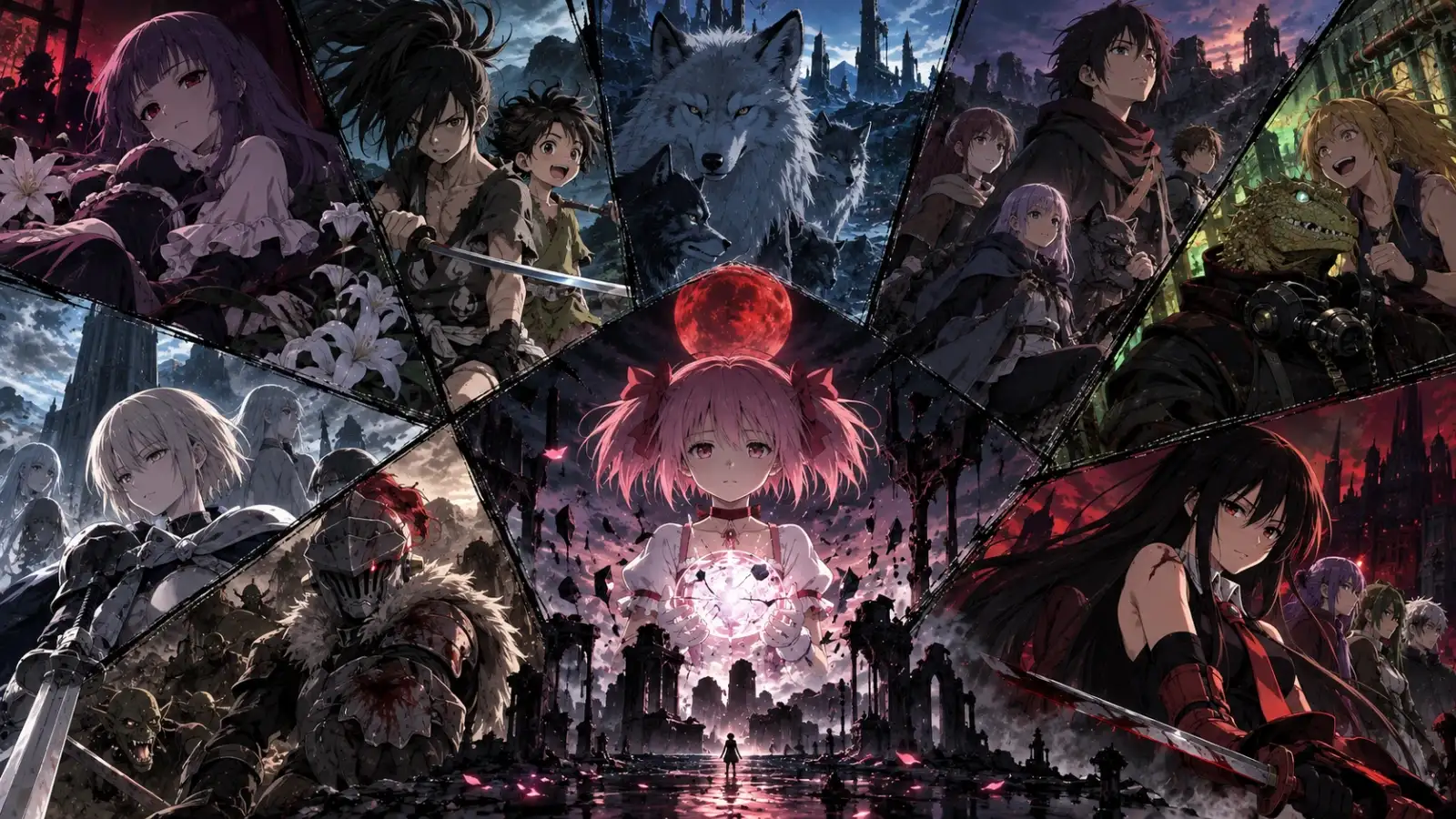
Rather than using darkness purely for shock value, the strongest series make their bleak settings part of the storytelling. Monsters, curses, wars and supernatural forces become ways of exploring grief, morality, sacrifice and survival.
The following anime each approach dark fantasy differently, but they share one important quality: their stories remain committed to the atmosphere and ideas they establish.
The arrival of vampire-like creatures known as Shiki forces the villagers to confront an enemy that is disturbingly similar to themselves. The more the characters learn, the harder it becomes to decide who deserves sympathy.
Toshio Ozaki's response to the crisis becomes increasingly extreme, while Natsuno Yuuki's transformation provides another perspective on the conflict. The villagers themselves eventually demonstrate how quickly fear can turn ordinary people towards horrifying acts.
Rather than restoring everything to normal, Shiki follows the consequences of its characters' choices. Its ending preserves the uncomfortable moral ambiguity that makes the series so effective.
Hyakkimaru is born under a terrible bargain. His father sacrifices parts of his son's body to demons in exchange for prosperity for his war-torn land. Hyakkimaru subsequently sets out to reclaim what was taken from him.
Each confrontation with a demon therefore has a deeper meaning. Regaining his body is not simply about becoming stronger; it forces Hyakkimaru and everyone around him to confront the consequences of his father's decision.
His friendship with Dororo gives the bleak journey an emotional centre. Their relationship provides moments of warmth without undermining the harshness of their world.
The series ultimately asks whether prosperity can ever justify sacrificing an innocent person, and it does not offer an easy answer.
Its world is already deteriorating when the story begins. Cities are crumbling, the environment is hostile and humanity appears to be approaching an uncertain end. Hidden among the population are wolves who can disguise themselves as humans.
Kiba and the other wolves search for Paradise, hoping that it represents a place where their kind can finally escape the dying world.
Yet the journey is never presented as a straightforward adventure. The closer the characters get to their goal, the more complicated their understanding of hope becomes.
The series' beautiful imagery contrasts sharply with its bleak themes, creating an atmosphere where hope and despair constantly exist side by side. Its concluding OVAs continue that approach rather than providing a simplistic happy ending.
The characters arrive in a strange world without exceptional abilities or a clear explanation of how they got there. Becoming an adventurer is not glamorous; it is dangerous work where even relatively weak enemies can be deadly.
Every battle requires cooperation and preparation. A single mistake can have permanent consequences.
Haruhiro is particularly affected by the losses his group experiences. His gradual transition into leadership is shaped by grief rather than sudden confidence, making his development feel grounded.
The series' quieter moments are just as important as its fights because they show how vulnerable people form friendships while living under constant threat.
The series gradually reveals the horrifying reality behind becoming a magical girl. Wishes, sacrifices and battles against supernatural enemies are connected to consequences that the characters never fully understand when they make their choices.
Sayaka Miki's storyline demonstrates how good intentions can lead somewhere devastating, while Homura Akemi's determination gives the story one of its strongest emotional threads.
Kyubey's detached attitude towards the suffering of magical girls makes the universe feel especially cold. Rather than treating heroism as an automatic path to a happy ending, the anime repeatedly questions whether sacrifice has meaning when the system itself is fundamentally unfair.
Madoka's eventual decision changes that system, but the story never pretends that such a transformation comes without a cost.
The series combines body horror, bizarre magic, extreme violence and absurd comedy to create one of anime's strangest worlds. Caiman, a man with a reptile's head and no memory of how he acquired it, searches for the sorcerer responsible.
His investigation quickly becomes much more complicated than expected.
One of the series' greatest strengths is its characterisation. Caiman and Nikaido have a genuine friendship that provides warmth amid all the chaos, while many of the supposed villains receive enough development to make them feel like actual people rather than disposable enemies.
The comedy does not weaken the darkness. Instead, it makes the disturbing moments even more distinctive.
The warriors' supernatural abilities make them formidable, but those powers carry a terrifying risk. Pushing their abilities too far can cause them to awaken and lose their humanity.
This creates genuine tension during battles. Becoming stronger is not automatically a good thing when strength itself could eventually destroy the person using it.
Clare's quest for revenge against the creature responsible for Teresa's death gives the story its emotional foundation. Her relationship with Raki also provides a reminder of the humanity she is fighting to preserve.
Although the anime eventually diverges from the manga, its darker tone remains intact through its conclusion.
Rather than treating adventuring as a glamorous profession, the series emphasises preparation, knowledge and caution. Goblins may be weak individually, but they are dangerous because they use numbers, traps and their surroundings to their advantage.
Goblin Slayer's obsessive focus on eliminating them comes from personal trauma, but the story gradually gives greater attention to the people around him.
Priestess, in particular, develops significantly as she gains experience while retaining her compassion.
The series' emphasis on planning gives its battles a grounded quality. Characters cannot simply rely on an enormous power-up when things go wrong. They need to think, adapt and work together.
The members of Night Raid are skilled assassins, yet their abilities do not make them invincible.
Major characters can die, and those deaths affect the people left behind. This gives battles a sense of genuine danger that would be missing if every character were guaranteed to survive.
The Imperial Arms also create a wide range of abilities and combat styles, allowing confrontations to feel distinct rather than simply becoming contests of increasingly ridiculous strength.
Akame's journey becomes increasingly lonely as the conflict intensifies, while the group's relationships make every loss more painful.
Its willingness to follow the consequences of rebellion all the way to the end ensures that the series remains consistent with its brutal worldview.
Shiki uses horror to explore fear and moral responsibility. Dororo examines the consequences of sacrificing one person for the prosperity of many. Wolf's Rain connects its dying world to ideas of hope and renewal, while Grimgar makes survival feel painfully fragile.
Meanwhile, Madoka Magica questions the very idea of heroic sacrifice, Dorohedoro combines grotesque horror with strange humour, and Claymore makes power itself dangerous.
Goblin Slayer focuses on preparation and survival, while Akame ga Kill! refuses to protect its characters from the consequences of war.
Together, these series demonstrate why dark fantasy can be so effective in anime. They do not simply create frightening worlds. They use those worlds to ask difficult questions about humanity, sacrifice, fear, freedom and survival.
And most importantly, they understand that a dark story does not need to become hopeless to remain powerful.
Rather than using darkness purely for shock value, the strongest series make their bleak settings part of the storytelling. Monsters, curses, wars and supernatural forces become ways of exploring grief, morality, sacrifice and survival.
The following anime each approach dark fantasy differently, but they share one important quality: their stories remain committed to the atmosphere and ideas they establish.
Shiki Turns a Vampire Mystery Into a Morally Bleak Horror Story
At first, Shiki appears to be a mysterious story about a series of unexplained deaths in an isolated Japanese village. As the truth emerges, however, the anime becomes something much more complicated.The arrival of vampire-like creatures known as Shiki forces the villagers to confront an enemy that is disturbingly similar to themselves. The more the characters learn, the harder it becomes to decide who deserves sympathy.
Toshio Ozaki's response to the crisis becomes increasingly extreme, while Natsuno Yuuki's transformation provides another perspective on the conflict. The villagers themselves eventually demonstrate how quickly fear can turn ordinary people towards horrifying acts.
Rather than restoring everything to normal, Shiki follows the consequences of its characters' choices. Its ending preserves the uncomfortable moral ambiguity that makes the series so effective.
Dororo Makes the Price of Power Impossible to Ignore
The 2019 adaptation of Dororo transforms Osamu Tezuka's classic manga into a grim tale about identity, sacrifice and the value of human life.Hyakkimaru is born under a terrible bargain. His father sacrifices parts of his son's body to demons in exchange for prosperity for his war-torn land. Hyakkimaru subsequently sets out to reclaim what was taken from him.
Each confrontation with a demon therefore has a deeper meaning. Regaining his body is not simply about becoming stronger; it forces Hyakkimaru and everyone around him to confront the consequences of his father's decision.
His friendship with Dororo gives the bleak journey an emotional centre. Their relationship provides moments of warmth without undermining the harshness of their world.
The series ultimately asks whether prosperity can ever justify sacrificing an innocent person, and it does not offer an easy answer.
Wolf's Rain Finds Beauty in a World Approaching Its End
Few anime create an atmosphere as melancholy as Wolf's Rain.Its world is already deteriorating when the story begins. Cities are crumbling, the environment is hostile and humanity appears to be approaching an uncertain end. Hidden among the population are wolves who can disguise themselves as humans.
Kiba and the other wolves search for Paradise, hoping that it represents a place where their kind can finally escape the dying world.
Yet the journey is never presented as a straightforward adventure. The closer the characters get to their goal, the more complicated their understanding of hope becomes.
The series' beautiful imagery contrasts sharply with its bleak themes, creating an atmosphere where hope and despair constantly exist side by side. Its concluding OVAs continue that approach rather than providing a simplistic happy ending.
Grimgar of Fantasy and Ash Makes Survival Feel Frighteningly Real
Grimgar of Fantasy and Ash takes a familiar isekai premise and strips away the usual sense of power fantasy.The characters arrive in a strange world without exceptional abilities or a clear explanation of how they got there. Becoming an adventurer is not glamorous; it is dangerous work where even relatively weak enemies can be deadly.
Every battle requires cooperation and preparation. A single mistake can have permanent consequences.
Haruhiro is particularly affected by the losses his group experiences. His gradual transition into leadership is shaped by grief rather than sudden confidence, making his development feel grounded.
The series' quieter moments are just as important as its fights because they show how vulnerable people form friendships while living under constant threat.
Madoka Magica Turns Magical Girl Fantasy Into Existential Horror
Puella Magi Madoka Magica initially resembles a colourful magical-girl series, but that appearance quickly becomes deceptive.The series gradually reveals the horrifying reality behind becoming a magical girl. Wishes, sacrifices and battles against supernatural enemies are connected to consequences that the characters never fully understand when they make their choices.
Sayaka Miki's storyline demonstrates how good intentions can lead somewhere devastating, while Homura Akemi's determination gives the story one of its strongest emotional threads.
Kyubey's detached attitude towards the suffering of magical girls makes the universe feel especially cold. Rather than treating heroism as an automatic path to a happy ending, the anime repeatedly questions whether sacrifice has meaning when the system itself is fundamentally unfair.
Madoka's eventual decision changes that system, but the story never pretends that such a transformation comes without a cost.
Dorohedoro Makes Its Grotesque World Surprisingly Fun
Dorohedoro proves that dark fantasy does not have to take itself completely seriously.The series combines body horror, bizarre magic, extreme violence and absurd comedy to create one of anime's strangest worlds. Caiman, a man with a reptile's head and no memory of how he acquired it, searches for the sorcerer responsible.
His investigation quickly becomes much more complicated than expected.
One of the series' greatest strengths is its characterisation. Caiman and Nikaido have a genuine friendship that provides warmth amid all the chaos, while many of the supposed villains receive enough development to make them feel like actual people rather than disposable enemies.
The comedy does not weaken the darkness. Instead, it makes the disturbing moments even more distinctive.
Claymore Makes Every Fight a Battle for Humanity
Claymore follows Clare, a warrior who is neither fully human nor fully monster. She belongs to an organisation of female fighters who battle Yoma, creatures that prey upon humans.The warriors' supernatural abilities make them formidable, but those powers carry a terrifying risk. Pushing their abilities too far can cause them to awaken and lose their humanity.
This creates genuine tension during battles. Becoming stronger is not automatically a good thing when strength itself could eventually destroy the person using it.
Clare's quest for revenge against the creature responsible for Teresa's death gives the story its emotional foundation. Her relationship with Raki also provides a reminder of the humanity she is fighting to preserve.
Although the anime eventually diverges from the manga, its darker tone remains intact through its conclusion.
Goblin Slayer Turns Fantasy Adventure Into a Survival Exercise
Goblin Slayer takes familiar fantasy elements and approaches them from an unusually practical perspective.Rather than treating adventuring as a glamorous profession, the series emphasises preparation, knowledge and caution. Goblins may be weak individually, but they are dangerous because they use numbers, traps and their surroundings to their advantage.
Goblin Slayer's obsessive focus on eliminating them comes from personal trauma, but the story gradually gives greater attention to the people around him.
Priestess, in particular, develops significantly as she gains experience while retaining her compassion.
The series' emphasis on planning gives its battles a grounded quality. Characters cannot simply rely on an enormous power-up when things go wrong. They need to think, adapt and work together.
Akame ga Kill! Makes No Promises About Who Will Survive
Akame ga Kill! establishes its dangerous atmosphere almost immediately. Tatsumi joins Night Raid after discovering the horrifying corruption at the heart of the Empire, but becoming part of a revolutionary organisation comes with an enormous cost.The members of Night Raid are skilled assassins, yet their abilities do not make them invincible.
You may also like
- Bigg Boss Tamil 10: Vijay Sethupathi's comments spark political debate on social media
- I am letting my first love, poetry, take a new shape: Priya Malik
- Bigg Boss Tamil 10 Preview: Ansar and group target wildcard contestant Aanandhi
- Divya Dutta brings memories & poetry to life at a city session
- 'Irumudi' OTT release: When and where to watch the Ravi Teja starrer emotional father and daughter drama after its theatrical run across different languages?
Major characters can die, and those deaths affect the people left behind. This gives battles a sense of genuine danger that would be missing if every character were guaranteed to survive.
The Imperial Arms also create a wide range of abilities and combat styles, allowing confrontations to feel distinct rather than simply becoming contests of increasingly ridiculous strength.
Akame's journey becomes increasingly lonely as the conflict intensifies, while the group's relationships make every loss more painful.
Its willingness to follow the consequences of rebellion all the way to the end ensures that the series remains consistent with its brutal worldview.
What Makes These Dark Fantasy Anime Stand Out?
Darkness alone does not make a fantasy story memorable. What matters is whether that darkness serves the characters and themes.Shiki uses horror to explore fear and moral responsibility. Dororo examines the consequences of sacrificing one person for the prosperity of many. Wolf's Rain connects its dying world to ideas of hope and renewal, while Grimgar makes survival feel painfully fragile.
Meanwhile, Madoka Magica questions the very idea of heroic sacrifice, Dorohedoro combines grotesque horror with strange humour, and Claymore makes power itself dangerous.
Goblin Slayer focuses on preparation and survival, while Akame ga Kill! refuses to protect its characters from the consequences of war.
Together, these series demonstrate why dark fantasy can be so effective in anime. They do not simply create frightening worlds. They use those worlds to ask difficult questions about humanity, sacrifice, fear, freedom and survival.
And most importantly, they understand that a dark story does not need to become hopeless to remain powerful.






Loving Newspoint? Download the app now
