
10 Anime Movies Everyone Should Watch at Least Once

Anime films have a unique advantage. A feature-length story has only a few hours to introduce its characters, establish its world and leave a lasting impression. The best ones manage to do all three without feeling rushed.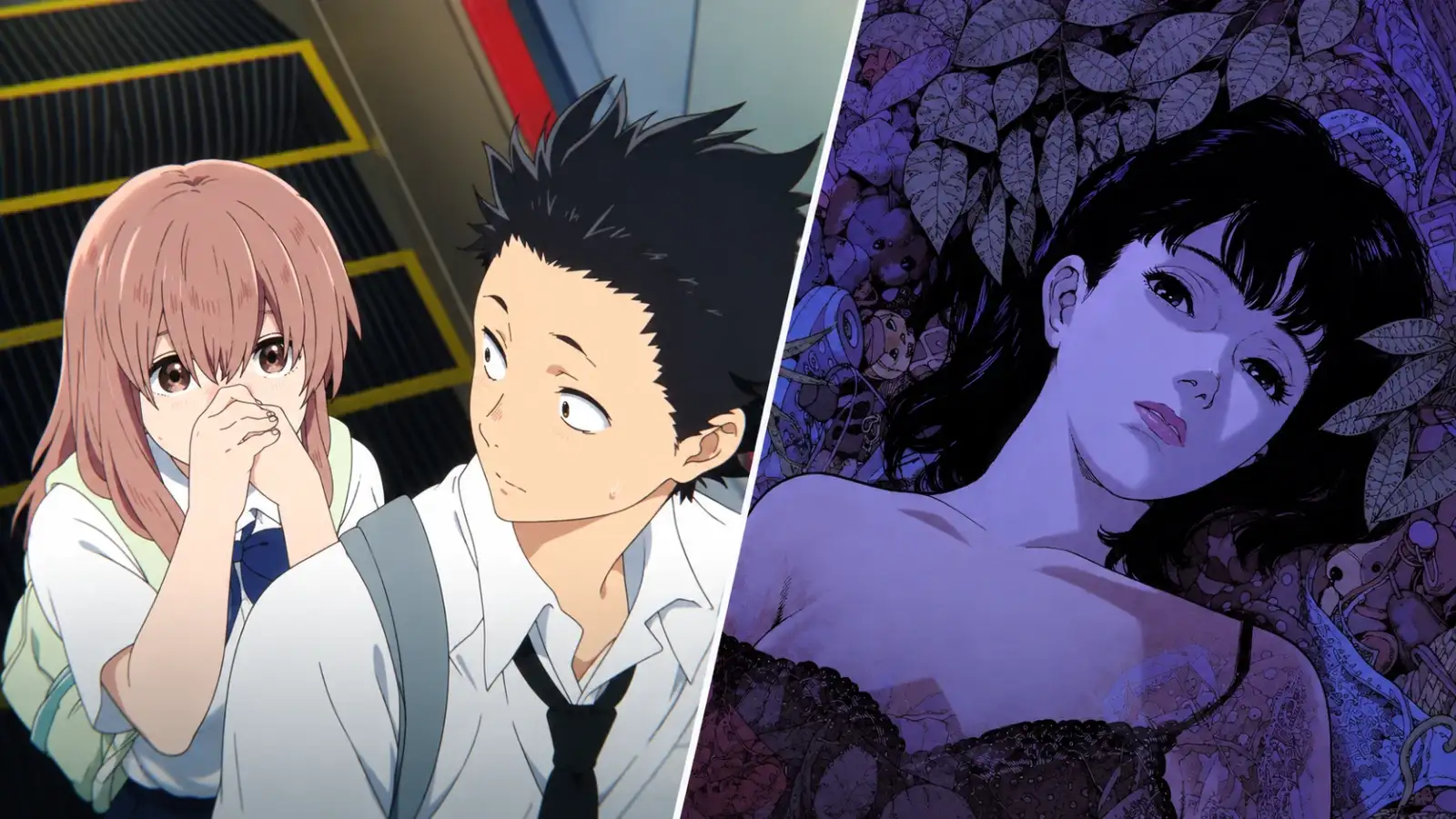
Over the decades, anime cinema has produced psychological thrillers, emotional family dramas, spectacular science fiction and imaginative fantasy adventures. Some films became international landmarks, while others remain essential viewing because of the way they handle storytelling, animation or complex human emotions.
Here are 10 anime movies that showcase just how much the medium can achieve on the big screen.
Chihiro is travelling with her parents when they enter an unfamiliar place filled with spirits and mysterious buildings. After her parents are transformed into pigs, she must find a way to survive in a magical bathhouse controlled by the demanding Yubaba.
The film's world feels enormous without needing lengthy explanations. Every character, creature and location seems to have a history of its own, from No-Face and Haku to the strange workers inside the bathhouse.
At its heart, however, Spirited Away is a coming-of-age story. Chihiro begins as a frightened child and gradually becomes more independent, resourceful and compassionate.
Set in a futuristic Neo-Tokyo, the story follows biker gangs, government experiments and psychic abilities that threaten to unleash destruction on an enormous scale. Tetsuo Shima becomes increasingly powerful after being exposed to a secret government project, while his friend Kaneda attempts to understand what is happening.
The film's animation is a major part of its legacy. Vehicles move with incredible weight, crowded streets feel genuinely alive and destruction is presented with extraordinary detail.
Akira also played a significant role in introducing international audiences to the possibilities of Japanese animation, demonstrating that anime could tackle mature science fiction and complex social themes.
At first, the situation creates plenty of comedy. They leave messages for each other, establish rules and attempt to navigate one another's lives without causing too much trouble.
The story gradually develops into something much larger, blending romance, mystery, time and fate.
Makoto Shinkai's visual style gives the film an additional layer of appeal. Tokyo streets, mountain landscapes and night skies are rendered with remarkable detail, creating a world that feels both familiar and dreamlike.
Its accessible story and emotional core make it one of the easiest anime films to recommend to someone new to the medium.
Mima Kirigoe leaves her successful career as a pop idol in the hope of becoming a serious actress. The transition proves difficult, particularly when fans refuse to accept her new direction and an anonymous website begins documenting intimate details of her life.
As Mima's professional and personal worlds become increasingly difficult to separate, the film deliberately makes the viewer question what is real.
Directed by Satoshi Kon, Perfect Blue explores celebrity culture, identity, obsession and the psychological pressure of being constantly observed.
Its fragmented storytelling can be unsettling, but that uncertainty is precisely what makes the film so effective.
Major Motoko Kusanagi is a highly advanced cyborg working for a government security organisation in a future where cybernetic enhancement is commonplace. Her investigation into a mysterious hacker gradually becomes a much deeper examination of consciousness.
The film's world imagines a society where the boundaries between humans and machines have become increasingly difficult to define.
Its action sequences and cyberpunk cityscapes remain impressive, but the quieter scenes are equally important. The Major's questions about her own existence give the film a philosophical dimension that extends far beyond its central investigation.
Hana falls in love with a man who can transform into a wolf. Their two children, Yuki and Ame, inherit the same ability. After Hana is left to raise them alone, she has to figure out how to give her children a normal childhood while protecting a secret that could make their lives extremely difficult.
As the children grow older, they begin developing very different relationships with their human and wolf identities.
The film's central conflict is not about defeating a villain. Instead, it explores the challenges of raising children and eventually accepting that they must make their own choices.
As a child, Shoya Ishida bullies Shoko Nishimiya, a deaf girl who joins his class. Years later, Shoya is isolated and deeply regrets his behaviour. He eventually attempts to reconnect with Shoko and confront the damage caused by his actions.
The film does not treat an apology as a magical solution. Rebuilding trust takes time, and both characters have to confront painful memories and their own insecurities.
Alongside bullying and disability, A Silent Voice explores loneliness, friendship, guilt and the difficulty of communicating emotions.
Kyoto Animation's sensitive visual direction gives the story additional emotional weight without turning it into simple melodrama.
JP is a reckless racer competing in the Redline, an enormous intergalactic race where safety is clearly not a priority. Competitors use bizarre vehicles and employ increasingly dangerous methods to gain an advantage.
The story is deliberately straightforward because the film's real attraction is its visual energy.
The animation is packed with exaggerated movement, unusual character designs and imaginative vehicles. Every race feels like the screen is struggling to contain the speed and destruction taking place.
Redline proves that an anime film does not always need an elaborate narrative to become memorable. Sometimes sheer visual ambition is enough.
The film revisits the events surrounding the conclusion of the television series and presents the story on an enormous cinematic scale.
Shinji Ikari, NERV and the remaining characters become caught in a conflict involving giant mecha, psychological trauma and an apocalyptic event that threatens the boundaries between individual identity and humanity itself.
The film shifts between intense action and deeply abstract sequences, often refusing to explain everything directly.
It is challenging, disturbing and deliberately unconventional, but it remains an important part of anime film history.
Set during the final months of the Second World War, it follows siblings Seita and Setsuko as they attempt to survive after their home and family life are destroyed.
The film does not present war through generals or battlefields. Instead, it focuses on food, shelter, family and the everyday consequences of conflict.
That perspective makes the story particularly painful. The children are placed in circumstances far beyond their ability to control, and the film refuses to offer easy solutions.
Isao Takahata's direction demonstrates that animation can address historical tragedy with the same seriousness as live-action cinema.
Spirited Away builds an extraordinary fantasy world around a young girl's growth, while Akira uses futuristic science fiction to explore power and social instability. Perfect Blue examines identity and celebrity culture, Ghost in the Shell questions what it means to be human, and Your Name turns a supernatural premise into an emotional story about connection and fate.
Other films take a more intimate approach. Wolf Children explores parenthood, A Silent Voice examines guilt and reconciliation, while Grave of the Fireflies portrays the devastating consequences of war through two children's experiences.
Together, these films demonstrate the enormous range of anime cinema. Whether you are interested in fantasy, science fiction, psychological drama, romance, action or emotional storytelling, there is an anime film capable of offering something memorable.
Over the decades, anime cinema has produced psychological thrillers, emotional family dramas, spectacular science fiction and imaginative fantasy adventures. Some films became international landmarks, while others remain essential viewing because of the way they handle storytelling, animation or complex human emotions.
Here are 10 anime movies that showcase just how much the medium can achieve on the big screen.
1. Spirited Away
Hayao Miyazaki's Spirited Away takes a young girl's ordinary life and suddenly places her in a strange supernatural world.Chihiro is travelling with her parents when they enter an unfamiliar place filled with spirits and mysterious buildings. After her parents are transformed into pigs, she must find a way to survive in a magical bathhouse controlled by the demanding Yubaba.
The film's world feels enormous without needing lengthy explanations. Every character, creature and location seems to have a history of its own, from No-Face and Haku to the strange workers inside the bathhouse.
At its heart, however, Spirited Away is a coming-of-age story. Chihiro begins as a frightened child and gradually becomes more independent, resourceful and compassionate.
2. Akira
Akira remains one of the defining landmarks of science-fiction anime.Set in a futuristic Neo-Tokyo, the story follows biker gangs, government experiments and psychic abilities that threaten to unleash destruction on an enormous scale. Tetsuo Shima becomes increasingly powerful after being exposed to a secret government project, while his friend Kaneda attempts to understand what is happening.
The film's animation is a major part of its legacy. Vehicles move with incredible weight, crowded streets feel genuinely alive and destruction is presented with extraordinary detail.
Akira also played a significant role in introducing international audiences to the possibilities of Japanese animation, demonstrating that anime could tackle mature science fiction and complex social themes.
3. Your Name
Your Name begins with a simple supernatural premise. Mitsuha, a teenage girl living in rural Japan, and Taki, a boy living in Tokyo, mysteriously begin switching bodies.At first, the situation creates plenty of comedy. They leave messages for each other, establish rules and attempt to navigate one another's lives without causing too much trouble.
The story gradually develops into something much larger, blending romance, mystery, time and fate.
Makoto Shinkai's visual style gives the film an additional layer of appeal. Tokyo streets, mountain landscapes and night skies are rendered with remarkable detail, creating a world that feels both familiar and dreamlike.
Its accessible story and emotional core make it one of the easiest anime films to recommend to someone new to the medium.
4. Perfect Blue
Perfect Blue takes a very different approach to identity.Mima Kirigoe leaves her successful career as a pop idol in the hope of becoming a serious actress. The transition proves difficult, particularly when fans refuse to accept her new direction and an anonymous website begins documenting intimate details of her life.
As Mima's professional and personal worlds become increasingly difficult to separate, the film deliberately makes the viewer question what is real.
Directed by Satoshi Kon, Perfect Blue explores celebrity culture, identity, obsession and the psychological pressure of being constantly observed.
Its fragmented storytelling can be unsettling, but that uncertainty is precisely what makes the film so effective.
5. Ghost in the Shell
Ghost in the Shell combines cyberpunk action with philosophical questions about technology and identity.Major Motoko Kusanagi is a highly advanced cyborg working for a government security organisation in a future where cybernetic enhancement is commonplace. Her investigation into a mysterious hacker gradually becomes a much deeper examination of consciousness.
The film's world imagines a society where the boundaries between humans and machines have become increasingly difficult to define.
Its action sequences and cyberpunk cityscapes remain impressive, but the quieter scenes are equally important. The Major's questions about her own existence give the film a philosophical dimension that extends far beyond its central investigation.
6. Wolf Children
Wolf Children uses a supernatural premise to tell a deeply human story about parenthood.Hana falls in love with a man who can transform into a wolf. Their two children, Yuki and Ame, inherit the same ability. After Hana is left to raise them alone, she has to figure out how to give her children a normal childhood while protecting a secret that could make their lives extremely difficult.
As the children grow older, they begin developing very different relationships with their human and wolf identities.
The film's central conflict is not about defeating a villain. Instead, it explores the challenges of raising children and eventually accepting that they must make their own choices.
7. A Silent Voice
A Silent Voice begins with an uncomfortable history between its two central characters.As a child, Shoya Ishida bullies Shoko Nishimiya, a deaf girl who joins his class. Years later, Shoya is isolated and deeply regrets his behaviour. He eventually attempts to reconnect with Shoko and confront the damage caused by his actions.
The film does not treat an apology as a magical solution. Rebuilding trust takes time, and both characters have to confront painful memories and their own insecurities.
Alongside bullying and disability, A Silent Voice explores loneliness, friendship, guilt and the difficulty of communicating emotions.
Kyoto Animation's sensitive visual direction gives the story additional emotional weight without turning it into simple melodrama.
8. Redline
Redline is the film to choose when the main requirement is spectacular animation.JP is a reckless racer competing in the Redline, an enormous intergalactic race where safety is clearly not a priority. Competitors use bizarre vehicles and employ increasingly dangerous methods to gain an advantage.
The story is deliberately straightforward because the film's real attraction is its visual energy.
The animation is packed with exaggerated movement, unusual character designs and imaginative vehicles. Every race feels like the screen is struggling to contain the speed and destruction taking place.
Redline proves that an anime film does not always need an elaborate narrative to become memorable. Sometimes sheer visual ambition is enough.
9. The End of Evangelion
The End of Evangelion is best experienced after watching Neon Genesis Evangelion rather than as a standalone introduction.The film revisits the events surrounding the conclusion of the television series and presents the story on an enormous cinematic scale.
Shinji Ikari, NERV and the remaining characters become caught in a conflict involving giant mecha, psychological trauma and an apocalyptic event that threatens the boundaries between individual identity and humanity itself.
The film shifts between intense action and deeply abstract sequences, often refusing to explain everything directly.
It is challenging, disturbing and deliberately unconventional, but it remains an important part of anime film history.
You may also like
- Experts Explore Buddhist Heritage, Ancient Inscriptions and Archaeology at Bhopal's Birla Museum
- Bombay HC Discharges Rahul Raj Singh In Pratyusha Banerjee Suicide Abetment Case
- Fatima Sana Shaikh calls Vijay Varma 'emotionally intelligent'; says, 'He is an incredible person'
- Yami Gautam's 'Nayyi Navelli' trailer out: Mohini's arrival as new bahu turns the Awasthi family's world upside down
10. Grave of the Fireflies
Grave of the Fireflies is one of the most emotionally difficult films on this list.Set during the final months of the Second World War, it follows siblings Seita and Setsuko as they attempt to survive after their home and family life are destroyed.
The film does not present war through generals or battlefields. Instead, it focuses on food, shelter, family and the everyday consequences of conflict.
That perspective makes the story particularly painful. The children are placed in circumstances far beyond their ability to control, and the film refuses to offer easy solutions.
Isao Takahata's direction demonstrates that animation can address historical tragedy with the same seriousness as live-action cinema.
Why These Anime Films Still Matter
The best anime movies do more than compress a television-length story into two hours. They use the format to create experiences that would be difficult to reproduce in another medium.Spirited Away builds an extraordinary fantasy world around a young girl's growth, while Akira uses futuristic science fiction to explore power and social instability. Perfect Blue examines identity and celebrity culture, Ghost in the Shell questions what it means to be human, and Your Name turns a supernatural premise into an emotional story about connection and fate.
Other films take a more intimate approach. Wolf Children explores parenthood, A Silent Voice examines guilt and reconciliation, while Grave of the Fireflies portrays the devastating consequences of war through two children's experiences.
Together, these films demonstrate the enormous range of anime cinema. Whether you are interested in fantasy, science fiction, psychological drama, romance, action or emotional storytelling, there is an anime film capable of offering something memorable.






Loving Newspoint? Download the app now
