
10 Fantasy Anime to Watch If You Loved Attack on Titan

Attack on Titan became famous for combining fantasy, political conflict, survival horror and large-scale warfare into one increasingly complex story. Its world is built around secrets, shifting alliances and characters forced to make difficult choices as the stakes continue to rise.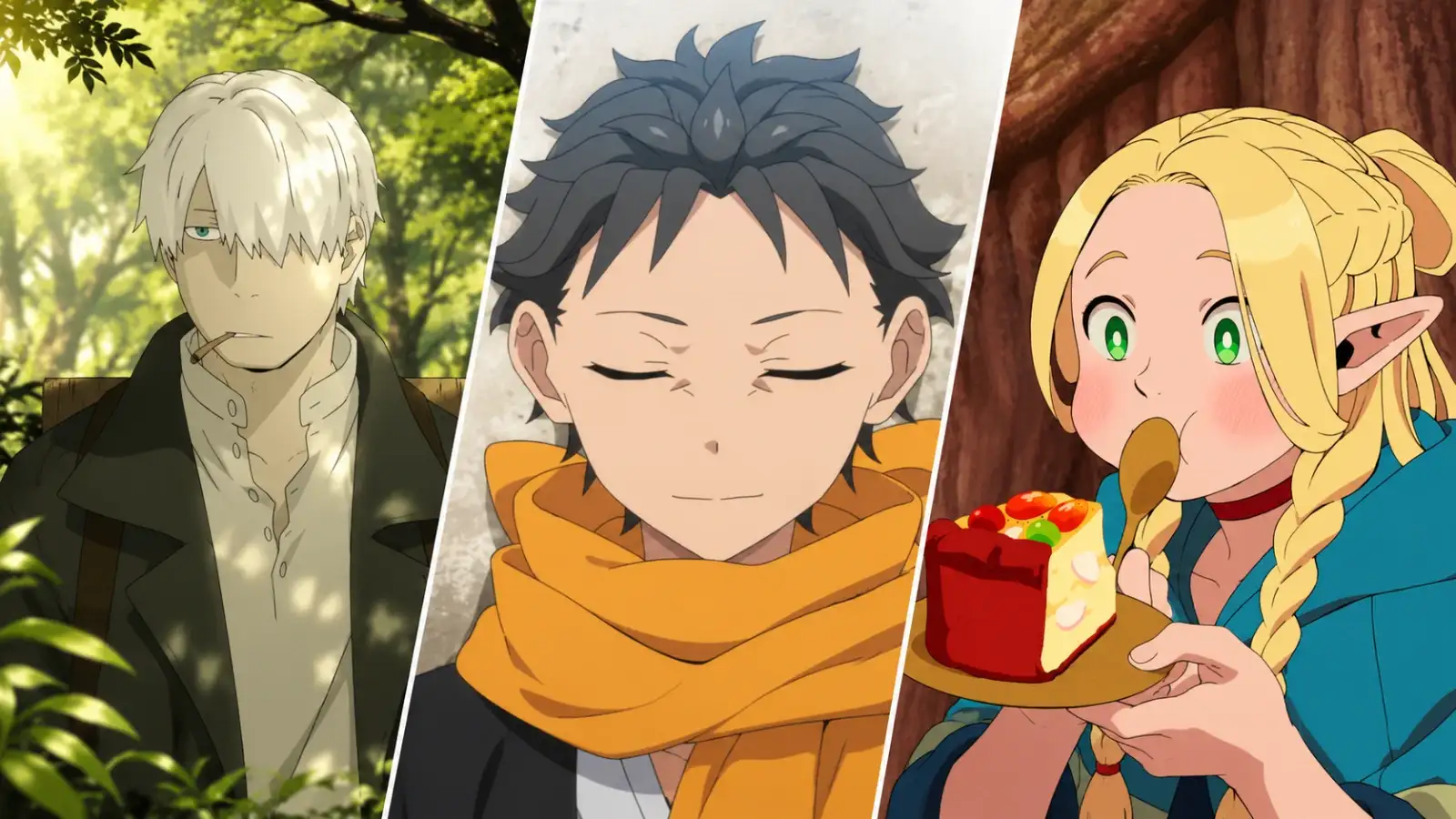
But fantasy anime can take viewers in very different directions. Some focus on personal growth rather than war, while others build their stories around exploration, folklore, intricate power systems or imaginative worlds.
If Attack on Titan's blend of fantasy and serious storytelling appealed to you, these 10 anime offer different ways to experience the genre.
The demon king has already been defeated, the heroes have returned home and the great adventure is over. The story instead follows Frieren, an elf whose extremely long lifespan gives her a very different understanding of time.
Years after the original quest, Frieren begins travelling again and gradually realises how little she understood about her former companions while they were still alive.
The series uses small encounters, forgotten memories and ordinary moments to explore friendship, loss and the passage of time. Its fantasy setting is detailed, but its strongest moments often come from quiet character interactions rather than enormous battles.
The Abyss is an enormous unexplored chasm filled with strange creatures, ancient relics and environmental dangers. Riko, a young aspiring Cave Raider, dreams of reaching its deepest levels and eventually sets out on the journey with the mysterious robot-like Reg.
Every new layer introduces unfamiliar rules and raises further questions about the Abyss.
Unlike Attack on Titan, where discovering the truth behind the world is closely tied to political conflict, Made in Abyss creates mystery through exploration. The deeper the characters travel, the less predictable their surroundings become.
Its beautiful setting also contrasts sharply with the dangers hidden within it.
The story follows Edward and Alphonse Elric, two brothers who suffer devastating consequences after attempting forbidden human transmutation. Their search for the Philosopher's Stone eventually uncovers a conspiracy involving the military and the country's history.
The series is particularly effective at connecting its fantasy rules to its characters. Alchemy is not simply a way to create spectacular fights; the principle of equivalent exchange becomes central to the show's ideas about sacrifice and ambition.
Viewers who enjoyed Attack on Titan's political storytelling and morally complicated conflicts may find plenty to explore here, while the series maintains a stronger focus on family, redemption and human relationships.
There is no enormous war dominating the story and no single villain responsible for every problem. Instead, the series follows Ginko, a travelling specialist who studies mysterious lifeforms known as mushi.
These creatures exist alongside humans and can sometimes influence people's health, memories, dreams and surroundings.
Ginko's role is rarely about defeating something. He usually tries to understand what is happening and determine whether intervention will actually help.
The result is a quiet, atmospheric series inspired by folklore and nature. Each episode tells a largely self-contained story, making Mushishi particularly appealing to viewers who want fantasy without constant escalation.
Gon Freecss sets out to become a Hunter and eventually encounters Killua, Kurapika and Leorio. Their adventures take them through exams, criminal underworlds, dangerous games and increasingly complex conflicts.
The Nen system is one of the show's biggest strengths. Characters cannot simply rely on having more power than their opponent. Preparation, restrictions, deception and clever use of abilities can completely change the outcome of a fight.
Attack on Titan often uses strategy on a large military scale, whereas Hunter x Hunter can make even a single confrontation feel like a battle of psychology and planning.
Bojji is a young prince who is deaf, struggles to communicate and is physically smaller and weaker than the people around him. Because of these differences, many characters underestimate his potential.
His journey challenges the traditional idea that a powerful fantasy hero needs overwhelming physical strength.
The series combines political intrigue, betrayal and family drama with a distinctive storybook visual style. Bojji's friendship with Kage also becomes an important part of the story, showing how trust and kindness can matter as much as combat ability.
It offers a more intimate approach to fantasy than Attack on Titan while still exploring power, leadership and the consequences of political decisions.
A group of adventurers travels through a dangerous dungeon while attempting to rescue a missing companion. With their food supplies running low, they begin preparing meals using the monsters and plants they encounter along the way.
The concept sounds comedic, but the series uses food to explain its world in surprisingly detailed ways.
Different creatures have distinct biological characteristics, while the dungeon's environments create their own survival challenges. As the story progresses, the seemingly simple adventure develops into a much larger fantasy narrative.
It is a good option for viewers who enjoy detailed worldbuilding but want something considerably lighter in tone.
Yona begins the story as a sheltered princess living a comfortable life inside the royal palace. A sudden political upheaval destroys that security and forces her to flee with her childhood companion Hak.
Her journey gradually changes her understanding of leadership, responsibility and the people living beyond the palace.
Rather than immediately turning Yona into an unstoppable fighter, the series allows her development to happen gradually. She learns from the people she meets and begins to understand the consequences of the decisions made by those in power.
Its combination of political fantasy, adventure and character development makes it a compelling choice for viewers interested in the human side of large-scale conflicts.
The characters are humanoid gemstones who live under the threat of mysterious beings known as Lunarians. The protagonist, Phosphophyllite, begins as one of the less capable members of the group but gradually changes through a series of increasingly traumatic experiences.
Physical transformation is closely connected to identity throughout the story. Injuries and the loss of gemstone fragments can literally alter a character, making questions about memory and selfhood part of the wider fantasy mystery.
Its distinctive worldbuilding and visual style make Land of the Lustrous very different from Attack on Titan, but both series understand how mystery can gradually reshape the viewer's understanding of their world.
Subaru Natsuki discovers that he can return to an earlier point in time after dying. At first, this appears to give him an enormous advantage.
The reality is much harsher.
Subaru retains memories of events that everyone else has forgotten, meaning each failed attempt leaves him carrying emotional experiences that nobody around him can understand. Repeated deaths also force him to confront his own weaknesses rather than simply becoming stronger.
The series combines fantasy, mystery and psychological drama while constantly challenging its protagonist's assumptions.
Frieren explores time and grief, Mushishi examines humanity's relationship with nature, Made in Abyss turns exploration into its central mystery, while Hunter x Hunter makes strategy and psychology essential to combat.
Meanwhile, series such as Yona of the Dawn and Ranking of Kings place character growth at the centre, while Delicious in Dungeon proves that even something as ordinary as food can become an effective worldbuilding tool.
If what you enjoyed about Attack on Titan was its layered world, complex characters and willingness to take fantasy seriously, these series provide very different experiences while offering their own reasons to keep watching.
But fantasy anime can take viewers in very different directions. Some focus on personal growth rather than war, while others build their stories around exploration, folklore, intricate power systems or imaginative worlds.
If Attack on Titan's blend of fantasy and serious storytelling appealed to you, these 10 anime offer different ways to experience the genre.
1. Frieren: Beyond Journey's End
Frieren: Beyond Journey's End starts where many traditional fantasy stories would normally finish.The demon king has already been defeated, the heroes have returned home and the great adventure is over. The story instead follows Frieren, an elf whose extremely long lifespan gives her a very different understanding of time.
Years after the original quest, Frieren begins travelling again and gradually realises how little she understood about her former companions while they were still alive.
The series uses small encounters, forgotten memories and ordinary moments to explore friendship, loss and the passage of time. Its fantasy setting is detailed, but its strongest moments often come from quiet character interactions rather than enormous battles.
2. Made in Abyss
Made in Abyss turns exploration itself into the central source of excitement.The Abyss is an enormous unexplored chasm filled with strange creatures, ancient relics and environmental dangers. Riko, a young aspiring Cave Raider, dreams of reaching its deepest levels and eventually sets out on the journey with the mysterious robot-like Reg.
Every new layer introduces unfamiliar rules and raises further questions about the Abyss.
Unlike Attack on Titan, where discovering the truth behind the world is closely tied to political conflict, Made in Abyss creates mystery through exploration. The deeper the characters travel, the less predictable their surroundings become.
Its beautiful setting also contrasts sharply with the dangers hidden within it.
3. Fullmetal Alchemist: Brotherhood
Fullmetal Alchemist: Brotherhood combines fantasy adventure with political intrigue, military conflict and questions about morality.The story follows Edward and Alphonse Elric, two brothers who suffer devastating consequences after attempting forbidden human transmutation. Their search for the Philosopher's Stone eventually uncovers a conspiracy involving the military and the country's history.
The series is particularly effective at connecting its fantasy rules to its characters. Alchemy is not simply a way to create spectacular fights; the principle of equivalent exchange becomes central to the show's ideas about sacrifice and ambition.
Viewers who enjoyed Attack on Titan's political storytelling and morally complicated conflicts may find plenty to explore here, while the series maintains a stronger focus on family, redemption and human relationships.
4. Mushishi
Mushishi offers almost the complete opposite of Attack on Titan's approach to fantasy.There is no enormous war dominating the story and no single villain responsible for every problem. Instead, the series follows Ginko, a travelling specialist who studies mysterious lifeforms known as mushi.
These creatures exist alongside humans and can sometimes influence people's health, memories, dreams and surroundings.
Ginko's role is rarely about defeating something. He usually tries to understand what is happening and determine whether intervention will actually help.
The result is a quiet, atmospheric series inspired by folklore and nature. Each episode tells a largely self-contained story, making Mushishi particularly appealing to viewers who want fantasy without constant escalation.
5. Hunter x Hunter
Hunter x Hunter is particularly strong when it comes to building a fantasy world around an intelligent and flexible power system.Gon Freecss sets out to become a Hunter and eventually encounters Killua, Kurapika and Leorio. Their adventures take them through exams, criminal underworlds, dangerous games and increasingly complex conflicts.
The Nen system is one of the show's biggest strengths. Characters cannot simply rely on having more power than their opponent. Preparation, restrictions, deception and clever use of abilities can completely change the outcome of a fight.
Attack on Titan often uses strategy on a large military scale, whereas Hunter x Hunter can make even a single confrontation feel like a battle of psychology and planning.
6. Ranking of Kings
Ranking of Kings looks like a simple fairy tale at first, but its story becomes considerably more complicated.Bojji is a young prince who is deaf, struggles to communicate and is physically smaller and weaker than the people around him. Because of these differences, many characters underestimate his potential.
His journey challenges the traditional idea that a powerful fantasy hero needs overwhelming physical strength.
The series combines political intrigue, betrayal and family drama with a distinctive storybook visual style. Bojji's friendship with Kage also becomes an important part of the story, showing how trust and kindness can matter as much as combat ability.
It offers a more intimate approach to fantasy than Attack on Titan while still exploring power, leadership and the consequences of political decisions.
7. Delicious in Dungeon
Delicious in Dungeon takes fantasy adventure and adds an unusual ingredient: cooking.A group of adventurers travels through a dangerous dungeon while attempting to rescue a missing companion. With their food supplies running low, they begin preparing meals using the monsters and plants they encounter along the way.
The concept sounds comedic, but the series uses food to explain its world in surprisingly detailed ways.
Different creatures have distinct biological characteristics, while the dungeon's environments create their own survival challenges. As the story progresses, the seemingly simple adventure develops into a much larger fantasy narrative.
It is a good option for viewers who enjoy detailed worldbuilding but want something considerably lighter in tone.
8. Yona of the Dawn
Yona of the Dawn focuses heavily on personal transformation.Yona begins the story as a sheltered princess living a comfortable life inside the royal palace. A sudden political upheaval destroys that security and forces her to flee with her childhood companion Hak.
Her journey gradually changes her understanding of leadership, responsibility and the people living beyond the palace.
Rather than immediately turning Yona into an unstoppable fighter, the series allows her development to happen gradually. She learns from the people she meets and begins to understand the consequences of the decisions made by those in power.
Its combination of political fantasy, adventure and character development makes it a compelling choice for viewers interested in the human side of large-scale conflicts.
9. Land of the Lustrous
Land of the Lustrous creates one of anime's most unusual fantasy worlds.The characters are humanoid gemstones who live under the threat of mysterious beings known as Lunarians. The protagonist, Phosphophyllite, begins as one of the less capable members of the group but gradually changes through a series of increasingly traumatic experiences.
Physical transformation is closely connected to identity throughout the story. Injuries and the loss of gemstone fragments can literally alter a character, making questions about memory and selfhood part of the wider fantasy mystery.
Its distinctive worldbuilding and visual style make Land of the Lustrous very different from Attack on Titan, but both series understand how mystery can gradually reshape the viewer's understanding of their world.
10. Re − Starting Life in Another World
Re takes the familiar idea of a character receiving multiple chances and turns it into something psychologically demanding.Subaru Natsuki discovers that he can return to an earlier point in time after dying. At first, this appears to give him an enormous advantage.
The reality is much harsher.
Subaru retains memories of events that everyone else has forgotten, meaning each failed attempt leaves him carrying emotional experiences that nobody around him can understand. Repeated deaths also force him to confront his own weaknesses rather than simply becoming stronger.
The series combines fantasy, mystery and psychological drama while constantly challenging its protagonist's assumptions.
Why These Anime Are Worth Exploring
Attack on Titan demonstrates how fantasy can be used to tell stories about war, political power, survival and the consequences of violence. But those ideas are only one part of what the genre can offer.Frieren explores time and grief, Mushishi examines humanity's relationship with nature, Made in Abyss turns exploration into its central mystery, while Hunter x Hunter makes strategy and psychology essential to combat.
Meanwhile, series such as Yona of the Dawn and Ranking of Kings place character growth at the centre, while Delicious in Dungeon proves that even something as ordinary as food can become an effective worldbuilding tool.
If what you enjoyed about Attack on Titan was its layered world, complex characters and willingness to take fantasy seriously, these series provide very different experiences while offering their own reasons to keep watching.
Next Story