
From Flops to Favorites: How Streaming Platforms Save Cinema's Theatrical Outcasts

Nukkad Naatak is arguably one of the most unusual Hindi films you will encounter this year. It is important to note that this is not a traditional Bollywood film, as it breaks away from the industry’s conventional mould. Created by two newcomers who are true outsiders with no major studio backing, this indie project was produced on a budget of under ₹1 crore. Despite its modest beginnings, it not only secured a theatrical run but also debuted on Netflix last week, where it has since trended in the top 10 and reached audiences who previously had no idea the film existed.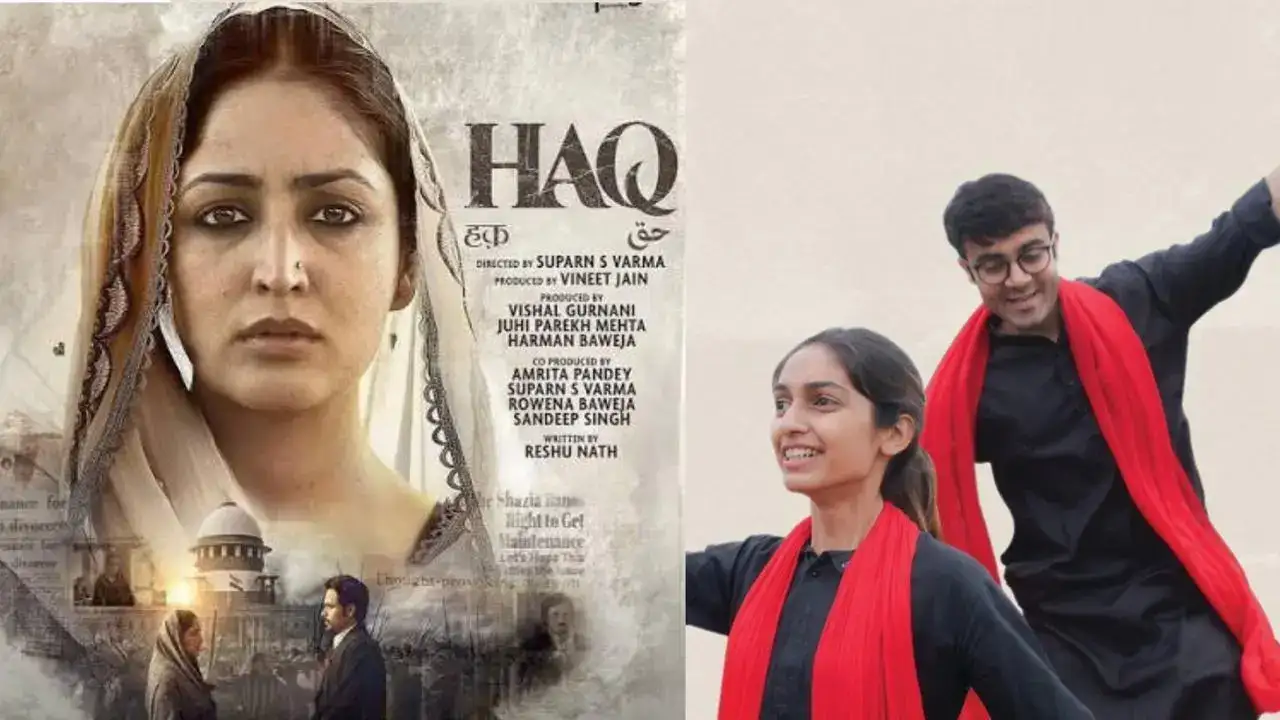
Nukkad Naatak represents an extreme example of a growing trend: streaming platforms turning films that did not receive their due in theatres into major successes. Whether it is titles like Haq or Dhadak 2, which failed to find their footing at the box office and were labelled “flops”, or projects like Kennedy, which never saw their intended theatrical release, OTT platforms have become a vital lifeline. These films are now evolving into “cult hits” within weeks of their digital debut.
OTT as a Second Innings for Cinema
Until very recently, box-office numbers were the only benchmark for how an audience received a film. It was rare for a project to shed the "flop" label, and when it did happen, it took a long time. For example, it took years of television reruns for Andaz Apna Apna to become a cult classic. Similarly, Black Friday only found its status a decade later through home media. Today, OTT platforms have accelerated this transformation, ensuring it happens in weeks rather than decades.
Shazia Iqbal’s Dhadak 2, starring Siddhant Chaturvedi and Triptii Dimri, was praised by critics but struggled to earn significant revenue at the box office. However, just six weeks later on Netflix, it became one of the most-watched films on the platform. Shazia noted the shift in engagement, saying, “I don't have a lot of followers (on Instagram); still, I have about 20 DMs per hour. And Siddhant called me, and he said that this feels bigger than the theatrical release. And yes, it does feel like the reach is wider.” In its first two weeks alone, the film secured 3.3 million views.
How Success Online Changes a Film's Legacy
Independent films often find it difficult to capture public attention in crowded theaters. Vadh 2, featuring Sanjay Mishra and Neena Gupta, had a brief and unmemorable two-week run in cinemas. It likely would have been forgotten if not for its release on Netflix, where it reached 1.5 million views and trended at number one in India. Even more impressive was the performance of Haq, starring Yami Gautam and Emraan Hashmi. Despite earning only ₹30 crore at the box office, it registered a staggering 11 million views on Netflix and trended in the top 10 across 14 different countries.
Reflecting on this journey, Yami Gautam shares, “As an actor, it's truly special to see a story continue to find love over time. Haq has been that journey for me—one rooted in resilience, identity, and quiet courage. Seeing it now reach new audiences on Netflix makes it even more meaningful. What touches me most is how differently it connects with each person.”
When OTT Platforms Provide a Refuge
In recent years, streaming services have emerged as a sanctuary for award-winning indie films that cannot find space in traditional exhibitions. Payal Kapadia’s All We Imagine As Light topped charts on JioHotstar after its success at Cannes, while Anurag Kashyap’s Kennedy waited two years for a release before finding a home on an OTT Platform. Kashyap expressed his gratitude, saying, “All I can say is that I am grateful for having been able to make this film, for my team, my producers, my studio, and at the end of the day—jab jab jo jo hona hai, tab tab so so hota hai (everything happens in its own time).”
Industry leaders like Monika Shergill, Vice President of Content at Netflix India, explain that supporting independent films is often more than just a business calculation. She notes, “These are films that celebrate storytelling and may not find that large audience in theatres that certain commercial blockbusters do. The diversity of the slate is important because it mirrors the society and the audiences who actually come to watch. Yes, it is important for us to have the big stuff sorted... But the entire spectrum is important because it represents the country's cinema.”
The True Democratisation of Exhibition
The most significant achievement of this trend is how it levels the playing field. An independent film like Nukkad Naatak now sits on the same digital shelf as a massive blockbuster like Dhurandhar. There is no longer a massive disparity between a film having 10 screens versus 10,000. Molshri, the producer and actor of Nukkad Naatak, summarized the feeling of victory after facing industry rejections: “After the film was released on OTT, Karan Johar shared about it on Instagram Stories, saying he wanted to watch it. That was a big win for us.”
Nukkad Naatak represents an extreme example of a growing trend: streaming platforms turning films that did not receive their due in theatres into major successes. Whether it is titles like Haq or Dhadak 2, which failed to find their footing at the box office and were labelled “flops”, or projects like Kennedy, which never saw their intended theatrical release, OTT platforms have become a vital lifeline. These films are now evolving into “cult hits” within weeks of their digital debut.
OTT as a Second Innings for Cinema
Until very recently, box-office numbers were the only benchmark for how an audience received a film. It was rare for a project to shed the "flop" label, and when it did happen, it took a long time. For example, it took years of television reruns for Andaz Apna Apna to become a cult classic. Similarly, Black Friday only found its status a decade later through home media. Today, OTT platforms have accelerated this transformation, ensuring it happens in weeks rather than decades.
Shazia Iqbal’s Dhadak 2, starring Siddhant Chaturvedi and Triptii Dimri, was praised by critics but struggled to earn significant revenue at the box office. However, just six weeks later on Netflix, it became one of the most-watched films on the platform. Shazia noted the shift in engagement, saying, “I don't have a lot of followers (on Instagram); still, I have about 20 DMs per hour. And Siddhant called me, and he said that this feels bigger than the theatrical release. And yes, it does feel like the reach is wider.” In its first two weeks alone, the film secured 3.3 million views.
You may also like
- Vicky Kaushal to join Aamir Khan in this iconic sequel?
- When Thalapathy Vijay hailed Trisha Krishnan as 'our princess Kundavai', she revealed the one thing she 'hates' about him
- A. R. Rahman on Vijay's assembly elections win: May your endeavor to transform Chennai shine brightly
- Amal Sehrawat: Once I'm on the set, my preparation takes a backseat, and I surrender to the director's vision
- Princess Eugenie expecting her 3rd child, announces Buckingham Palace
How Success Online Changes a Film's Legacy
Independent films often find it difficult to capture public attention in crowded theaters. Vadh 2, featuring Sanjay Mishra and Neena Gupta, had a brief and unmemorable two-week run in cinemas. It likely would have been forgotten if not for its release on Netflix, where it reached 1.5 million views and trended at number one in India. Even more impressive was the performance of Haq, starring Yami Gautam and Emraan Hashmi. Despite earning only ₹30 crore at the box office, it registered a staggering 11 million views on Netflix and trended in the top 10 across 14 different countries.
Reflecting on this journey, Yami Gautam shares, “As an actor, it's truly special to see a story continue to find love over time. Haq has been that journey for me—one rooted in resilience, identity, and quiet courage. Seeing it now reach new audiences on Netflix makes it even more meaningful. What touches me most is how differently it connects with each person.”
When OTT Platforms Provide a Refuge
In recent years, streaming services have emerged as a sanctuary for award-winning indie films that cannot find space in traditional exhibitions. Payal Kapadia’s All We Imagine As Light topped charts on JioHotstar after its success at Cannes, while Anurag Kashyap’s Kennedy waited two years for a release before finding a home on an OTT Platform. Kashyap expressed his gratitude, saying, “All I can say is that I am grateful for having been able to make this film, for my team, my producers, my studio, and at the end of the day—jab jab jo jo hona hai, tab tab so so hota hai (everything happens in its own time).”
Industry leaders like Monika Shergill, Vice President of Content at Netflix India, explain that supporting independent films is often more than just a business calculation. She notes, “These are films that celebrate storytelling and may not find that large audience in theatres that certain commercial blockbusters do. The diversity of the slate is important because it mirrors the society and the audiences who actually come to watch. Yes, it is important for us to have the big stuff sorted... But the entire spectrum is important because it represents the country's cinema.”
The True Democratisation of Exhibition
The most significant achievement of this trend is how it levels the playing field. An independent film like Nukkad Naatak now sits on the same digital shelf as a massive blockbuster like Dhurandhar. There is no longer a massive disparity between a film having 10 screens versus 10,000. Molshri, the producer and actor of Nukkad Naatak, summarized the feeling of victory after facing industry rejections: “After the film was released on OTT, Karan Johar shared about it on Instagram Stories, saying he wanted to watch it. That was a big win for us.”






More from our partners


Loving Newspoint? Download the app now
