
Water Stunt or Lip-Sync? Jasmine Sandlas Faces Backlash

Punjabi singer Jasmine Sandlas has landed in the middle of an online controversy after a video from her recent Ahmedabad concert went viral. The clip shows the singer pouring water over herself mid-performance, a dramatic on-stage moment that quickly grabbed attention. However, what followed was a much larger debate around whether the performance was truly live.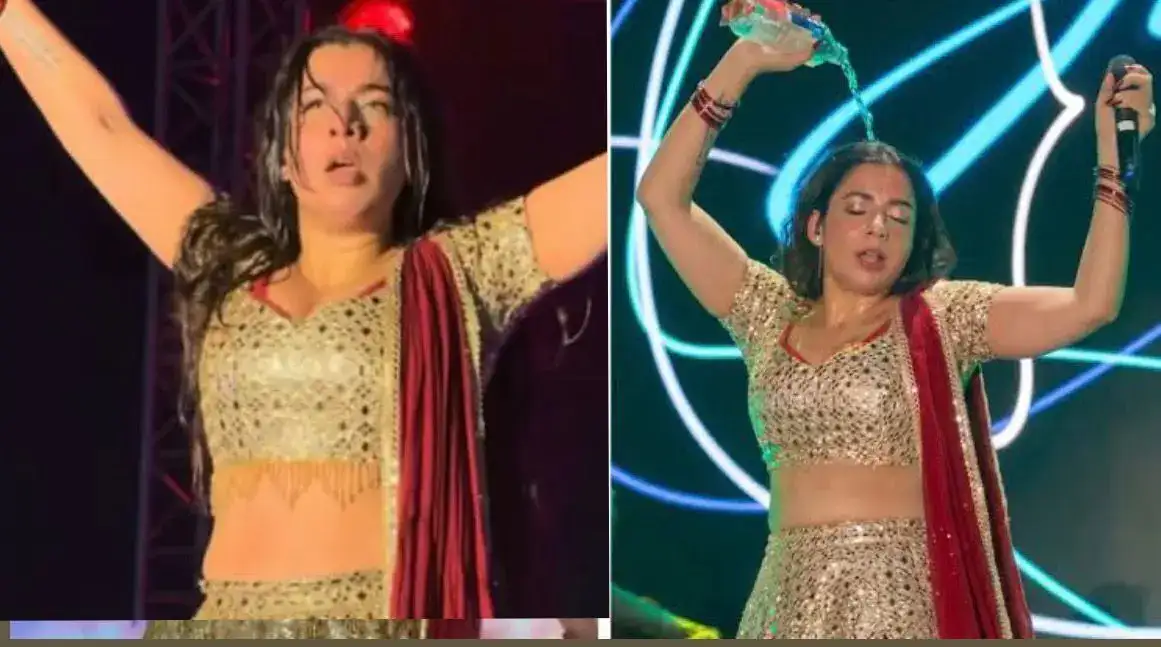
The concert, held on April 19, featured Sandlas performing her popular track “Shararat” while engaging energetically with the audience. But as the video spread across social media platforms, viewers began questioning her vocals. Many claimed that she appeared to be lip-syncing, pointing out moments where the audio continued seamlessly even when the microphone was lowered.
The reaction online was swift and divided. Several users expressed disappointment, especially those who had attended the concert expecting a fully live performance. Some even questioned the value of live shows if pre-recorded tracks dominate the experience. Comments ranged from frustration to sarcasm, with one user remarking that if the audience sang half the song, ticket prices should reflect that.
At the same time, not all reactions were negative. A section of fans defended Sandlas, arguing that modern concerts often blend live vocals with backing tracks to maintain energy and production quality. For many attendees, the overall experience, crowd engagement, stage presence, and atmosphere mattered more than whether every note was sung live.
The water-pouring act itself also became a talking point. Such high-energy theatrics are common in global pop and hip-hop performances, often used to create viral moments and enhance audience engagement. However, in this case, the visual spectacle may have inadvertently drawn more scrutiny to the performance, shifting focus from entertainment to authenticity.
This incident highlights a broader shift in audience expectations. Today’s concert-goers are more vocal and discerning, especially in the age of social media where clips can be replayed, analysed, and critiqued instantly. The line between performance and playback is under greater scrutiny than ever before.
It also raises a key question for the music industry: what defines a “live” concert today? With advanced sound engineering, backing tracks, and choreography becoming standard, many performances blur the boundary between live singing and staged production.
For artists like Sandlas, who are known for high-energy performances, balancing spectacle with vocal authenticity is becoming increasingly important. While theatrics can enhance a show, they also come with the risk of overshadowing the core expectation of live music.
In simple terms, the controversy is not just about one performance. It reflects a larger debate about authenticity in live entertainment where audiences are no longer passive viewers but active critics.
Whether the backlash fades or continues, one thing is clear: in today’s digital-first world, every performance is not just live on stage but also permanently under the lens online.
The concert, held on April 19, featured Sandlas performing her popular track “Shararat” while engaging energetically with the audience. But as the video spread across social media platforms, viewers began questioning her vocals. Many claimed that she appeared to be lip-syncing, pointing out moments where the audio continued seamlessly even when the microphone was lowered.
The reaction online was swift and divided. Several users expressed disappointment, especially those who had attended the concert expecting a fully live performance. Some even questioned the value of live shows if pre-recorded tracks dominate the experience. Comments ranged from frustration to sarcasm, with one user remarking that if the audience sang half the song, ticket prices should reflect that.
At the same time, not all reactions were negative. A section of fans defended Sandlas, arguing that modern concerts often blend live vocals with backing tracks to maintain energy and production quality. For many attendees, the overall experience, crowd engagement, stage presence, and atmosphere mattered more than whether every note was sung live.
The water-pouring act itself also became a talking point. Such high-energy theatrics are common in global pop and hip-hop performances, often used to create viral moments and enhance audience engagement. However, in this case, the visual spectacle may have inadvertently drawn more scrutiny to the performance, shifting focus from entertainment to authenticity.
This incident highlights a broader shift in audience expectations. Today’s concert-goers are more vocal and discerning, especially in the age of social media where clips can be replayed, analysed, and critiqued instantly. The line between performance and playback is under greater scrutiny than ever before.
It also raises a key question for the music industry: what defines a “live” concert today? With advanced sound engineering, backing tracks, and choreography becoming standard, many performances blur the boundary between live singing and staged production.
For artists like Sandlas, who are known for high-energy performances, balancing spectacle with vocal authenticity is becoming increasingly important. While theatrics can enhance a show, they also come with the risk of overshadowing the core expectation of live music.
In simple terms, the controversy is not just about one performance. It reflects a larger debate about authenticity in live entertainment where audiences are no longer passive viewers but active critics.
Whether the backlash fades or continues, one thing is clear: in today’s digital-first world, every performance is not just live on stage but also permanently under the lens online.
Next Story