
5 Naruto Characters Who Would Struggle Against Peak Boruto

Boruto Uzumaki 's growth has taken him far beyond the mischievous Academy student introduced at the beginning of Boruto: Naruto Next Generations. What started as a talented young shinobi gradually became something much more complicated after Boruto became connected to the Otsutsuki and gained access to powers that completely changed the scale of his battles.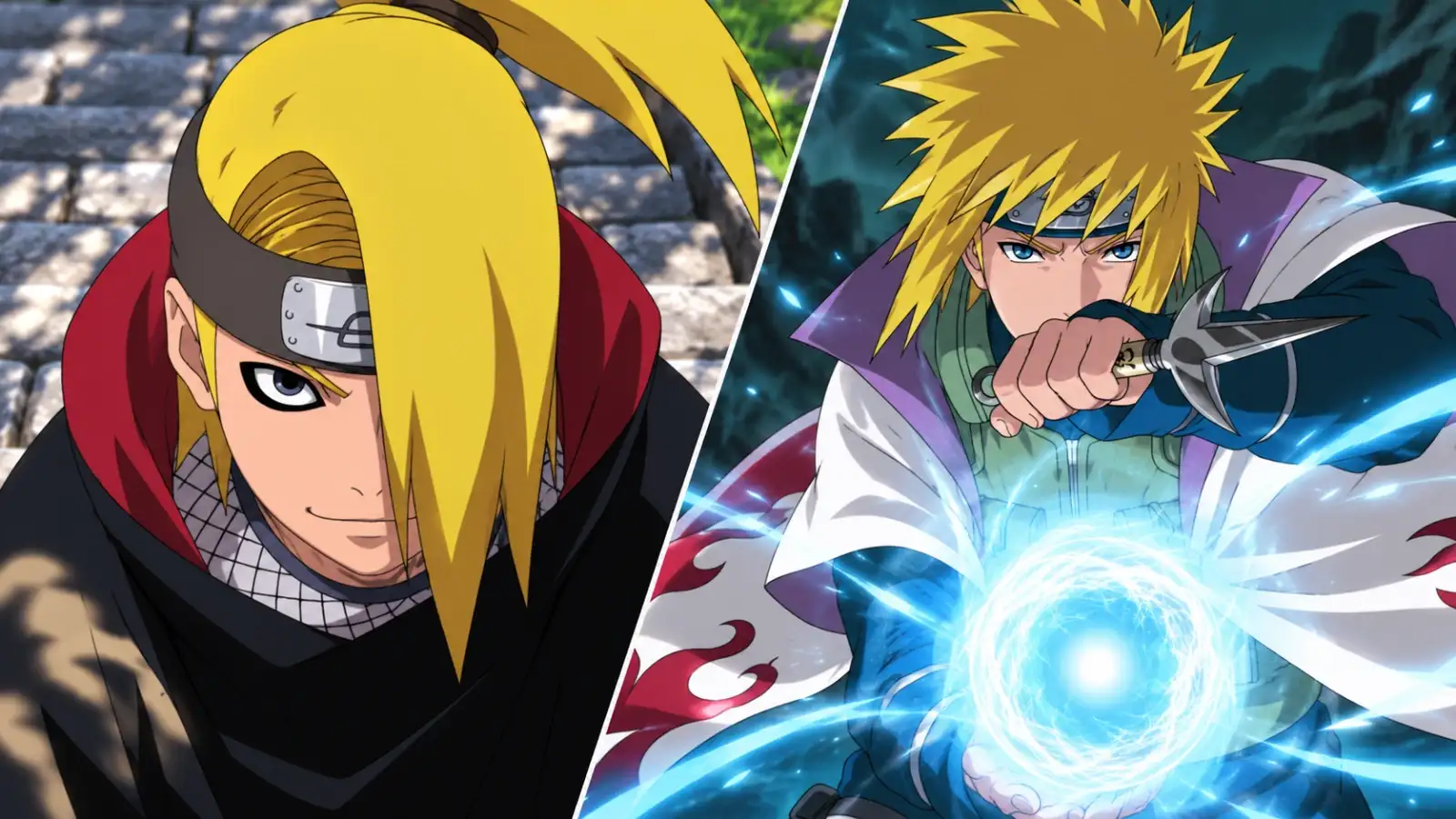
His development is particularly noticeable when he is placed alongside characters from Naruto and Naruto: Shippuden. Many of those older-generation shinobi were considered extraordinary during their respective eras, but Boruto is now fighting in a world where battles involving the Otsutsuki have pushed the limits of speed, power and ninjutsu much further.
His arsenal is also unusually difficult to prepare for. Alongside conventional ninjutsu, Boruto has access to Karma-related abilities and increasingly advanced Rasengan techniques. In the later manga, he also develops Rasengan Uzuhiko, a technique that incorporates the planet's rotation and orbit and can disrupt an opponent's balance. The official Naruto site describes its effects as continuing because they are tied to the planet's movement.
That does not mean every older-generation legend would simply lose to Boruto. Several of them possess abilities that could still create extremely difficult battles. However, these five characters would face particularly complicated matchups against Boruto at his strongest.
A battle between Minato and Boruto would therefore revolve around movement rather than raw destructive power. Minato would have the advantage of decades of battle-tested experience and an ability that can make conventional speed almost irrelevant. Boruto could not simply chase him around the battlefield and expect to land a decisive hit.
The problem is that Boruto has also grown accustomed to fighting opponents whose physical abilities operate on an extraordinary scale. Karma has been associated with major boosts to Boruto's combat capabilities, while his encounters with Otsutsuki-level threats have forced him to react much faster than the young shinobi seen at the beginning of the series. Official material also depicts Karma progression as greatly enhancing physical abilities.
Minato's greatest weapon would probably be his ability to analyse Boruto's techniques and establish a teleportation network around the battlefield. But Boruto has enough offensive variety to make that process dangerous. A Vanishing Rasengan can disappear from an opponent's immediate awareness, while Boruto's newer techniques give him additional ways to control an encounter.
Minato would remain one of the most technically difficult opponents Boruto could face. His speed would not suddenly become irrelevant. The difference is that against peak Boruto, speed is no longer enough on its own to guarantee control of the fight.
That system created an enormous tactical advantage. The shared vision of the Paths made surprise attacks difficult, while abilities such as Shinra Tensei and Chibaku Tensei could reshape the battlefield. Pain could also use the Preta Path to absorb chakra-based attacks, meaning opponents could not simply rely on ninjutsu to overwhelm him.
Boruto would have several tools that make this matchup particularly interesting. His Karma is capable of absorbing chakra-based techniques, which could interfere with some of Pain's most useful attacks. Official Naruto material has also described Boruto's Karma progression as enhancing his physical capabilities and offensive potential.
However, Pain would still be extremely dangerous. Shinra Tensei can control space around the battlefield, while Chibaku Tensei presents a much larger threat that Boruto could not afford to underestimate. The Six Paths would also force him to divide his attention between several bodies with different abilities.
Boruto's advantage would come from his speed and adaptability. Once he understands how the Paths operate and identifies the central weaknesses of their formation, he can begin dismantling the system rather than treating all six bodies as equal opponents.
Pain could make the battle complicated from the opening moment, but Boruto's later abilities give him more tools for dealing with that complexity than the Naruto who originally fought Nagato.
Unlike Pain or Deidara , the Third Raikage does not depend on complicated battlefield tricks. He can simply close the distance and force his opponent into a brutal physical exchange.
That creates an interesting challenge for Boruto. If he attempted to match the Raikage purely through hand-to-hand combat, he would be taking an unnecessary risk. The Third Raikage's durability was so remarkable that even large-scale military forces struggled to bring him down during the Fourth Great Ninja War.
Boruto's advantage is versatility. He can combine Shadow Clones, taijutsu and different forms of ninjutsu rather than remaining locked into one method of attack. Karma also changes the physical side of the matchup by improving his overall combat capabilities.
More importantly, Boruto does not have to defeat the Third Raikage by overpowering him. He can use speed, misdirection and ranged techniques to create openings. The official Naruto material describes Boruto's later development as involving increasingly powerful techniques, including Rasengan Uzuhiko, which operates through a completely different mechanism from a conventional Rasengan.
The Third Raikage would therefore force Boruto to fight intelligently. His durability could prevent an easy victory, but Boruto's broader arsenal gives him more ways to avoid being trapped in a direct contest of strength.
This allowed him to dictate the pace of many battles. An enemy on the ground had to worry about explosives coming from multiple directions while Deidara remained mobile in the sky.
Boruto would be a particularly awkward opponent for this strategy because he is not dependent on a single range of attack. His mobility, Shadow Clones and Rasengan variants give him several ways to pressure an enemy without simply standing beneath Deidara's clay creations.
The Vanishing Rasengan is especially useful in a matchup built around prediction. Deidara's combat style relies heavily on understanding where an attack is coming from and creating enough distance to respond. An attack that becomes difficult to track can interfere with that rhythm.
Karma creates another complication because it can absorb chakra-based techniques. That does not automatically mean every one of Deidara's explosives becomes useless, particularly because his clay techniques have specific properties and Deidara is an intelligent fighter. However, losing access to reliable ninjutsu-based pressure would dramatically change the battle.
Deidara would need to keep Boruto at a distance and constantly alter his positioning. The moment Boruto successfully closes the gap, the Akatsuki member's greatest advantage begins to disappear.
Earth Grudge Fear allowed Kakuzu to maintain multiple hearts, giving him several lives and access to different elemental attacks. His masked creatures could also operate independently, turning a fight into something closer to a battle against several opponents at once.
For most Naruto characters , this made Kakuzu incredibly difficult to eliminate. Even if one part of his body was destroyed, the fight could continue because his other hearts remained.
Boruto has the sort of versatility that could gradually dismantle this defensive advantage. His ability to combine Shadow Clones with different forms of ninjutsu would allow him to attack Kakuzu's various bodies without committing himself to one predictable strategy.
Kakuzu's elemental attacks would also give Boruto more opportunities to use his abilities defensively. Karma's chakra absorption creates an obvious complication for an opponent whose fighting style relies heavily on ninjutsu. Official material has repeatedly associated Karma progression with enhanced physical capabilities and powerful ninjutsu, reinforcing how dramatically different Boruto's combat profile becomes after his transformation.
Kakuzu could still make the fight lengthy. His multiple hearts, elemental masks and battle experience would prevent Boruto from simply landing one attack and ending everything.
But the longer the battle continues, the more valuable Boruto's adaptability becomes. He can change techniques, create openings with clones and exploit the weaknesses of individual opponents rather than repeatedly attacking Kakuzu's strongest defence.
The Naruto era contained extraordinarily powerful characters, but the arrival of the Otsutsuki introduced an entirely different level of combat. Boruto has subsequently had to develop techniques and reactions suited to opponents operating far beyond the ordinary shinobi scale.
That progression continues in Boruto: Two Blue Vortex. The official material describes Boruto as returning after three years of training with Sasuke, with his abilities having developed significantly during that period. His Rasengan Uzuhiko is another example of how far his technique development has moved beyond the conventional Rasengan.
None of this makes Minato, Pain, the Third Raikage, Deidara or Kakuzu weak characters. Each dominated battles in an earlier era because of abilities that were exceptionally difficult to counter.
The difference is that Boruto now operates with a combination of speed, versatility, unusual chakra abilities and increasingly sophisticated Rasengan techniques that can create entirely different kinds of battles.
That is what makes comparing the two generations so interesting. The older shinobi established the standards of their era, while Boruto has inherited those techniques and entered a world where the limits of shinobi combat have been pushed considerably further.
His development is particularly noticeable when he is placed alongside characters from Naruto and Naruto: Shippuden. Many of those older-generation shinobi were considered extraordinary during their respective eras, but Boruto is now fighting in a world where battles involving the Otsutsuki have pushed the limits of speed, power and ninjutsu much further.
His arsenal is also unusually difficult to prepare for. Alongside conventional ninjutsu, Boruto has access to Karma-related abilities and increasingly advanced Rasengan techniques. In the later manga, he also develops Rasengan Uzuhiko, a technique that incorporates the planet's rotation and orbit and can disrupt an opponent's balance. The official Naruto site describes its effects as continuing because they are tied to the planet's movement.
That does not mean every older-generation legend would simply lose to Boruto. Several of them possess abilities that could still create extremely difficult battles. However, these five characters would face particularly complicated matchups against Boruto at his strongest.
Minato Namikaze Would Have to Solve a Completely Different Kind of Speed
Minato Namikaze's reputation was built on speed, precision and tactical intelligence. The Flying Thunder God allowed him to teleport between marked locations almost instantaneously, making it extremely difficult for opponents to predict where he would strike next.A battle between Minato and Boruto would therefore revolve around movement rather than raw destructive power. Minato would have the advantage of decades of battle-tested experience and an ability that can make conventional speed almost irrelevant. Boruto could not simply chase him around the battlefield and expect to land a decisive hit.
The problem is that Boruto has also grown accustomed to fighting opponents whose physical abilities operate on an extraordinary scale. Karma has been associated with major boosts to Boruto's combat capabilities, while his encounters with Otsutsuki-level threats have forced him to react much faster than the young shinobi seen at the beginning of the series. Official material also depicts Karma progression as greatly enhancing physical abilities.
Minato's greatest weapon would probably be his ability to analyse Boruto's techniques and establish a teleportation network around the battlefield. But Boruto has enough offensive variety to make that process dangerous. A Vanishing Rasengan can disappear from an opponent's immediate awareness, while Boruto's newer techniques give him additional ways to control an encounter.
Minato would remain one of the most technically difficult opponents Boruto could face. His speed would not suddenly become irrelevant. The difference is that against peak Boruto, speed is no longer enough on its own to guarantee control of the fight.
Pain 's Six Bodies Would Create a Huge Tactical Problem
Pain was one of Naruto: Shippuden's most difficult opponents because fighting him was never as simple as defeating one powerful shinobi. The Six Paths of Pain divided Nagato's abilities across multiple bodies, giving him different offensive, defensive and support options at the same time.That system created an enormous tactical advantage. The shared vision of the Paths made surprise attacks difficult, while abilities such as Shinra Tensei and Chibaku Tensei could reshape the battlefield. Pain could also use the Preta Path to absorb chakra-based attacks, meaning opponents could not simply rely on ninjutsu to overwhelm him.
Boruto would have several tools that make this matchup particularly interesting. His Karma is capable of absorbing chakra-based techniques, which could interfere with some of Pain's most useful attacks. Official Naruto material has also described Boruto's Karma progression as enhancing his physical capabilities and offensive potential.
However, Pain would still be extremely dangerous. Shinra Tensei can control space around the battlefield, while Chibaku Tensei presents a much larger threat that Boruto could not afford to underestimate. The Six Paths would also force him to divide his attention between several bodies with different abilities.
Boruto's advantage would come from his speed and adaptability. Once he understands how the Paths operate and identifies the central weaknesses of their formation, he can begin dismantling the system rather than treating all six bodies as equal opponents.
Pain could make the battle complicated from the opening moment, but Boruto's later abilities give him more tools for dealing with that complexity than the Naruto who originally fought Nagato.
The Third Raikage Would Test Boruto's Ability to Fight a Physical Monster
The Third Raikage is one of the most intimidating physical fighters from Naruto's era. His Lightning Release Chakra Mode gave him exceptional durability and speed, while his signature Hell Stab transformed that physical power into an extremely dangerous piercing attack.Unlike Pain or Deidara , the Third Raikage does not depend on complicated battlefield tricks. He can simply close the distance and force his opponent into a brutal physical exchange.
That creates an interesting challenge for Boruto. If he attempted to match the Raikage purely through hand-to-hand combat, he would be taking an unnecessary risk. The Third Raikage's durability was so remarkable that even large-scale military forces struggled to bring him down during the Fourth Great Ninja War.
Boruto's advantage is versatility. He can combine Shadow Clones, taijutsu and different forms of ninjutsu rather than remaining locked into one method of attack. Karma also changes the physical side of the matchup by improving his overall combat capabilities.
More importantly, Boruto does not have to defeat the Third Raikage by overpowering him. He can use speed, misdirection and ranged techniques to create openings. The official Naruto material describes Boruto's later development as involving increasingly powerful techniques, including Rasengan Uzuhiko, which operates through a completely different mechanism from a conventional Rasengan.
The Third Raikage would therefore force Boruto to fight intelligently. His durability could prevent an easy victory, but Boruto's broader arsenal gives him more ways to avoid being trapped in a direct contest of strength.
Deidara's Long-Range Bombardment Would Become Risky Against Boruto
Deidara's greatest advantage was his ability to control the battlefield from the air. By using Explosive Clay, he could create birds, insects and other constructs capable of attacking opponents from considerable distances.This allowed him to dictate the pace of many battles. An enemy on the ground had to worry about explosives coming from multiple directions while Deidara remained mobile in the sky.
Boruto would be a particularly awkward opponent for this strategy because he is not dependent on a single range of attack. His mobility, Shadow Clones and Rasengan variants give him several ways to pressure an enemy without simply standing beneath Deidara's clay creations.
The Vanishing Rasengan is especially useful in a matchup built around prediction. Deidara's combat style relies heavily on understanding where an attack is coming from and creating enough distance to respond. An attack that becomes difficult to track can interfere with that rhythm.
Karma creates another complication because it can absorb chakra-based techniques. That does not automatically mean every one of Deidara's explosives becomes useless, particularly because his clay techniques have specific properties and Deidara is an intelligent fighter. However, losing access to reliable ninjutsu-based pressure would dramatically change the battle.
Deidara would need to keep Boruto at a distance and constantly alter his positioning. The moment Boruto successfully closes the gap, the Akatsuki member's greatest advantage begins to disappear.
Kakuzu 's Multiple Hearts Would Make Him Difficult to Finish
Kakuzu's biggest strength was not necessarily overwhelming speed. It was his extraordinary ability to keep fighting after sustaining damage that would end an ordinary shinobi's battle.Earth Grudge Fear allowed Kakuzu to maintain multiple hearts, giving him several lives and access to different elemental attacks. His masked creatures could also operate independently, turning a fight into something closer to a battle against several opponents at once.
For most Naruto characters , this made Kakuzu incredibly difficult to eliminate. Even if one part of his body was destroyed, the fight could continue because his other hearts remained.
Boruto has the sort of versatility that could gradually dismantle this defensive advantage. His ability to combine Shadow Clones with different forms of ninjutsu would allow him to attack Kakuzu's various bodies without committing himself to one predictable strategy.
Kakuzu's elemental attacks would also give Boruto more opportunities to use his abilities defensively. Karma's chakra absorption creates an obvious complication for an opponent whose fighting style relies heavily on ninjutsu. Official material has repeatedly associated Karma progression with enhanced physical capabilities and powerful ninjutsu, reinforcing how dramatically different Boruto's combat profile becomes after his transformation.
Kakuzu could still make the fight lengthy. His multiple hearts, elemental masks and battle experience would prevent Boruto from simply landing one attack and ending everything.
But the longer the battle continues, the more valuable Boruto's adaptability becomes. He can change techniques, create openings with clones and exploit the weaknesses of individual opponents rather than repeatedly attacking Kakuzu's strongest defence.
Boruto's New Era Has Changed the Scale of Shinobi Battles
The biggest difference between Boruto and many older-generation shinobi is not simply that he possesses stronger attacks. It is the environment in which he has been forced to develop.The Naruto era contained extraordinarily powerful characters, but the arrival of the Otsutsuki introduced an entirely different level of combat. Boruto has subsequently had to develop techniques and reactions suited to opponents operating far beyond the ordinary shinobi scale.
That progression continues in Boruto: Two Blue Vortex. The official material describes Boruto as returning after three years of training with Sasuke, with his abilities having developed significantly during that period. His Rasengan Uzuhiko is another example of how far his technique development has moved beyond the conventional Rasengan.
None of this makes Minato, Pain, the Third Raikage, Deidara or Kakuzu weak characters. Each dominated battles in an earlier era because of abilities that were exceptionally difficult to counter.
The difference is that Boruto now operates with a combination of speed, versatility, unusual chakra abilities and increasingly sophisticated Rasengan techniques that can create entirely different kinds of battles.
That is what makes comparing the two generations so interesting. The older shinobi established the standards of their era, while Boruto has inherited those techniques and entered a world where the limits of shinobi combat have been pushed considerably further.
Next Story