
Salman Khan’s Raja Shivaji Cameo Goes Viral: Why Fans Can’t Stop Talking

Salman Khan has once again proved that screen time is not always about duration. Sometimes, impact is enough.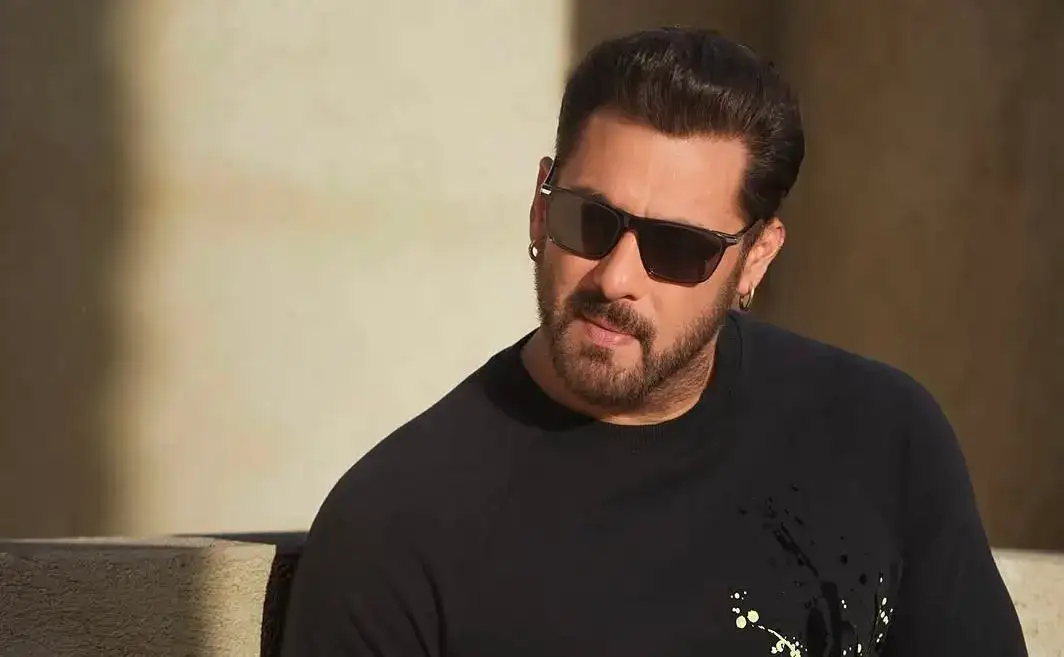
His cameo in Raja Shivaji has quickly gone viral, becoming one of the most talked-about moments since the film’s release.
In the film, Salman appears as Jiva Mahala, a loyal warrior associated with the legacy of Chhatrapati Shivaji Maharaj. His role is brief, but the execution is designed for maximum impact. From his entry to his dialogue delivery, the scene is crafted to trigger a strong audience response.
And that is exactly what has happened.
Clips from theatres and social media show viewers cheering, clapping, and reacting loudly the moment he appears on screen.
The cameo features Salman in a traditional look, complete with a turban, tilak, and a sword, reinforcing the historical setting of the film. His character is shown in an intense sequence, including a moment where he delivers a powerful line that has already become widely shared online.
What makes this moment stand out is not just the performance, but the way it has been positioned.
Cameos in Indian cinema often function as crowd-pullers, but they only work when they feel purposeful. In this case, the role connects directly to the narrative, adding weight rather than appearing as a distraction.
The film itself, directed by Riteish Deshmukh, is a historical drama based on the life of Shivaji Maharaj. It brings together a large ensemble cast and aims to balance storytelling with scale.
Within that structure, Salman’s cameo acts as a high-energy moment designed to elevate the theatrical experience.
There is also a broader trend at play. In recent years, star cameos have become a strategic tool in Indian cinema. They generate pre-release buzz, amplify opening-day reactions, and extend the film’s reach through viral clips. Social media ensures that even a short appearance can dominate conversations if it resonates with audiences.
Salman Khan, in particular, has built a reputation for such appearances. His screen presence, even in limited roles, often translates into strong audience engagement. This cameo follows that pattern.
Early reactions suggest that for many viewers, this moment is one of the highlights of the film. It reinforces the idea that theatrical experiences in India are not just about watching a story. They are about participating in it.
Cheering, whistling, and reacting collectively are part of that culture. In simple terms, this is not just about a cameo. It is about how a single scene can shape audience memory.
And in this case, Salman Khan’s brief appearance has managed to do exactly that, turning a moment into a talking point far beyond the film itself.
His cameo in Raja Shivaji has quickly gone viral, becoming one of the most talked-about moments since the film’s release.
In the film, Salman appears as Jiva Mahala, a loyal warrior associated with the legacy of Chhatrapati Shivaji Maharaj. His role is brief, but the execution is designed for maximum impact. From his entry to his dialogue delivery, the scene is crafted to trigger a strong audience response.
And that is exactly what has happened.
Clips from theatres and social media show viewers cheering, clapping, and reacting loudly the moment he appears on screen.
The cameo features Salman in a traditional look, complete with a turban, tilak, and a sword, reinforcing the historical setting of the film. His character is shown in an intense sequence, including a moment where he delivers a powerful line that has already become widely shared online.
What makes this moment stand out is not just the performance, but the way it has been positioned.
Cameos in Indian cinema often function as crowd-pullers, but they only work when they feel purposeful. In this case, the role connects directly to the narrative, adding weight rather than appearing as a distraction.
The film itself, directed by Riteish Deshmukh, is a historical drama based on the life of Shivaji Maharaj. It brings together a large ensemble cast and aims to balance storytelling with scale.
Within that structure, Salman’s cameo acts as a high-energy moment designed to elevate the theatrical experience.
There is also a broader trend at play. In recent years, star cameos have become a strategic tool in Indian cinema. They generate pre-release buzz, amplify opening-day reactions, and extend the film’s reach through viral clips. Social media ensures that even a short appearance can dominate conversations if it resonates with audiences.
Salman Khan, in particular, has built a reputation for such appearances. His screen presence, even in limited roles, often translates into strong audience engagement. This cameo follows that pattern.
Early reactions suggest that for many viewers, this moment is one of the highlights of the film. It reinforces the idea that theatrical experiences in India are not just about watching a story. They are about participating in it.
Cheering, whistling, and reacting collectively are part of that culture. In simple terms, this is not just about a cameo. It is about how a single scene can shape audience memory.
And in this case, Salman Khan’s brief appearance has managed to do exactly that, turning a moment into a talking point far beyond the film itself.
Next Story