
6 Hidden Anime Gems Worth Watching From the 2020s

The 2020s have already produced several anime that have become household names. Series such as Jujutsu Kaisen, Frieren: Beyond Journey’s End and Dandadan have attracted enormous audiences, but popularity does not always determine quality.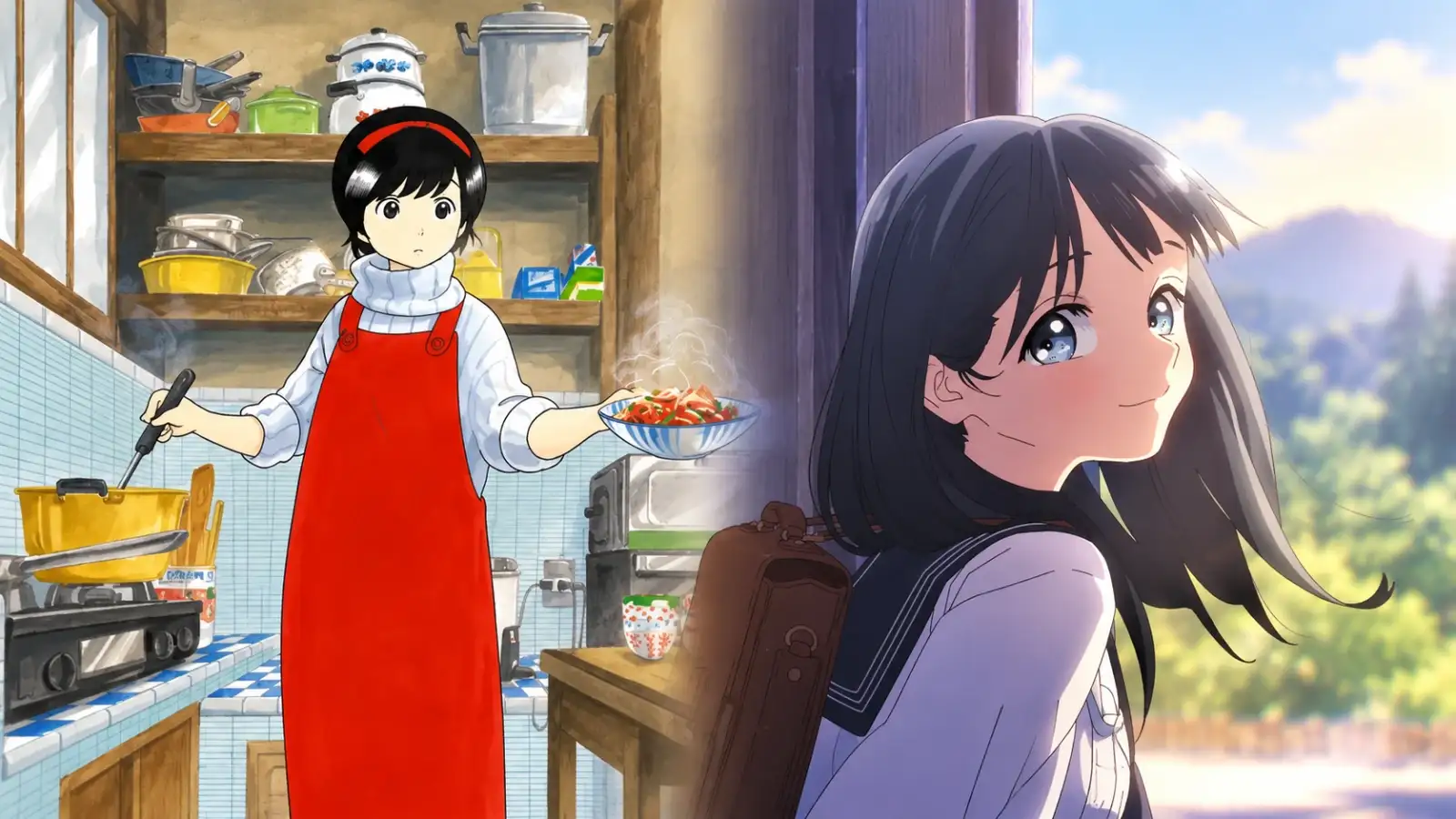
Several quieter releases have delivered memorable characters, distinctive premises and beautifully crafted worlds without receiving anything close to the same attention. Some are relaxing slice-of-life stories, while others experiment with comedy, workplace drama or unconventional fantasy.
For viewers looking beyond the biggest titles of the decade, these six anime are excellent places to start.
Instead of becoming a temporary embarrassment, the incident becomes the beginning of Minare's broadcasting career.
Wave, Listen to Me! follows her attempts to understand an industry she knows almost nothing about while continuing to deal with the messy reality of everyday life. Minare's mistakes are an important part of the appeal because she never feels like a perfectly written professional who has everything figured out.
The series also provides an unusual look at radio production, showing the preparation, pressure and unpredictability involved in keeping a live programme entertaining. Its energetic comedy is balanced by moments that give Minare genuine emotional depth.
The story follows Serufu, a cheerful but accident-prone student who joins her school's DIY club. The club is struggling to survive, but its members gradually find new motivation as they learn different crafts and work on projects together.
The series' futuristic setting makes its central idea even more interesting. Technology has made everyday life easier, yet Serufu discovers satisfaction in doing difficult things manually.
Its relaxed pacing and charming visual style make Do It Yourself!! an easy watch, but the series has more substance than its cosy presentation initially suggests. Friendship, creativity and the satisfaction of learning through failure all sit at the centre of the story.
Rather than treating technology as an enemy, the anime simply argues that convenience should not completely replace the experience of creating something yourself.
He wants an easy life.
Unfortunately for him, his dreams of comfort disappear when he finds himself trapped in a brutal mining operation controlled by a ruthless company. Instead of accepting his miserable circumstances, Kinji begins looking for ways to manipulate the system and climb his way out.
That makes The Dungeon of Black Company a refreshing change from conventional isekai stories. Kinji is greedy, calculating and selfish, but those qualities make him considerably more entertaining than another endlessly noble protagonist.
His plans frequently involve questionable business strategies, alliances and attempts to exploit the people exploiting him. The comedy comes from watching someone who desperately wants to avoid hard work repeatedly create even more work for himself.
The result is an energetic fantasy comedy built around a protagonist who is far more interested in escaping exploitation than saving the world.
Akebi has always dreamed of wearing a sailor uniform at her new school. Once she arrives, however, the uniform becomes less important than the friendships she develops.
The series spends time on activities that might seem insignificant in another anime, from school events and sports to trips and casual conversations. CloverWorks' detailed animation gives these everyday moments a remarkable visual quality.
Akebi's curiosity also helps the show introduce the personalities of her classmates. Each friendship adds another small piece to her experience at school, gradually transforming what began as a personal dream into something shared with other people.
The result is a gentle coming-of-age story that understands how meaningful ordinary school memories can become.
Kiyo and her friend Sumire travel to Kyoto with the ambition of becoming maiko. Their paths soon begin to diverge, however. While Sumire continues working towards her dream, Kiyo discovers that her real talent lies somewhere completely different.
Cooking becomes Kiyo's way of contributing to the household. Rather than feeling like a failure because she cannot follow the same path as her friend, she gradually understands that her skills have their own value.
Much of the series' charm comes from its focus on food, daily routines and relationships within the maiko house. Kiyo's meals become an expression of affection, allowing her to support people who are often exhausted by demanding training.
The anime quietly explores an important idea: finding your purpose does not always mean achieving the goal you originally imagined.
Serufu begins as someone who is not particularly skilled with practical tasks. Instead of turning that weakness into a source of embarrassment, the series makes it part of her learning process.
The DIY club gives its members a place where mistakes are expected and improvement happens gradually. The characters learn to repair, build and create things while developing stronger friendships.
Its gentle story, warm atmosphere and emphasis on handmade creativity make it particularly different from the louder anime dominating the 2020s. It is the sort of series that can easily be missed when viewers are focused only on seasonal blockbusters.
Wave, Listen to Me! finds comedy in radio broadcasting and personal chaos. The Dungeon of Black Company turns the isekai formula into a workplace satire, while Akebi's Sailor Uniform finds beauty in ordinary school life. Kiyo in Kyoto explores purpose through food and tradition, and Do It Yourself!! celebrates creativity in a world increasingly dependent on technology.
They may not have the same cultural footprint as the biggest anime of the decade, but that does not make them less worthwhile. For viewers willing to look beyond the obvious recommendations, these hidden gems offer some of the most distinctive anime experiences of the 2020s.
Several quieter releases have delivered memorable characters, distinctive premises and beautifully crafted worlds without receiving anything close to the same attention. Some are relaxing slice-of-life stories, while others experiment with comedy, workplace drama or unconventional fantasy.
For viewers looking beyond the biggest titles of the decade, these six anime are excellent places to start.
1. Wave, Listen to Me! Turns a Chaotic Personality Into Great Radio
Minare Koda is hardly the polished protagonist normally associated with a career-changing opportunity. She is outspoken, impulsive and still struggling after a painful breakup when one of her drunken rants unexpectedly reaches a radio station.Instead of becoming a temporary embarrassment, the incident becomes the beginning of Minare's broadcasting career.
Wave, Listen to Me! follows her attempts to understand an industry she knows almost nothing about while continuing to deal with the messy reality of everyday life. Minare's mistakes are an important part of the appeal because she never feels like a perfectly written professional who has everything figured out.
The series also provides an unusual look at radio production, showing the preparation, pressure and unpredictability involved in keeping a live programme entertaining. Its energetic comedy is balanced by moments that give Minare genuine emotional depth.
2. Do It Yourself!! Finds Something Special in Making Things by Hand
In a world increasingly dominated by advanced technology, Do It Yourself!! deliberately slows things down.The story follows Serufu, a cheerful but accident-prone student who joins her school's DIY club. The club is struggling to survive, but its members gradually find new motivation as they learn different crafts and work on projects together.
The series' futuristic setting makes its central idea even more interesting. Technology has made everyday life easier, yet Serufu discovers satisfaction in doing difficult things manually.
Its relaxed pacing and charming visual style make Do It Yourself!! an easy watch, but the series has more substance than its cosy presentation initially suggests. Friendship, creativity and the satisfaction of learning through failure all sit at the centre of the story.
Rather than treating technology as an enemy, the anime simply argues that convenience should not completely replace the experience of creating something yourself.
3. The Dungeon of Black Company Gives the Isekai Hero a Different Motivation
Kinji doesn't enter another world because he wants to become a noble hero.He wants an easy life.
Unfortunately for him, his dreams of comfort disappear when he finds himself trapped in a brutal mining operation controlled by a ruthless company. Instead of accepting his miserable circumstances, Kinji begins looking for ways to manipulate the system and climb his way out.
That makes The Dungeon of Black Company a refreshing change from conventional isekai stories. Kinji is greedy, calculating and selfish, but those qualities make him considerably more entertaining than another endlessly noble protagonist.
His plans frequently involve questionable business strategies, alliances and attempts to exploit the people exploiting him. The comedy comes from watching someone who desperately wants to avoid hard work repeatedly create even more work for himself.
The result is an energetic fantasy comedy built around a protagonist who is far more interested in escaping exploitation than saving the world.
4. Akebi's Sailor Uniform Turns Everyday School Life Into Something Beautiful
Akebi's Sailor Uniform does not require a massive fantasy world or an elaborate central mystery. Its appeal comes from observing ordinary experiences through the optimistic perspective of Akebi Komichi.Akebi has always dreamed of wearing a sailor uniform at her new school. Once she arrives, however, the uniform becomes less important than the friendships she develops.
The series spends time on activities that might seem insignificant in another anime, from school events and sports to trips and casual conversations. CloverWorks' detailed animation gives these everyday moments a remarkable visual quality.
Akebi's curiosity also helps the show introduce the personalities of her classmates. Each friendship adds another small piece to her experience at school, gradually transforming what began as a personal dream into something shared with other people.
The result is a gentle coming-of-age story that understands how meaningful ordinary school memories can become.
5. Kiyo in Kyoto Finds Purpose in an Unexpected Place
Kiyo in Kyoto offers a quieter story centred on the traditional world of Kyoto's maiko houses.Kiyo and her friend Sumire travel to Kyoto with the ambition of becoming maiko. Their paths soon begin to diverge, however. While Sumire continues working towards her dream, Kiyo discovers that her real talent lies somewhere completely different.
Cooking becomes Kiyo's way of contributing to the household. Rather than feeling like a failure because she cannot follow the same path as her friend, she gradually understands that her skills have their own value.
Much of the series' charm comes from its focus on food, daily routines and relationships within the maiko house. Kiyo's meals become an expression of affection, allowing her to support people who are often exhausted by demanding training.
The anime quietly explores an important idea: finding your purpose does not always mean achieving the goal you originally imagined.
6. The Unexpected Charm of Do It Yourself!! Makes It Easy to Overlook
While major anime often rely on dramatic conflicts to hold an audience's attention, Do It Yourself!! takes almost the opposite approach. Its appeal comes from small victories and the relationships formed while working towards them.You may also like
- Rakhi Sawant backs Sunita Ahuja again, lashes out at Govinda over rumoured relationship with Komal Rani Swarnkar, calls the 'Roopa' actress 'pati chor': 'Pura desh naaraz hai aapse'
- Singeetham Srinivasa Rao passes away at 94: Nani calls him 'greatest of greatest', Venkatesh Daggubati mourns 'the end of an extraordinary chapter', Rishab Shetty and Ravi Teja pay tribute
- Khatron Ke Khiladi 15: Rubina Dilaik's emotional farewell as she shares pictures from the journey; says, 'The friendship will continue to grow'
- 'Seeing the final number was slightly scary': Bengaluru techie reveals ₹63K September expenses
Serufu begins as someone who is not particularly skilled with practical tasks. Instead of turning that weakness into a source of embarrassment, the series makes it part of her learning process.
The DIY club gives its members a place where mistakes are expected and improvement happens gradually. The characters learn to repair, build and create things while developing stronger friendships.
Its gentle story, warm atmosphere and emphasis on handmade creativity make it particularly different from the louder anime dominating the 2020s. It is the sort of series that can easily be missed when viewers are focused only on seasonal blockbusters.
Why These Anime Are Worth Discovering
The strongest reason to explore overlooked anime is that popularity can hide variety. The biggest shows tend to dominate recommendations, streaming charts and online discussions, but smaller productions often experiment with ideas that would never fit the mainstream formula.Wave, Listen to Me! finds comedy in radio broadcasting and personal chaos. The Dungeon of Black Company turns the isekai formula into a workplace satire, while Akebi's Sailor Uniform finds beauty in ordinary school life. Kiyo in Kyoto explores purpose through food and tradition, and Do It Yourself!! celebrates creativity in a world increasingly dependent on technology.
They may not have the same cultural footprint as the biggest anime of the decade, but that does not make them less worthwhile. For viewers willing to look beyond the obvious recommendations, these hidden gems offer some of the most distinctive anime experiences of the 2020s.






Loving Newspoint? Download the app now
