
7 Underrated Cartoon Network Shows Worth Revisiting

Cartoon Network is remembered for iconic shows that defined childhoods across generations. However, the channel also introduced several creative series that never received the same level of recognition.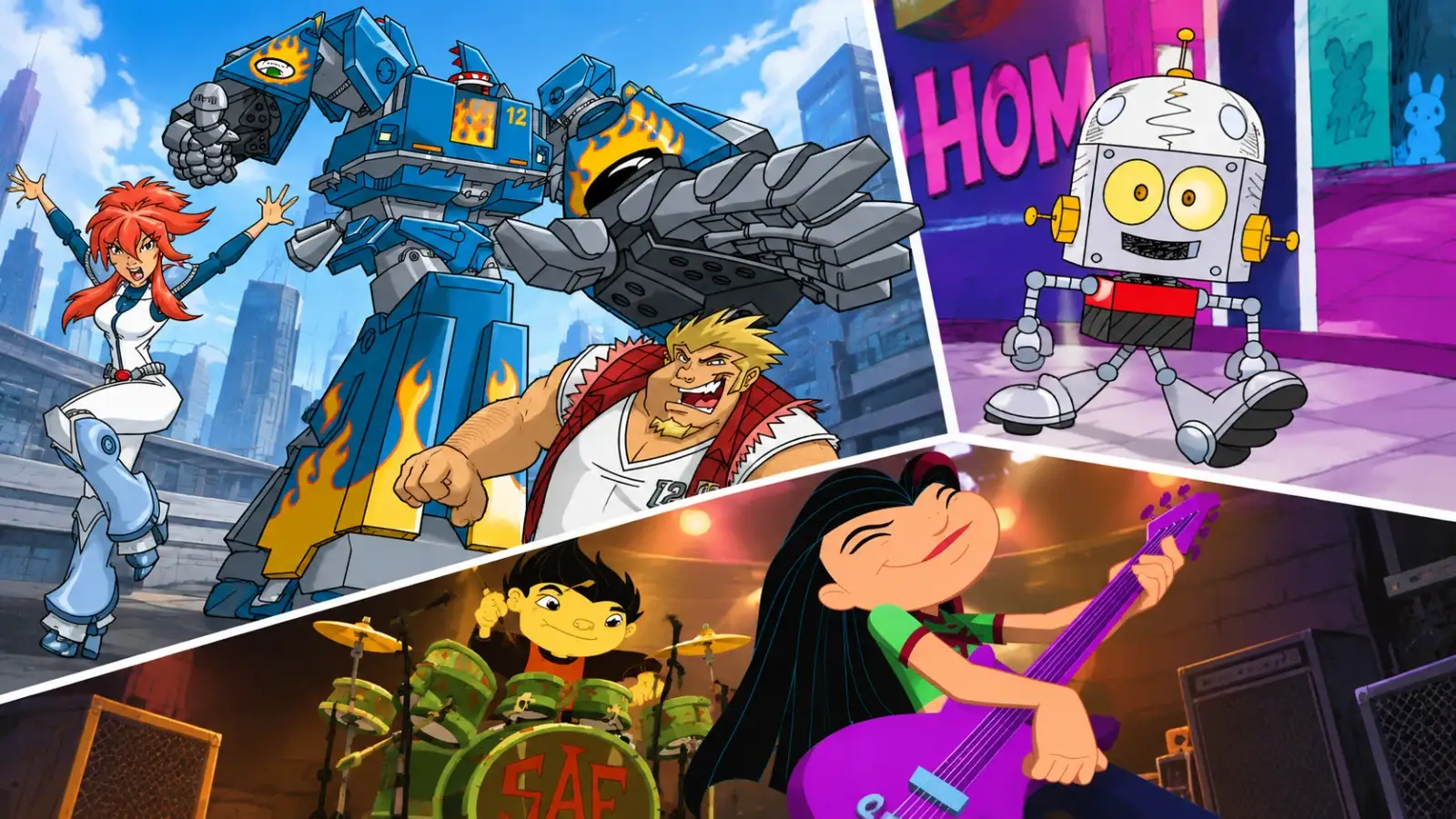
Some blended mecha action with teenage drama, while others explored time travel, supernatural adventures, music and the challenges of growing up. Although limited runs and modest promotion affected their popularity, these shows featured imaginative concepts, memorable characters and distinctive visual styles.
Here are seven overlooked Cartoon Network series that deserve another look.
Ilana struggled with the responsibilities of royalty, Lance used his tough personality to hide his emotions, and Octus attempted to understand human behaviour through his highly analytical mind.
Their contrasting personalities gave the series its emotional core. Alongside fighting alien enemies, the trio had to deal with school, friendships and the challenges of living ordinary lives.
The show balanced large-scale action with quieter character moments. Its impressive mechanical designs, energetic battles and cinematic music added excitement, but the relationships between the main characters made the story more memorable.
Sym-Bionic Titan stood out because it treated its young heroes as real individuals rather than simply pilots waiting for their next mission.
Instead of treating the advanced robot as a serious military weapon, Coop modifies it with elements inspired by muscle cars, video games and arcade culture. His reckless approach regularly clashes with Kiva, a trained warrior who understands the machine’s true purpose.
Jamie, Coop’s easy-going friend, completes the central trio and often finds himself caught between their opposing attitudes.
The series combined exaggerated action with sharp comedy. Its battles featured outrageous weapons, creative robot designs and plenty of references to popular science fiction and gaming culture.
Despite its humorous approach, Megas XLR maintained a clear sense of adventure. The conflict with the Glorft gave the story a genuine threat, while the friendship between the main characters kept the show grounded.
With only 26 episodes, the series delivered a distinctive mix of comedy, mecha action and pop culture references.
Nanites had spread throughout the world, causing some people to transform into dangerous creatures known as E.V.O.s. Rex’s unique ability to control and deactivate these nanites made him an important figure in the fight against the threat.
His situation became more complicated because he suffered from memory loss. As he searched for answers about his past, he also had to understand the origins of the nanites and the forces attempting to control them.
The organisation Providence placed Rex under strict supervision, creating tension between his independent personality and the demands of authority. Characters such as Dr Rebecca Holiday, Agent Six and White Knight added different perspectives to the story.
Generator Rex combined superhero action, science fiction and elements of body horror. Its central mystery gave the series more depth than a conventional action cartoon.
Otto Osworth was an enthusiastic young history expert, Buck Tuddrussel relied on physical strength and impulsive decisions, while Larry 3000 used his robotic abilities and unusual manners to solve problems.
Together, they travelled to different periods and encountered famous historical figures, including Julius Caesar, Leonardo da Vinci and Abraham Lincoln.
The series used historical events as the foundation for fast-paced comedy. Well-known personalities were placed in absurd situations, and familiar moments from the past were reimagined in unexpected ways.
Despite its exaggerated humour, Time Squad often retained important details about the people and events it featured. This balance allowed the show to entertain viewers while introducing them to different parts of history.
Its unusual characters, visual jokes and imaginative time-travel scenarios helped it develop a style of its own.
Although Robot could process information quickly, he struggled with problems that could not be solved through logic. Friendship, popularity, embarrassment, jealousy and teenage romance were all unfamiliar experiences.
His classmates, including Shannon Westerburg, Socks Morton, Mitch Davis and Cubey Cubinacle, introduced him to different aspects of school life.
Much of the humour came from Robot’s serious approach to everyday situations. Ordinary school problems appeared unusually complicated when viewed through the eyes of a machine.
The show also had a distinctive retro appearance. Its old-fashioned animation, unusual character designs and early text-to-speech voice gave it a unique identity.
Robot’s recordings at the end of episodes added a thoughtful touch. Beneath the comedy, the series captured the uncertainty of growing up and the desire to fit in.
As the Te Xuan Ze, Juniper had to maintain peace between humans and magical creatures in Orchid Bay City. However, her extraordinary duties did not free her from ordinary childhood problems.
She still had to attend school, manage friendships and deal with her younger siblings. Her loyal dog, Monroe, often offered guidance, while her younger brother Ray Ray frequently created additional trouble.
The show’s appeal came from the contrast between Juniper’s immense responsibility and her everyday family life. She could face dangerous magical beings, yet she still had to deal with arguments at home and the pressures of growing up.
The series gradually expanded its supernatural mythology while keeping Juniper’s personal experiences at the centre of the story.
Its combination of fantasy, comedy and family-based storytelling made it a distinctive addition to Cartoon Network’s line-up.
Rather than treating music as a background element, the series made it part of almost every aspect of its storytelling. Classroom disagreements, personal challenges and creative ideas could all develop into musical performances.
Sunny’s students each had their own personalities, interests and artistic ambitions. Li’l D, Tamika, Eddie, Madison, Philly Phil, Kim and Kam brought different musical influences and perspectives to the group.
The show explored genres such as jazz, funk, blues and hip-hop, while its energetic animation gave each performance a lively visual identity.
Its Atlanta setting and distinctive musical influences helped the series develop a strong personality. The characters were not simply learning how to perform. They were also discovering how to express themselves, work together and overcome creative frustrations.
Class of 3000 offered a colourful and imaginative take on music education, making it different from many other animated shows of its time.
Sym-Bionic Titan focused on identity and friendship, Megas XLR celebrated mecha culture through comedy, Generator Rex explored the darker side of superhero powers, and Time Squad turned history into an adventure.
Meanwhile, Robot Jones examined the awkwardness of adolescence, Juniper Lee combined family life with supernatural action, and Class of 3000 placed creativity and music at the centre of its storytelling.
Their unusual ideas and memorable characters make them worth rediscovering, particularly for viewers looking for animated series beyond the most familiar classics.
Some blended mecha action with teenage drama, while others explored time travel, supernatural adventures, music and the challenges of growing up. Although limited runs and modest promotion affected their popularity, these shows featured imaginative concepts, memorable characters and distinctive visual styles.
Here are seven overlooked Cartoon Network series that deserve another look.
1. Sym-Bionic Titan Combined Robot Battles With Teenage Drama
Sym-Bionic Titan offered much more than spectacular battles between giant robots and alien creatures. The series followed Ilana, Lance and Octus, three outsiders forced to hide on Earth while escaping a dangerous conflict from their home world.Ilana struggled with the responsibilities of royalty, Lance used his tough personality to hide his emotions, and Octus attempted to understand human behaviour through his highly analytical mind.
Their contrasting personalities gave the series its emotional core. Alongside fighting alien enemies, the trio had to deal with school, friendships and the challenges of living ordinary lives.
The show balanced large-scale action with quieter character moments. Its impressive mechanical designs, energetic battles and cinematic music added excitement, but the relationships between the main characters made the story more memorable.
Sym-Bionic Titan stood out because it treated its young heroes as real individuals rather than simply pilots waiting for their next mission.
2. Megas XLR Turned Mecha Action Into Hilarious Chaos
Megas XLR followed Coop, a laid-back New Jersey mechanic who discovers a futuristic war machine and turns it into his personal playground.Instead of treating the advanced robot as a serious military weapon, Coop modifies it with elements inspired by muscle cars, video games and arcade culture. His reckless approach regularly clashes with Kiva, a trained warrior who understands the machine’s true purpose.
Jamie, Coop’s easy-going friend, completes the central trio and often finds himself caught between their opposing attitudes.
The series combined exaggerated action with sharp comedy. Its battles featured outrageous weapons, creative robot designs and plenty of references to popular science fiction and gaming culture.
Despite its humorous approach, Megas XLR maintained a clear sense of adventure. The conflict with the Glorft gave the story a genuine threat, while the friendship between the main characters kept the show grounded.
With only 26 episodes, the series delivered a distinctive mix of comedy, mecha action and pop culture references.
3. Generator Rex Added a Darker Edge to Superhero Animation
Generator Rex introduced audiences to a hero whose abilities were both impressive and disturbing. Rex Salazar could transform parts of his body into powerful machines, but the source of his abilities was linked to a much larger global crisis.Nanites had spread throughout the world, causing some people to transform into dangerous creatures known as E.V.O.s. Rex’s unique ability to control and deactivate these nanites made him an important figure in the fight against the threat.
His situation became more complicated because he suffered from memory loss. As he searched for answers about his past, he also had to understand the origins of the nanites and the forces attempting to control them.
The organisation Providence placed Rex under strict supervision, creating tension between his independent personality and the demands of authority. Characters such as Dr Rebecca Holiday, Agent Six and White Knight added different perspectives to the story.
Generator Rex combined superhero action, science fiction and elements of body horror. Its central mystery gave the series more depth than a conventional action cartoon.
4. Time Squad Made History Entertaining Through Time Travel
Time Squad followed three unlikely time-travelling agents who were responsible for protecting the course of history.Otto Osworth was an enthusiastic young history expert, Buck Tuddrussel relied on physical strength and impulsive decisions, while Larry 3000 used his robotic abilities and unusual manners to solve problems.
Together, they travelled to different periods and encountered famous historical figures, including Julius Caesar, Leonardo da Vinci and Abraham Lincoln.
The series used historical events as the foundation for fast-paced comedy. Well-known personalities were placed in absurd situations, and familiar moments from the past were reimagined in unexpected ways.
Despite its exaggerated humour, Time Squad often retained important details about the people and events it featured. This balance allowed the show to entertain viewers while introducing them to different parts of history.
Its unusual characters, visual jokes and imaginative time-travel scenarios helped it develop a style of its own.
5. Whatever Happened to Robot Jones ? Explored the Confusion of Growing Up
Whatever Happened to Robot Jones? followed a young robot attempting to understand the complicated world of middle school.Although Robot could process information quickly, he struggled with problems that could not be solved through logic. Friendship, popularity, embarrassment, jealousy and teenage romance were all unfamiliar experiences.
His classmates, including Shannon Westerburg, Socks Morton, Mitch Davis and Cubey Cubinacle, introduced him to different aspects of school life.
Much of the humour came from Robot’s serious approach to everyday situations. Ordinary school problems appeared unusually complicated when viewed through the eyes of a machine.
The show also had a distinctive retro appearance. Its old-fashioned animation, unusual character designs and early text-to-speech voice gave it a unique identity.
Robot’s recordings at the end of episodes added a thoughtful touch. Beneath the comedy, the series captured the uncertainty of growing up and the desire to fit in.
6. The Life and Times of Juniper Lee Blended Magic With Family Life
The Life and Times of Juniper Lee followed a young girl who inherited the responsibility of protecting the human world from supernatural threats.As the Te Xuan Ze, Juniper had to maintain peace between humans and magical creatures in Orchid Bay City. However, her extraordinary duties did not free her from ordinary childhood problems.
She still had to attend school, manage friendships and deal with her younger siblings. Her loyal dog, Monroe, often offered guidance, while her younger brother Ray Ray frequently created additional trouble.
The show’s appeal came from the contrast between Juniper’s immense responsibility and her everyday family life. She could face dangerous magical beings, yet she still had to deal with arguments at home and the pressures of growing up.
The series gradually expanded its supernatural mythology while keeping Juniper’s personal experiences at the centre of the story.
Its combination of fantasy, comedy and family-based storytelling made it a distinctive addition to Cartoon Network’s line-up.
7. Class of 3000 Made Music the Heart of Its Story
Class of 3000 centred on Sunny Bridges, a successful musician who leaves the stage to teach at a performing arts school in Atlanta.Rather than treating music as a background element, the series made it part of almost every aspect of its storytelling. Classroom disagreements, personal challenges and creative ideas could all develop into musical performances.
Sunny’s students each had their own personalities, interests and artistic ambitions. Li’l D, Tamika, Eddie, Madison, Philly Phil, Kim and Kam brought different musical influences and perspectives to the group.
The show explored genres such as jazz, funk, blues and hip-hop, while its energetic animation gave each performance a lively visual identity.
Its Atlanta setting and distinctive musical influences helped the series develop a strong personality. The characters were not simply learning how to perform. They were also discovering how to express themselves, work together and overcome creative frustrations.
Class of 3000 offered a colourful and imaginative take on music education, making it different from many other animated shows of its time.
Why These Shows Are Worth Revisiting
These Cartoon Network series may not have achieved the same lasting fame as the channel’s biggest hits, but each one brought something different to animation.Sym-Bionic Titan focused on identity and friendship, Megas XLR celebrated mecha culture through comedy, Generator Rex explored the darker side of superhero powers, and Time Squad turned history into an adventure.
Meanwhile, Robot Jones examined the awkwardness of adolescence, Juniper Lee combined family life with supernatural action, and Class of 3000 placed creativity and music at the centre of its storytelling.
Their unusual ideas and memorable characters make them worth rediscovering, particularly for viewers looking for animated series beyond the most familiar classics.
Next Story