
From ‘Vande Mataram’ to ‘Quit India’: Slogans That Sparked India’s Fight for Freedom

Slogans are more than catchy phrases. During India’s freedom struggle, they became powerful tools of resistance, unity and mobilisation. Short, sharp and easy to remember, these words travelled from streets and protest marches to homes, schools and newspapers, creating a shared language for a nation fighting for freedom.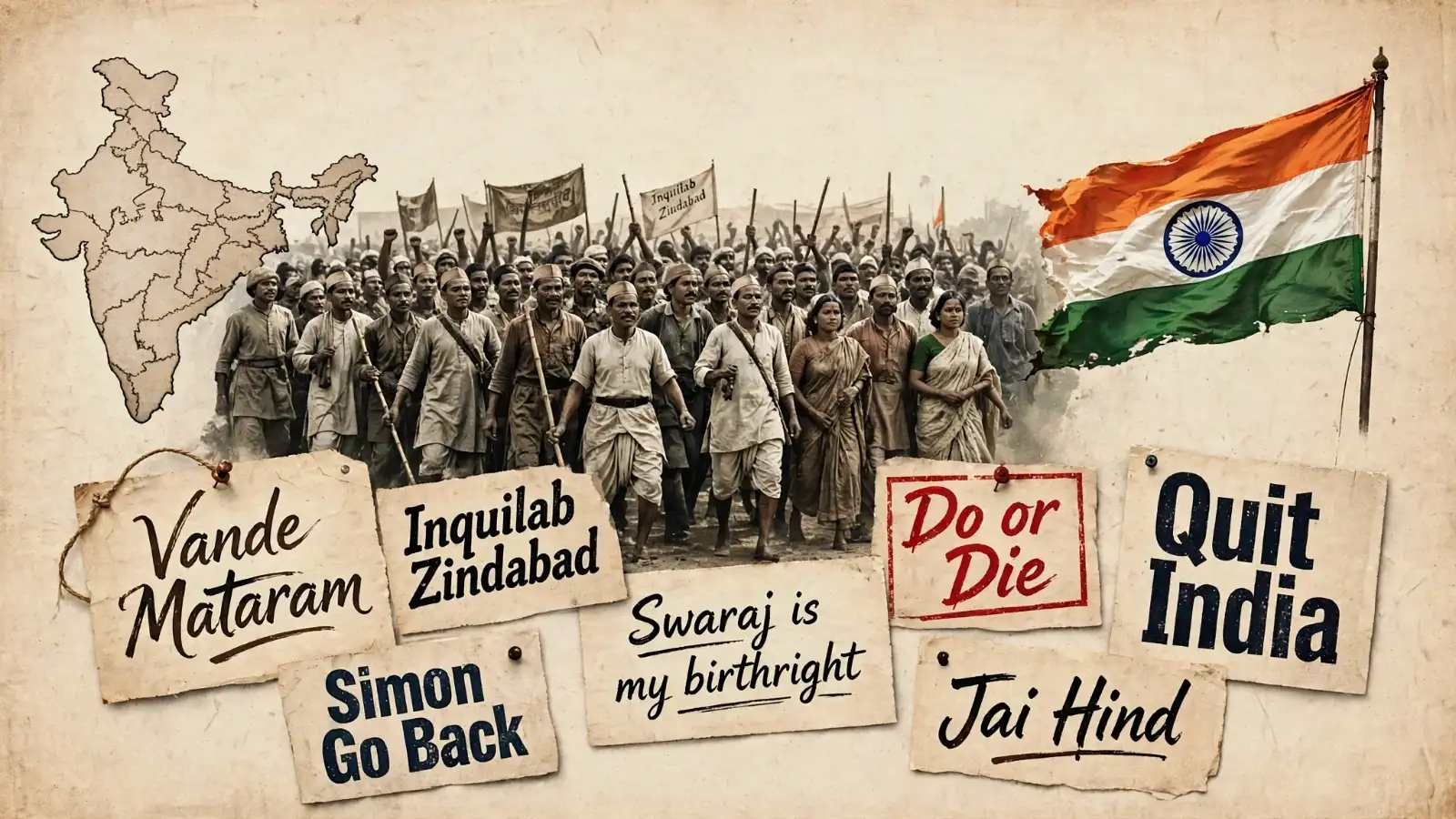
Its strength lay in its simplicity. It turned widespread frustration into a direct call for action and helped create an early sense of collective resistance cutting across communities.
The word ‘Swaraj’ soon became part of everyday political and cultural conversations, connecting with ideas such as swadeshi and non-cooperation. It gave people a simple word for a much larger dream, freedom from colonial rule.
Bhagat Singh and B.K. Dutt repeatedly shouted the slogan after throwing non-lethal smoke bombs in the Central Assembly in 1929. Its message of revolution soon became a defining expression of resistance and continues to echo in protest movements even today.
Bankim Chandra Chatterjee’s ‘ Vande Mataram ’, from his novel Anandamath, became a powerful symbol of devotion to the motherland. During the 1905 Partition of Bengal, it grew into a rallying cry against colonial policies.
Similarly, ‘ Jai Hind ’, meaning ‘Hail India’, represented the idea of a united nation. It later became closely associated with Subhas Chandra Bose and the Indian National Army.
Bose also delivered another stirring call: ‘Give me blood and I shall give you freedom' (Tum mujhe khoon do, mai tumhe azaadi doonga). The slogan reflected the growing demand for total commitment to the freedom struggle.
The slogan appeared on banners and placards as protesters marched through the streets. Its effectiveness came from its directness, naming the target and stating exactly what people wanted.
The slogan captured a decisive shift in the freedom struggle. There was no longer room for delay or compromise. Alongside ‘Quit India’ and ‘Bharat Chodo’, it helped mobilise people across the country for what became one of the final mass movements against British rule.
That is why these slogans remain more than fragments of history. They are lasting reminders of how a few simple words can capture the mood of an entire nation.
‘Maaro Firangi Ko’: The first cry of resistance
During the 1857 revolt, the cry of ‘Maaro Firangi Ko’ echoed across North India. The three-word slogan captured the anger against British rule and helped connect sepoys with artisans, peasants and ordinary people.Its strength lay in its simplicity. It turned widespread frustration into a direct call for action and helped create an early sense of collective resistance cutting across communities.
‘Swaraj’ becomes a national dream
By the early 20th century, slogans had moved beyond direct resistance to expressing political aspirations. Bal Gangadhar Tilak’s famous declaration, ‘Swaraj is my birthright and I shall have it!’, turned self-rule into a powerful public demand.The word ‘Swaraj’ soon became part of everyday political and cultural conversations, connecting with ideas such as swadeshi and non-cooperation. It gave people a simple word for a much larger dream, freedom from colonial rule.
‘Inquilab Zindabad’: Revolution takes centre stage
As protests and labour unrest intensified in the 1920s, the freedom movement took on a more radical tone. Bhagat Singh popularised the slogan ‘Inquilab Zindabad’, originally coined by poet and revolutionary Hasrat Mohani.Bhagat Singh and B.K. Dutt repeatedly shouted the slogan after throwing non-lethal smoke bombs in the Central Assembly in 1929. Its message of revolution soon became a defining expression of resistance and continues to echo in protest movements even today.
Slogans that built national identity
Freedom slogans were not always about confronting the British. Some helped Indians imagine themselves as one nation.Bankim Chandra Chatterjee’s ‘ Vande Mataram ’, from his novel Anandamath, became a powerful symbol of devotion to the motherland. During the 1905 Partition of Bengal, it grew into a rallying cry against colonial policies.
Similarly, ‘ Jai Hind ’, meaning ‘Hail India’, represented the idea of a united nation. It later became closely associated with Subhas Chandra Bose and the Indian National Army.
Bose also delivered another stirring call: ‘Give me blood and I shall give you freedom' (Tum mujhe khoon do, mai tumhe azaadi doonga). The slogan reflected the growing demand for total commitment to the freedom struggle.
‘Simon Go Back’: A slogan becomes a symbol
In 1928, the arrival of the Simon Commission triggered widespread protests because it had no Indian member. The response was immediate and unmistakable: ‘SIMON GO BACK’.The slogan appeared on banners and placards as protesters marched through the streets. Its effectiveness came from its directness, naming the target and stating exactly what people wanted.
‘Karo Ya Maro’: The final push
By 1942, patience had given way to urgency. Launching the Quit India Movement, Mahatma Gandhi gave the nation the uncompromising call, ‘Karo ya Maro’, ‘Do or Die’.The slogan captured a decisive shift in the freedom struggle. There was no longer room for delay or compromise. Alongside ‘Quit India’ and ‘Bharat Chodo’, it helped mobilise people across the country for what became one of the final mass movements against British rule.
Words that outlived the moment
From ‘Maaro Firangi Ko’ to ‘Karo Ya Maro’, India’s freedom slogans evolved with the movement itself. Some demanded resistance, others inspired unity, revolution or sacrifice. Yet they shared one powerful quality: they transformed complex political ideas into words ordinary people could remember, repeat and act upon.That is why these slogans remain more than fragments of history. They are lasting reminders of how a few simple words can capture the mood of an entire nation.






Loving Newspoint? Download the app now
