
Aadhaar for Children: Key Biometric Updates Parents Should Know About

Getting an Aadhaar card for a child is only the beginning of keeping the identity record up to date. As children grow, their physical features change considerably, making biometric details less reliable for identification.
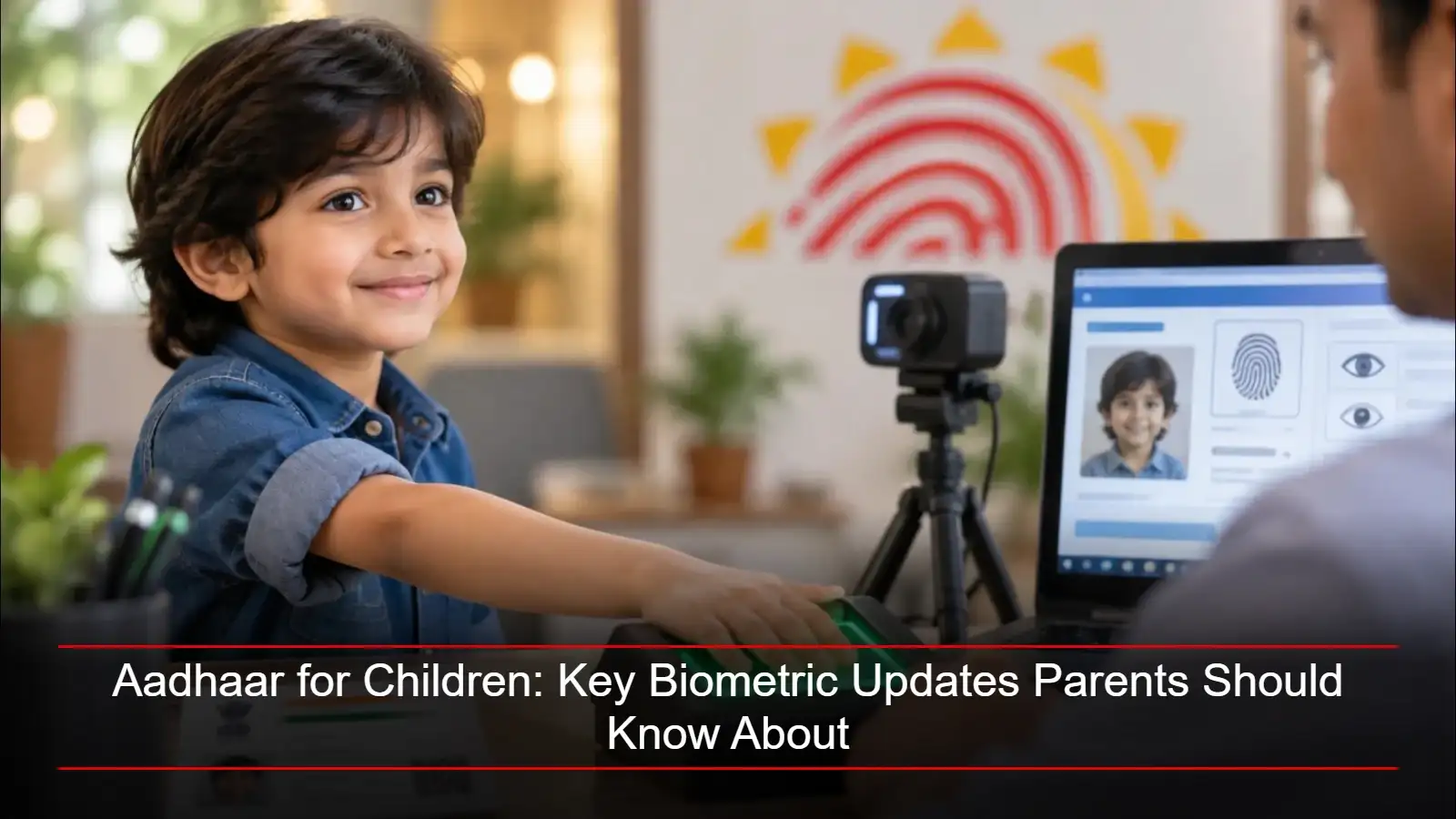
The UIDAI therefore requires children to undergo mandatory biometric updates at key ages. The first comes at five, when fingerprints, iris scans and a photograph are recorded. A second update follows at 15, helping ensure the Aadhaar record continues to reflect the child’s identity.
Why the age-five update matters
Aadhaar enrolment for a young child does not involve exactly the same biometric process used for an older person. When a child is very young, the initial Aadhaar record is created using the information and biometrics applicable at that stage.That changes when the child reaches five years of age. A complete set of biometrics is then captured and added to the Aadhaar record. This includes fingerprints of all fingers, scans of both irises and a new photograph.
For parents, the age-five milestone is therefore important rather than something that can simply be treated as another routine Aadhaar detail correction. The biometric information recorded during this update is intended to provide a more appropriate identity record as the child grows.
According to UIDAI rules, the mandatory biometric update at this stage also involves a deduplication process. This helps check the updated biometric information against existing Aadhaar records.
The Aadhaar number stays the same
One common concern among parents may be whether a biometric update means the child receives a new Aadhaar number. It does not.The child’s existing 12-digit Aadhaar number remains unchanged after the mandatory biometric update. The process may involve collecting a fresh set of information, but it is an update to the existing Aadhaar record rather than the creation of a completely new identity number.
This distinction is important because parents may otherwise assume that the child needs to be enrolled again from scratch. The biometric details are refreshed while the Aadhaar number continues to remain the same.
A second biometric update is required at 15
The process does not end with the age-five update. Another mandatory biometric update is required when the child reaches 15.By this point, a child’s physical appearance and biometric characteristics may have changed significantly. The second update allows the Aadhaar record to be refreshed again, with the photograph, fingerprints and iris scans captured once more.
The age-15 update is therefore another important milestone for families managing a child’s Aadhaar records. Parents should keep the requirement in mind rather than assuming that completing the first update means no further biometric action will be necessary.
The two age-based updates reflect the fact that children’s physical characteristics develop substantially during their growing years. Keeping the biometric record current can help maintain an Aadhaar profile that corresponds more closely with the individual’s later physical identity.
When is the child Aadhaar update free?
The charges applicable to mandatory biometric updates depend on the child’s age and the fee rules in force at the time.Under the fee information provided by UIDAI, the mandatory biometric update required between the ages of five and seven is free. A similar exemption applies to children aged 15 to 17 for the mandatory biometric update at that stage.
There is also a specific fee exemption covering children in the seven-to-15 age group. The exemption mentioned in the supplied UIDAI information was introduced through an order issued in September 2025 and was effective for one year from 1 October 2025.
Because fee exemptions can be changed through official orders, parents should check the applicable UIDAI fee position before visiting a centre, particularly if the child falls outside the age bands for which a mandatory update is currently free.
What if a fee applies?
When an update does not qualify for a fee exemption, the standard charge for a biometric update at an Aadhaar service centre is ₹125, according to UIDAI’s fee structure cited in the supplied information.However, parents should not assume that this amount will necessarily be payable for every child’s mandatory biometric update. The child’s age and the applicable exemption are important factors.
The distinction matters because a standard biometric-update fee and a mandatory child biometric update covered by an exemption are not necessarily treated in the same way. Checking the current applicable rules before the appointment can help avoid confusion at the centre.
Can the biometric update be completed from home?
The biometric part of the child’s Aadhaar update cannot simply be completed from home. A child needs to visit an Aadhaar enrolment centre because fingerprints and iris scans have to be physically captured.This is particularly important for parents planning the update around school, work or other commitments. The process requires the child’s presence at the relevant centre, rather than relying entirely on an online update facility.
Parents can use the UIDAI Bhuvan Aadhaar portal to find information about the nearest Aadhaar centre. Checking the location in advance can make the visit easier and help families plan for the required biometric capture.
Overall, the age-five and age-15 milestones are important parts of maintaining a child’s Aadhaar record. The first major biometric update takes place at five, while another is required at 15. The Aadhaar number remains unchanged through these updates, but the child’s photograph, fingerprints and iris scans are refreshed to keep the biometric information current.
Disclaimer: This content is for informational purposes only. Parents should verify the latest UIDAI rules, fee structure and applicable exemptions before taking any Aadhaar-related action.
Next Story