
Celebrating Vishwakarma Jayanti: The Significance of Worshipping Tools and Machines


New Delhi, September 16 (Daily Kiran) : The festival of Vishwakarma Jayanti will be celebrated on September 17 this year, with devotion and reverence. This day is dedicated to Lord Vishwakarma, the divine architect. On this occasion, it is customary to worship machines, tools, vehicles, and equipment used in construction at factories, shops, offices, and other workplaces.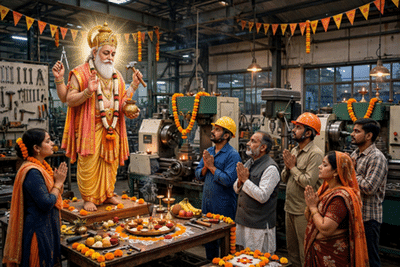 According to religious beliefs, Lord Vishwakarma was responsible for creating magnificent cities, palaces, and divine objects for the gods. He is credited with constructing remarkable structures like the golden Lanka, Indrapuri, and the city of Dwarka for Lord Krishna. The legendary Pushpaka Vimana is also associated with him, which is why he is regarded as a symbol of craftsmanship, architecture, and technical skill. The worship of machines and tools during Vishwakarma Puja is rooted in this religious significance.The tools used in work are viewed as manifestations of Lord Vishwakarma's creative power and craftsmanship. Therefore, on this day, people clean their machines, tools, and vehicles and offer prayers to them. It is believed that worshipping Lord Vishwakarma helps remove obstacles and blesses individuals with success and prosperity in their work. On Vishwakarma Puja day, devotees traditionally start by bathing in the morning and offering water to the sun. Following this, they thoroughly clean the worship area, shop, factory, or office.Machines, tools, vehicles, and other equipment are cleaned, and an idol or picture of Lord Vishwakarma is installed. During the puja, offerings of turmeric, vermilion, sandalwood, and flowers are made to Lord Vishwakarma. A ghee lamp is lit for the aarti, and fruits and sweets are offered as prasad. Reciting the mantra “Om Vishwakarmane Namah” is also a part of this religious tradition. In Hindu beliefs, Lord Vishwakarma is regarded as the divine craftsman, architect, and creator.Another belief associated with Vishwakarma Puja is the idea that tools and machines should not be used on this day. While it may not be feasible in many workplaces due to the nature of work, the tradition emphasizes resting the tools as a sign of respect. Additionally, it is customary to avoid tamasic substances like meat and alcohol, steer clear of disputes, and maintain positive thoughts. From a religious perspective, Vishwakarma Puja transcends the worship of tools and machines.It is also a festival that expresses respect for labor, craftsmanship, technology, and construction work. Cleaning and organizing the workplace before the puja is part of this sentiment, creating a spiritually pure and positive environment. Practically, a clean and organized workplace can enhance safety and improve workflow.
Next Story