
Delhi Mosque And Graveyard Row: How The Faiz-e-Ilahi Controversy Unfolded Near Ramlila Maidan

A long-standing land dispute involving a mosque and a claimed graveyard near Delhi’s historic Ramlila Maidan escalated into violence on Tuesday morning, following an anti-encroachment drive ordered by the Delhi High Court.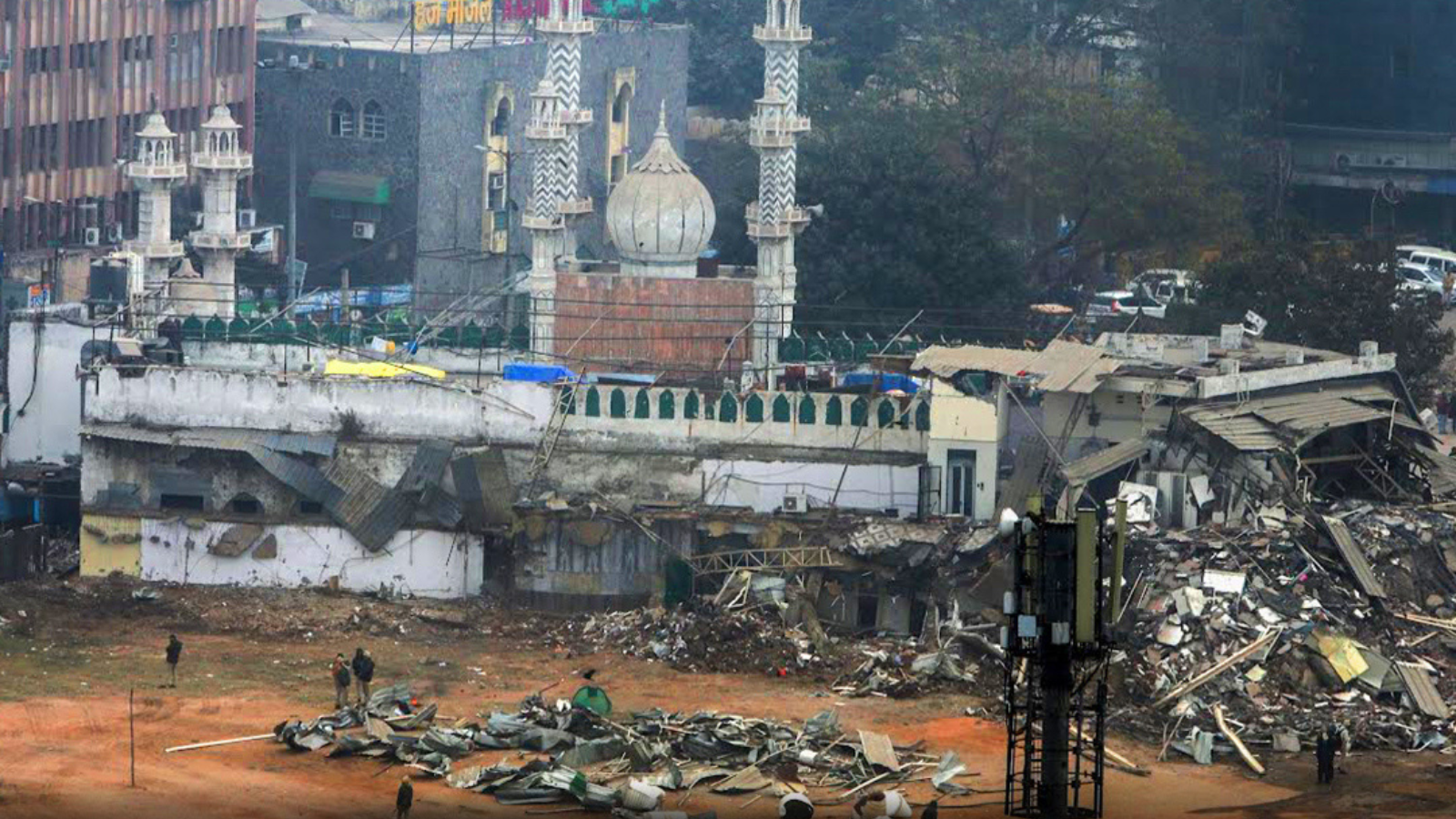
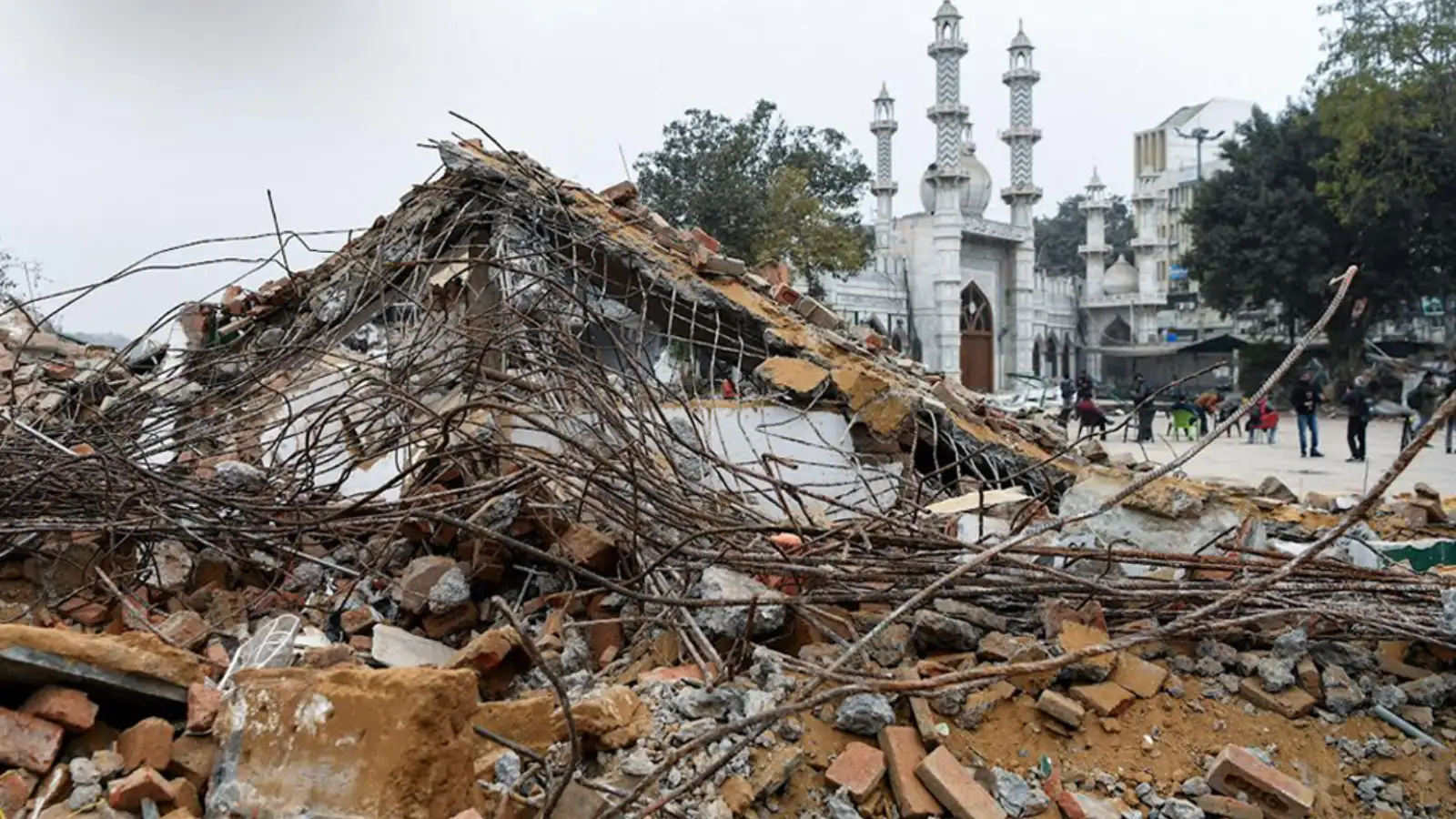
The clash took place near the Faiz-e-Ilahi Mosque in Old Delhi, located opposite Turkman Gate, after civic authorities moved in to demolish what they termed illegal structures on adjacent land. The situation quickly turned tense, resulting in stone-pelting and injuries to police personnel.
According to civic records, the land in question has been under dispute since before Independence. Officials say the entire parcel, situated on the edge of Ramlila Maidan, was historically claimed as a graveyard.
“In 1942, around 900 square metres were given in the name of a graveyard,” Delhi Municipal Corporation Mayor Raja Iqbal Singh said, adding that official records support this claim.
The Faiz-e-Ilahi Mosque was built later, nearly 80 years ago, and its management committee now claims ownership of the land, citing documents to support its position.
History of the Faiz-e-Ilahi Mosque
The mosque’s name, Faiz-e-Ilahi, is an Arabic phrase meaning Grace of God. Local residents say the site was once home to a Sufi saint.
“An elderly local said a Sufi named Shah Faiz Ilahi lived here and the mosque was named after him. His grave is located nearby.”
Locals also claim that a Dargah existed at the site earlier, and the mosque was constructed over it, further complicating ownership claims.
Allegations of Encroachment and Illegal Construction
Municipal sources allege that the mosque’s management committee began extending construction beyond the original site in the late 1990s.
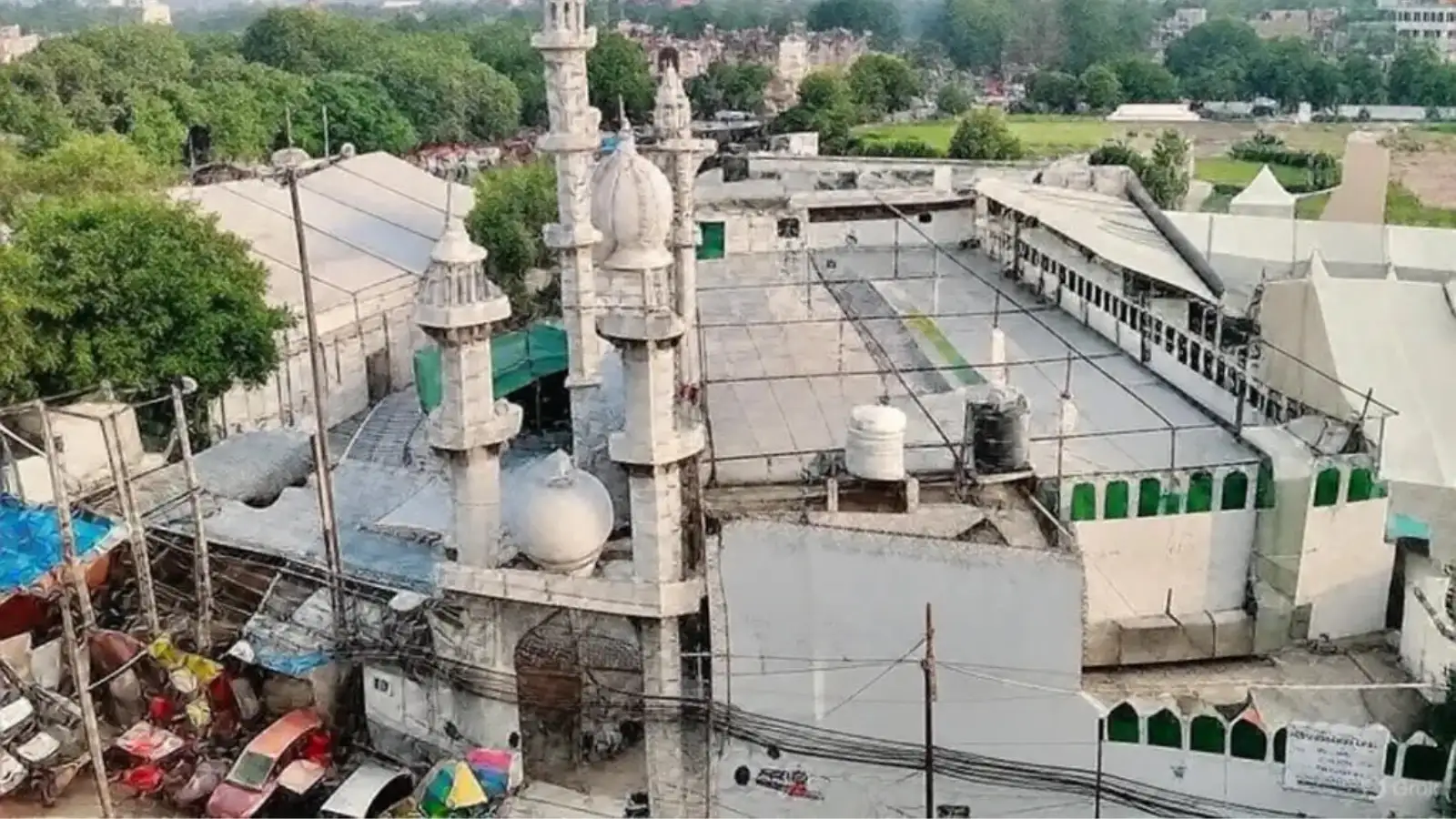
“Municipal sources said over the last 20 years, the management committee built rooms for accommodation and then, a two-story banquet hall.”
A municipal official, speaking on condition of anonymity, claimed that illegal construction gradually expanded onto Ramlila Maidan land, initially in the name of a diagnostic centre and later a library.
“Gradually, illegal construction had taken place on the land of Ramlila Maidan in the name of a diagnostic center and then a library, covering an area of 4047.55 square yards, which is around one acre.”
Violence During Anti-Encroachment Drive
Tensions flared when municipal teams attempted to carry out demolition proceedings in line with court directions. A mob of nearly 30 people allegedly attacked civic officials and police personnel with stones.
At least five police personnel were injured in the clash. Authorities used tear gas to disperse the crowd, and five people have been detained so far.
No Official Comment from Mosque Committee
Attempts to contact Matloob, a member of the Faiz-e-Ilahi Mosque management committee, were unsuccessful. The mosque’s Qazi declined to comment, saying he did not wish to speak on the matter at present.
As authorities tighten security in the area, the incident has once again brought attention to Old Delhi’s long-running disputes over religious sites, graveyards, and public land, many of which date back to the pre-Independence era.
The clash took place near the Faiz-e-Ilahi Mosque in Old Delhi, located opposite Turkman Gate, after civic authorities moved in to demolish what they termed illegal structures on adjacent land. The situation quickly turned tense, resulting in stone-pelting and injuries to police personnel.
Roots of the Dispute Go Back Decades
According to civic records, the land in question has been under dispute since before Independence. Officials say the entire parcel, situated on the edge of Ramlila Maidan, was historically claimed as a graveyard.
“In 1942, around 900 square metres were given in the name of a graveyard,” Delhi Municipal Corporation Mayor Raja Iqbal Singh said, adding that official records support this claim.
The Faiz-e-Ilahi Mosque was built later, nearly 80 years ago, and its management committee now claims ownership of the land, citing documents to support its position.
History of the Faiz-e-Ilahi Mosque
The mosque’s name, Faiz-e-Ilahi, is an Arabic phrase meaning Grace of God. Local residents say the site was once home to a Sufi saint.
“An elderly local said a Sufi named Shah Faiz Ilahi lived here and the mosque was named after him. His grave is located nearby.”
Locals also claim that a Dargah existed at the site earlier, and the mosque was constructed over it, further complicating ownership claims.
Allegations of Encroachment and Illegal Construction
Municipal sources allege that the mosque’s management committee began extending construction beyond the original site in the late 1990s. “Municipal sources said over the last 20 years, the management committee built rooms for accommodation and then, a two-story banquet hall.”
A municipal official, speaking on condition of anonymity, claimed that illegal construction gradually expanded onto Ramlila Maidan land, initially in the name of a diagnostic centre and later a library.
“Gradually, illegal construction had taken place on the land of Ramlila Maidan in the name of a diagnostic center and then a library, covering an area of 4047.55 square yards, which is around one acre.”
Violence During Anti-Encroachment Drive
Tensions flared when municipal teams attempted to carry out demolition proceedings in line with court directions. A mob of nearly 30 people allegedly attacked civic officials and police personnel with stones.
At least five police personnel were injured in the clash. Authorities used tear gas to disperse the crowd, and five people have been detained so far.
No Official Comment from Mosque Committee
Attempts to contact Matloob, a member of the Faiz-e-Ilahi Mosque management committee, were unsuccessful. The mosque’s Qazi declined to comment, saying he did not wish to speak on the matter at present.As authorities tighten security in the area, the incident has once again brought attention to Old Delhi’s long-running disputes over religious sites, graveyards, and public land, many of which date back to the pre-Independence era.
Next Story