
10 Beautiful Tribal Art Forms That Showcase India's Culture

India's tribal communities have preserved a rich artistic heritage through paintings, murals, crafts and traditional designs. Many of these art forms are closely connected with nature, festivals, rituals, everyday life and community traditions. From the geometric patterns of Warli art to the vibrant paintings of Gond artists, each style has its own visual language and cultural identity.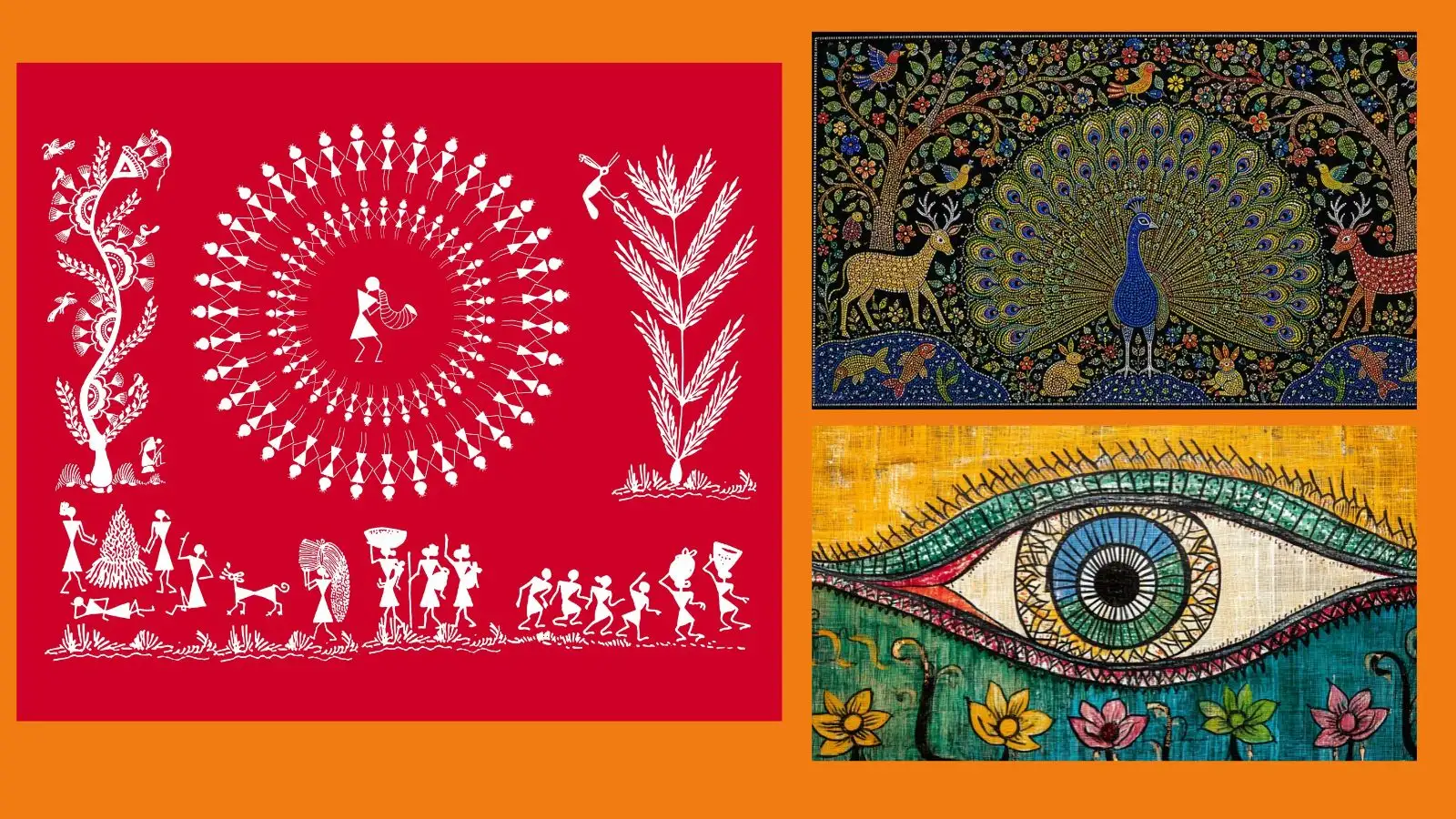
The paintings are known for their basic geometric forms. Circles, triangles and squares are used to depict people, animals, trees, houses, farming activities and celebrations. The famous Tarpa dance, in which people form a circle around a musician, is a recurring theme.
Today, Warli-inspired artwork can also be found on paper, canvas, clothing and home decor.
The art is recognised for its use of dots, lines and intricate patterns that fill the figures. Artists often give animals and natural elements imaginative forms, creating colourful compositions.
Gond painting has moved beyond its traditional setting and is now practised on paper and canvas as well.
One of its distinctive features is the use of numerous small dots to create patterns and fill shapes. Traditional subjects often include people, animals, trees, nature and scenes inspired by everyday life.
The colours and compositions can vary between artists and regions, giving Bhil paintings a distinctive visual character.
The paintings often depict human figures, animals, trees and other elements of the natural and social world. Traditionally, they were made on walls using natural materials.
Saura art has a distinctive style in which repeated human and animal figures create detailed compositions. Its visual language is different from the more widely recognised geometric simplicity of Warli art.
Unlike many forms of folk painting created mainly for decoration, traditional Pithora paintings have an important ritual role. They are associated with ceremonies and are traditionally painted on the walls of homes.
Horses are among the most recognisable elements in Pithora paintings. Other figures and symbols may represent deities, animals, people and elements of the community's cultural world.
The art is known for strong outlines, vibrant colours and intricate patterns. Traditional subjects include Hindu deities, scenes from mythology, nature, animals, plants and ceremonial themes.
Different styles exist within Madhubani painting, including Bharni, Kachni and Godna. The art form has evolved from wall and floor paintings to work produced on paper, canvas and other surfaces.
The paintings commonly feature animals, birds, plants and other elements of nature. Traditional wall paintings use earthy colours and natural materials.
The style can vary between communities and regions. Its connection with harvest traditions, nature and rural life makes Sohrai an important part of Jharkhand's visual heritage.
The artwork is often created on mud walls using distinctive techniques and motifs inspired by nature. Birds, animals, plants and geometric patterns are common elements.
Khovar and Sohrai are often discussed together because both are important mural traditions of the Hazaribagh region, but they have different traditional associations and themes.
Different communities have developed their own weaving, embroidery and decorative traditions. These may incorporate geometric patterns, plants, animals and symbols connected with local culture.
Because these traditions vary significantly from one community to another, they are best understood as a diverse collection of regional artistic practices rather than as a single art form.
Traditionally, Chittara designs are created on walls using locally available natural materials. The paintings feature geometric patterns, symbolic motifs and representations connected with everyday and cultural life.
The art is especially associated with the Malnad region of Karnataka and reflects the community's traditional visual vocabulary.
Many of these artistic practices were traditionally passed from one generation to another through families and communities. In recent decades, several tribal and folk art traditions have also reached galleries, museums, handicraft markets and contemporary art spaces.
However, the meaning of a traditional design can depend on the community and context in which it is created. Understanding that background helps appreciate these art forms beyond their colours and patterns.
From Warli and Gond to Pithora, Sohrai and Khovar, India's tribal art heritage represents a remarkable variety of regional traditions. Exploring these art forms offers a glimpse into the stories, surroundings and cultural practices of the communities that have preserved them over generations.
1. Warli Art
Warli art is associated with the Warli community of Maharashtra, particularly the northern parts of the state. Traditionally, Warli paintings were created on mud walls using simple white designs made from rice paste.The paintings are known for their basic geometric forms. Circles, triangles and squares are used to depict people, animals, trees, houses, farming activities and celebrations. The famous Tarpa dance, in which people form a circle around a musician, is a recurring theme.
Today, Warli-inspired artwork can also be found on paper, canvas, clothing and home decor.
2. Gond Art
Gond art is associated with the Gond tribal communities of central India, particularly Madhya Pradesh. Traditionally, Gond paintings feature subjects from nature, including birds, animals, trees and plants.The art is recognised for its use of dots, lines and intricate patterns that fill the figures. Artists often give animals and natural elements imaginative forms, creating colourful compositions.
Gond painting has moved beyond its traditional setting and is now practised on paper and canvas as well.
3. Bhil Art
Bhil art is associated with the Bhil tribal communities found across parts of central and western India, including Madhya Pradesh, Rajasthan, Gujarat and Maharashtra.One of its distinctive features is the use of numerous small dots to create patterns and fill shapes. Traditional subjects often include people, animals, trees, nature and scenes inspired by everyday life.
The colours and compositions can vary between artists and regions, giving Bhil paintings a distinctive visual character.
4. Saura Art
Saura painting comes from the Saura community of Odisha and is traditionally associated with ritual and religious practices.The paintings often depict human figures, animals, trees and other elements of the natural and social world. Traditionally, they were made on walls using natural materials.
Saura art has a distinctive style in which repeated human and animal figures create detailed compositions. Its visual language is different from the more widely recognised geometric simplicity of Warli art.
5. Pithora Art
Pithora painting is traditionally associated with communities such as the Rathwa, Bhilala and Bhil in parts of Gujarat and Madhya Pradesh.Unlike many forms of folk painting created mainly for decoration, traditional Pithora paintings have an important ritual role. They are associated with ceremonies and are traditionally painted on the walls of homes.
Horses are among the most recognisable elements in Pithora paintings. Other figures and symbols may represent deities, animals, people and elements of the community's cultural world.
6. Madhubani Art
Madhubani painting, also known as Mithila painting, originated in the Mithila region of Bihar and is traditionally associated with women artists.The art is known for strong outlines, vibrant colours and intricate patterns. Traditional subjects include Hindu deities, scenes from mythology, nature, animals, plants and ceremonial themes.
Different styles exist within Madhubani painting, including Bharni, Kachni and Godna. The art form has evolved from wall and floor paintings to work produced on paper, canvas and other surfaces.
7. Sohrai Art
Sohrai painting is traditionally practised by communities in Jharkhand and is particularly associated with the Sohrai festival and the decoration of homes.The paintings commonly feature animals, birds, plants and other elements of nature. Traditional wall paintings use earthy colours and natural materials.
The style can vary between communities and regions. Its connection with harvest traditions, nature and rural life makes Sohrai an important part of Jharkhand's visual heritage.
8. Khovar Art
Khovar is a traditional mural art form associated with Jharkhand, particularly the Hazaribagh region. It has traditionally been connected with marriage ceremonies.The artwork is often created on mud walls using distinctive techniques and motifs inspired by nature. Birds, animals, plants and geometric patterns are common elements.
Khovar and Sohrai are often discussed together because both are important mural traditions of the Hazaribagh region, but they have different traditional associations and themes.
9. Saathiya and Other Tribal Textile Traditions
Tribal art in India is not limited to wall paintings. Textile traditions across tribal communities also feature distinctive motifs, colours and patterns passed down through generations.Different communities have developed their own weaving, embroidery and decorative traditions. These may incorporate geometric patterns, plants, animals and symbols connected with local culture.
Because these traditions vary significantly from one community to another, they are best understood as a diverse collection of regional artistic practices rather than as a single art form.
10. Chittara Art
Chittara is a traditional mural and decorative art practice associated with the Deewaru community of Karnataka.Traditionally, Chittara designs are created on walls using locally available natural materials. The paintings feature geometric patterns, symbolic motifs and representations connected with everyday and cultural life.
The art is especially associated with the Malnad region of Karnataka and reflects the community's traditional visual vocabulary.
Why Indian Tribal Art Matters
Indian tribal art forms are more than decorative designs. They provide a visual record of community traditions, beliefs, festivals, occupations and relationships with nature.Many of these artistic practices were traditionally passed from one generation to another through families and communities. In recent decades, several tribal and folk art traditions have also reached galleries, museums, handicraft markets and contemporary art spaces.
However, the meaning of a traditional design can depend on the community and context in which it is created. Understanding that background helps appreciate these art forms beyond their colours and patterns.
From Warli and Gond to Pithora, Sohrai and Khovar, India's tribal art heritage represents a remarkable variety of regional traditions. Exploring these art forms offers a glimpse into the stories, surroundings and cultural practices of the communities that have preserved them over generations.
Next Story