
Farmers Delhi Chalo Protest: From MSP Demand To Swaminathan Formula - All You Need To Know

Farmers are once again marching towards Delhi. In 2020–21, they protested against three farm laws. Among the myriad of demands voiced during the protests, their primary call is for a legal assurance of the Minimum Support Price (MSP) for their agricultural produce, aiming to ensure a guaranteed income.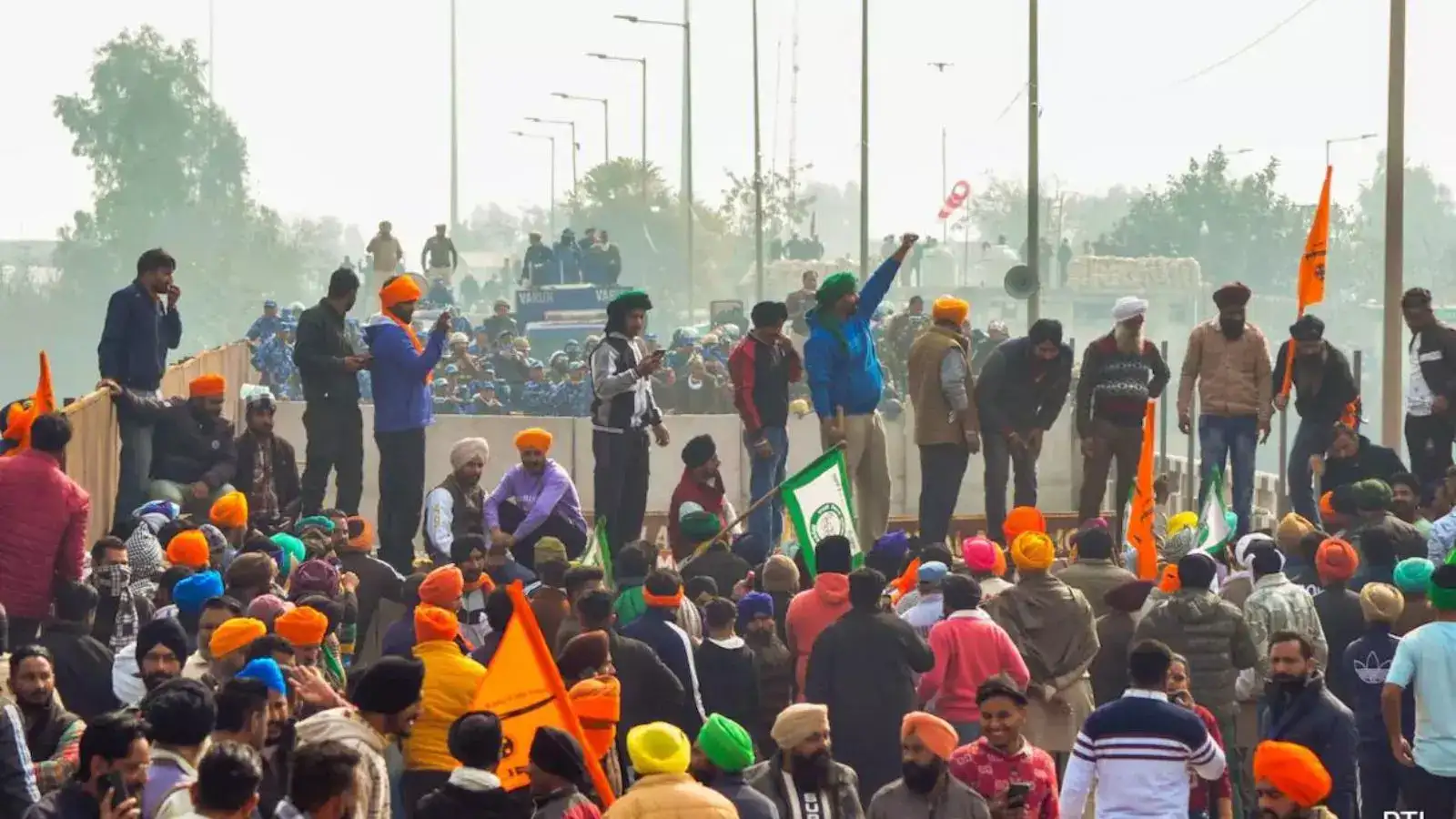
Let's explore the root causes and primary talking points of the Farmers Protests 2.0.
Primary Demand: Legal Assurance for MSP
The heart of their request hinges on obtaining a legal assurance for MSP, a pivotal aspect that motivated them to take to the streets during the previous protests against the farm laws.
Farmers are currently advocating for a Minimum Support Price (MSP) law to safeguard a guaranteed income. Drawing inspiration from the formula put forth by renowned agricultural scientist M.S. Swaminathan, who was recently honored with the Bharat Ratna award, the proposed MSP guarantees a 50 percent profit margin over the weighted average cost of production. This formula, championed by the National Commission on Farmers chaired by Swaminathan in 2004, has gained widespread endorsement.
Additional Demands: Beyond MSP
Additional requests entail the enactment of the Swaminathan Committee report, a significant document tackling agricultural issues, alongside the suggestion for a pension of Rs 10,000 per month for farmers aged 60 and older.
This is not the first instance of farmers raising these demands. In previous protests, farmers have included a legal guarantee for Minimum Support Price (MSP) among a list of approximately twelve demands.
What is the Minimum Support Price (MSP)?
Minimum Support Price (MSP) acts as a safety cushion for farmers. It guarantees the lowest price at which the government will purchase their crops, ensuring farmers receive a fair payment for their produce. This system offers financial stability and security to farmers.
What is the Swaminathan Commission?
In November 2004, Prime Minister Manmohan Singh established a commission headed by renowned agricultural scientist MS Swaminathan to tackle the challenges confronting farmers. Dubbed the 'National Commission on Farmers,' the committee extensively examined the issues afflicting the agricultural sector. From December 2004 to October 2006, over two years, the commission diligently submitted a total of six reports to the government.
The main goal of the Swaminathan Commission was to examine and offer solutions to the challenges encountered by farmers. Its reports extensively covered different facets of agriculture, presenting analyses and recommendations aimed at enhancing the overall well-being of farmers across the nation.
Tracking the Progress of the Swaminathan Formula : Is It in Effect?
The government asserts that it has adopted the Swaminathan committee's MSP formula, which guarantees a 50 percent profit margin over the entire production cost. However, this MSP is presently applicable solely to government procurement for 22 crop varieties, encompassing less than 10 percent of the nation's overall agricultural output.
The 'Samyukta Kisan Morcha' declared a 'Bharat Band' on February 16 aimed at securing improved MSP and legal safeguards. As per the Central government, the Union Budget for 2018–19 introduced the principle of fixing MSP at 1.5 times the production cost, a policy upheld ever since.
The farmer unions contend that the current Minimum Support Price (MSP) formula falls short of covering all expenses. Presently, the formula is A2+FL+50 percent profit, where A2 includes various expenses, and FL represents family labor.
Furthermore, the Farmer Commission headed by Swaminathan proposed the adoption of the C2 formula, which encompasses the total production costs, incorporating additional expenses such as interest on capital assets and the rental value of owned land. Farmer unions are advocating for the integration of the C2 formula into the proposed MSP legislation to overcome shortcomings and extend its application to all procurements, including those conducted by private entities.
Farmers are pressing for the implementation of the C2+50 percent formula for Minimum Support Price (MSP) as recommended by the Swaminathan Commission. This formula is designed to guarantee that farmers receive an extra 50 percent of the production cost for their crops, thereby boosting their income. The ongoing protests underscore the farmers' insistence on incorporating this formula into the MSP Guarantee Act.
What crops receive MSP and how are rates determined in the latest government announcement?
The government has announced Minimum Support Prices (MSP) for 22 designated crops and Fair and Remunerative Prices (FRP) for sugarcane. These encompass 14 crops from the kharif season, 6 from the rabi season, and two additional commercial crops.
The list encompasses:
The Minimum Support Prices (MSP) encompass a range of crops across different categories. In the cereal category, there are seven crops included: Paddy, Wheat, Barley, Jowar, Bajra, Maize, and Ragi.
The pulses category includes five crops:
Gram, Arhar/Tur, Moong, Urad, and Lentil. Moving on to oilseeds, the MSP applies to eight crops, including Groundnut, Rapeseed/Mustard, Toria, Soyabean, Sunflower Seed, Sesamum, Safflower Seed, and Nigerseed.
Moreover, Minimum Support Price (MSP) is allocated for various other crops including Raw Jute, Copra, De-husked Coconut, Sugarcane (under Fair and Remunerative Price), and Virginia Flu Cured (VFC) Tobacco.
The most recent Minimum Support Prices (MSPs) for Kharif (2023-24) and Rabi (2024-25) crops have been established in line with the principles outlined in the Union Budget 2018-19. The goal is to ensure that the MSP is set at a minimum of 1.5 times the All-India weighted average Cost of Production, thereby offering equitable compensation to farmers. This methodology results in the highest estimated margin over the cost of production for crops such as bajra (82 percent), tur (58 percent), soybean (52 percent), and urad (51 percent). The MSP for Rabi Crops in Marketing Season 2024-25 has also been increased, with the highest absolute increase for lentil (masur) at Rs 425 per quintal, followed by rapeseed & mustard at Rs 200 per quintal, among others.
Who holds the Reins in MSP Determination: Central or State government?
The Minimum Support Price (MSP) is set by the Government of India, particularly by the Cabinet Committee on Economic Affairs (CCEA), following the suggestions put forth by the Commission for Agricultural Costs and Prices (CACP). The CACP takes into account a range of factors including production costs, market prices, supply and demand dynamics, and the general agricultural landscape when formulating its recommendations.
Both the central and state governments have pivotal roles within the Minimum Support Price (MSP) framework. The central government establishes the MSP nationally, guaranteeing a minimum price for different crops nationwide. Conversely, state governments are tasked with implementing the MSP locally. Their responsibilities include procurement operations, wherein they purchase crops from farmers at MSP rates to ensure they receive fair and remunerative prices for their produce.
Farmers' 'Delhi Chalo' Protest Day 2: Increased security measures at the borders have led to significant congestion, with visuals depicting the heavy traffic. While the central government establishes the overarching policy framework and minimum support price (MSP) rates, state governments play a pivotal role in executing procurement operations and managing regional intricacies or difficulties within the agricultural sector.
Let's explore the root causes and primary talking points of the Farmers Protests 2.0.
Primary Demand: Legal Assurance for MSP
The heart of their request hinges on obtaining a legal assurance for MSP, a pivotal aspect that motivated them to take to the streets during the previous protests against the farm laws.
Farmers are currently advocating for a Minimum Support Price (MSP) law to safeguard a guaranteed income. Drawing inspiration from the formula put forth by renowned agricultural scientist M.S. Swaminathan, who was recently honored with the Bharat Ratna award, the proposed MSP guarantees a 50 percent profit margin over the weighted average cost of production. This formula, championed by the National Commission on Farmers chaired by Swaminathan in 2004, has gained widespread endorsement.
Additional Demands: Beyond MSP
Additional requests entail the enactment of the Swaminathan Committee report, a significant document tackling agricultural issues, alongside the suggestion for a pension of Rs 10,000 per month for farmers aged 60 and older.
This is not the first instance of farmers raising these demands. In previous protests, farmers have included a legal guarantee for Minimum Support Price (MSP) among a list of approximately twelve demands.
What is the Minimum Support Price (MSP)?
Minimum Support Price (MSP) acts as a safety cushion for farmers. It guarantees the lowest price at which the government will purchase their crops, ensuring farmers receive a fair payment for their produce. This system offers financial stability and security to farmers.
What is the Swaminathan Commission?
In November 2004, Prime Minister Manmohan Singh established a commission headed by renowned agricultural scientist MS Swaminathan to tackle the challenges confronting farmers. Dubbed the 'National Commission on Farmers,' the committee extensively examined the issues afflicting the agricultural sector. From December 2004 to October 2006, over two years, the commission diligently submitted a total of six reports to the government.
The main goal of the Swaminathan Commission was to examine and offer solutions to the challenges encountered by farmers. Its reports extensively covered different facets of agriculture, presenting analyses and recommendations aimed at enhancing the overall well-being of farmers across the nation.
Tracking the Progress of the Swaminathan Formula : Is It in Effect?
The government asserts that it has adopted the Swaminathan committee's MSP formula, which guarantees a 50 percent profit margin over the entire production cost. However, this MSP is presently applicable solely to government procurement for 22 crop varieties, encompassing less than 10 percent of the nation's overall agricultural output.
The 'Samyukta Kisan Morcha' declared a 'Bharat Band' on February 16 aimed at securing improved MSP and legal safeguards. As per the Central government, the Union Budget for 2018–19 introduced the principle of fixing MSP at 1.5 times the production cost, a policy upheld ever since.
The farmer unions contend that the current Minimum Support Price (MSP) formula falls short of covering all expenses. Presently, the formula is A2+FL+50 percent profit, where A2 includes various expenses, and FL represents family labor.
Furthermore, the Farmer Commission headed by Swaminathan proposed the adoption of the C2 formula, which encompasses the total production costs, incorporating additional expenses such as interest on capital assets and the rental value of owned land. Farmer unions are advocating for the integration of the C2 formula into the proposed MSP legislation to overcome shortcomings and extend its application to all procurements, including those conducted by private entities.
Farmers are pressing for the implementation of the C2+50 percent formula for Minimum Support Price (MSP) as recommended by the Swaminathan Commission. This formula is designed to guarantee that farmers receive an extra 50 percent of the production cost for their crops, thereby boosting their income. The ongoing protests underscore the farmers' insistence on incorporating this formula into the MSP Guarantee Act.
What crops receive MSP and how are rates determined in the latest government announcement?
The government has announced Minimum Support Prices (MSP) for 22 designated crops and Fair and Remunerative Prices (FRP) for sugarcane. These encompass 14 crops from the kharif season, 6 from the rabi season, and two additional commercial crops.
The list encompasses:
The Minimum Support Prices (MSP) encompass a range of crops across different categories. In the cereal category, there are seven crops included: Paddy, Wheat, Barley, Jowar, Bajra, Maize, and Ragi.
The pulses category includes five crops:
Gram, Arhar/Tur, Moong, Urad, and Lentil. Moving on to oilseeds, the MSP applies to eight crops, including Groundnut, Rapeseed/Mustard, Toria, Soyabean, Sunflower Seed, Sesamum, Safflower Seed, and Nigerseed.
Moreover, Minimum Support Price (MSP) is allocated for various other crops including Raw Jute, Copra, De-husked Coconut, Sugarcane (under Fair and Remunerative Price), and Virginia Flu Cured (VFC) Tobacco.
The most recent Minimum Support Prices (MSPs) for Kharif (2023-24) and Rabi (2024-25) crops have been established in line with the principles outlined in the Union Budget 2018-19. The goal is to ensure that the MSP is set at a minimum of 1.5 times the All-India weighted average Cost of Production, thereby offering equitable compensation to farmers. This methodology results in the highest estimated margin over the cost of production for crops such as bajra (82 percent), tur (58 percent), soybean (52 percent), and urad (51 percent). The MSP for Rabi Crops in Marketing Season 2024-25 has also been increased, with the highest absolute increase for lentil (masur) at Rs 425 per quintal, followed by rapeseed & mustard at Rs 200 per quintal, among others.
Who holds the Reins in MSP Determination: Central or State government?
The Minimum Support Price (MSP) is set by the Government of India, particularly by the Cabinet Committee on Economic Affairs (CCEA), following the suggestions put forth by the Commission for Agricultural Costs and Prices (CACP). The CACP takes into account a range of factors including production costs, market prices, supply and demand dynamics, and the general agricultural landscape when formulating its recommendations.
Both the central and state governments have pivotal roles within the Minimum Support Price (MSP) framework. The central government establishes the MSP nationally, guaranteeing a minimum price for different crops nationwide. Conversely, state governments are tasked with implementing the MSP locally. Their responsibilities include procurement operations, wherein they purchase crops from farmers at MSP rates to ensure they receive fair and remunerative prices for their produce.
Farmers' 'Delhi Chalo' Protest Day 2: Increased security measures at the borders have led to significant congestion, with visuals depicting the heavy traffic. While the central government establishes the overarching policy framework and minimum support price (MSP) rates, state governments play a pivotal role in executing procurement operations and managing regional intricacies or difficulties within the agricultural sector.
Next Story