
Food Inflation: Onion, Oil, Dal And Vegetable Prices Push Up Kitchen Budgets

Household food budgets are facing renewed pressure as the prices of several essential items climb. For families already managing expenses carefully, the increase is being felt across the kitchen rather than in just one or two products.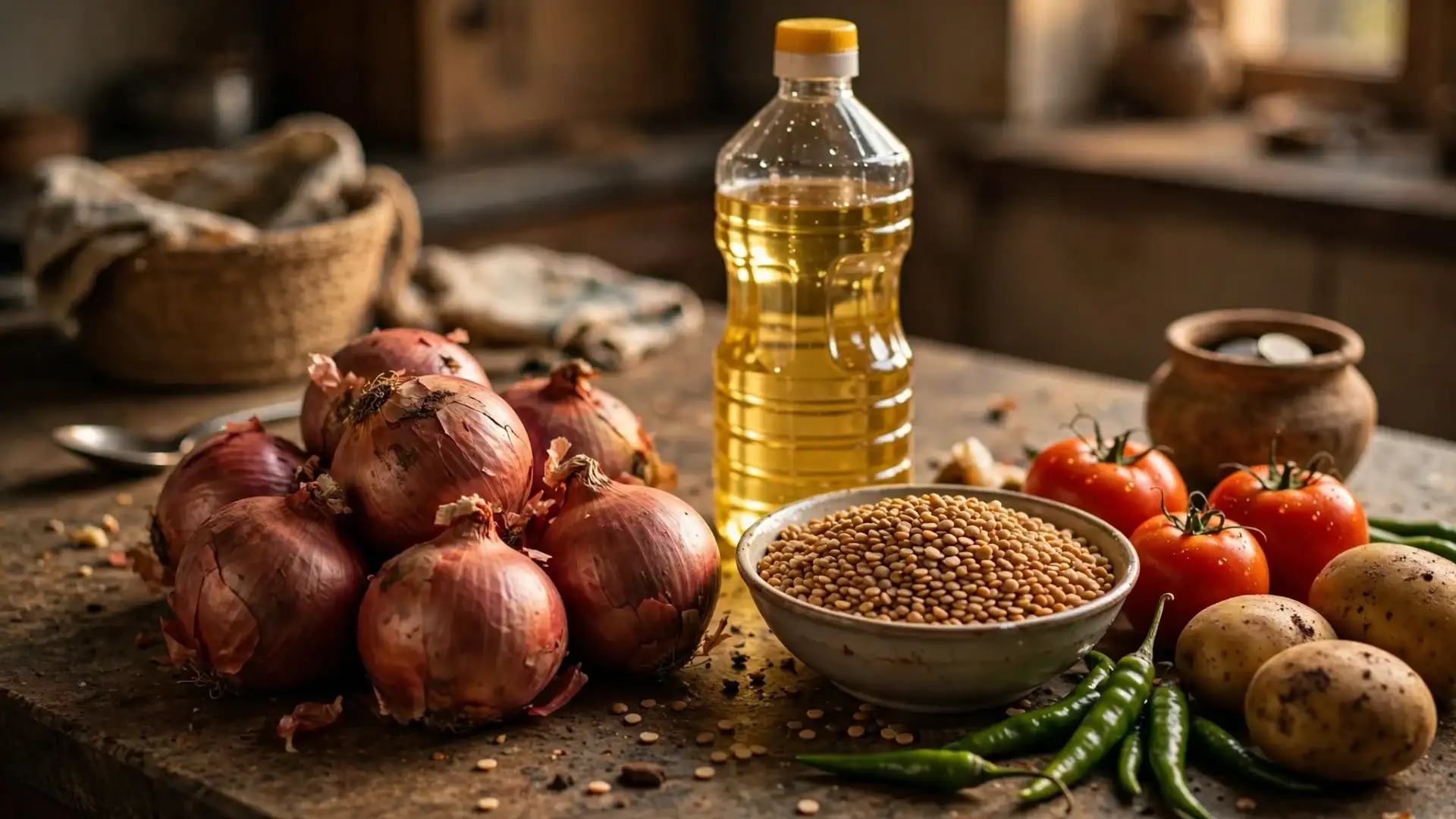
The impact goes beyond a higher grocery bill. When basic ingredients become expensive, households often have to rethink what they cook, how much they buy and which foods they can continue to include regularly.
For many families, earlier cost-cutting meant buying less protein-rich food, reducing the use of certain ingredients or choosing cheaper alternatives. With prices continuing to rise, even those adjustments are becoming harder to sustain.
Prices of everyday additions such as ginger and fresh coriander have also increased. While these may appear to be small-ticket purchases, repeated increases across several ingredients can make a noticeable difference to a monthly kitchen budget .
Green vegetables have also become more expensive. Tomatoes, cauliflower, okra, bottle gourd and beans are among the vegetables affected, with monsoon conditions and higher transportation costs contributing to the increase.
The rise is especially difficult for households that depend heavily on fresh vegetables for daily meals. Families may now have to replace preferred vegetables with cheaper options or reduce the quantity purchased during each shopping trip.
Milk and dairy products are putting additional pressure on household spending. A rise in milk prices can quickly affect the cost of curd, butter, paneer and buttermilk, making the increase more significant for families that regularly buy these products.
The combined effect of these increases means that a household may spend substantially more even without changing the quantity of groceries purchased. This is where food inflation becomes particularly visible in everyday household finances.
Sugar has risen from ₹45 to ₹65 per kg, while rice has increased from ₹90 to ₹105 per kg. Arhar dal has moved from ₹120 to ₹150 per kg, and mustard oil has reached ₹200 per litre.
Tea leaves have also become costlier, rising from ₹350 to ₹450 per kg. Vegetable prices have seen sharp increases too, with onions moving from ₹30 to ₹60 per kg and okra climbing from ₹30 to ₹60 per kg.
Cauliflower has risen from ₹50 to ₹100 per kg, while bottle gourd has doubled from ₹40 to ₹80 per kg. Continuous rain and flooding have added to supply pressures and contributed to the increase in vegetable prices.
Almond prices have also climbed from around ₹800 to approximately ₹1,100 per kg. For households that traditionally purchase dry fruits in larger quantities during festivals, these increases can add hundreds or even thousands of rupees to the shopping bill.
The pressure is not limited to festive purchases, either. Families are already dealing with higher costs for routine groceries, leaving less room in the budget for seasonal or discretionary spending.
The choices are becoming increasingly difficult. Families may have to increase their monthly food budget, reduce the quantity of certain items or switch to cheaper alternatives to keep spending under control.
The bigger concern is that repeated reductions in nutritious foods can affect the quality of household meals. As food inflation continues to influence everyday purchasing decisions, maintaining a balanced diet while staying within a fixed budget is becoming a tougher challenge for many families.
Image Courtesy: Meta AI
The impact goes beyond a higher grocery bill. When basic ingredients become expensive, households often have to rethink what they cook, how much they buy and which foods they can continue to include regularly.
For many families, earlier cost-cutting meant buying less protein-rich food, reducing the use of certain ingredients or choosing cheaper alternatives. With prices continuing to rise, even those adjustments are becoming harder to sustain.
Onion, garlic and vegetables lead the squeeze
The latest rise in vegetable prices has added significantly to household expenses. Onion and garlic have become particularly expensive, with garlic prices reportedly doubling in several cities and onions selling at almost twice their usual rates.Prices of everyday additions such as ginger and fresh coriander have also increased. While these may appear to be small-ticket purchases, repeated increases across several ingredients can make a noticeable difference to a monthly kitchen budget .
Green vegetables have also become more expensive. Tomatoes, cauliflower, okra, bottle gourd and beans are among the vegetables affected, with monsoon conditions and higher transportation costs contributing to the increase.
The rise is especially difficult for households that depend heavily on fresh vegetables for daily meals. Families may now have to replace preferred vegetables with cheaper options or reduce the quantity purchased during each shopping trip.
Oil, sugar and dairy add to the monthly bill
Cooking oil is another major concern because it is used almost every day. Mustard, soybean and sunflower oils have all become costlier, while prices of sugar and other basic household items have also increased by around 10% to 15%.Milk and dairy products are putting additional pressure on household spending. A rise in milk prices can quickly affect the cost of curd, butter, paneer and buttermilk, making the increase more significant for families that regularly buy these products.
The combined effect of these increases means that a household may spend substantially more even without changing the quantity of groceries purchased. This is where food inflation becomes particularly visible in everyday household finances.
Festive shopping faces another test
The timing of the price rise could make matters harder for families preparing for the festive season. Several staples have become noticeably more expensive between July and August 24.Sugar has risen from ₹45 to ₹65 per kg, while rice has increased from ₹90 to ₹105 per kg. Arhar dal has moved from ₹120 to ₹150 per kg, and mustard oil has reached ₹200 per litre.
Tea leaves have also become costlier, rising from ₹350 to ₹450 per kg. Vegetable prices have seen sharp increases too, with onions moving from ₹30 to ₹60 per kg and okra climbing from ₹30 to ₹60 per kg.
Cauliflower has risen from ₹50 to ₹100 per kg, while bottle gourd has doubled from ₹40 to ₹80 per kg. Continuous rain and flooding have added to supply pressures and contributed to the increase in vegetable prices.
You may also like
- 'Situation under control': Delhi minister as city logs 2,308 H1N1 cases amid flu surge
- 'Be ready for Cockroaches!' CJP doubles down on September 5 protest as 3 demands still 'pending'
- Gurugram's rules banning school buses on flooded roads backfires
- Toxic Review: Yash & Geetu Mohandas' Film Is A 'Headache For Grown-Ups'; Why Is Everyone Shouting?
- 'We support protest for accountability': AISA backs CJP's proposed September 5 march
Dry fruits make festive spending costlier
Festive preparations could also become more expensive because of higher dry fruit prices. Cashews, which cost around ₹1,000 per kg earlier, have risen to nearly ₹1,500 per kg.Almond prices have also climbed from around ₹800 to approximately ₹1,100 per kg. For households that traditionally purchase dry fruits in larger quantities during festivals, these increases can add hundreds or even thousands of rupees to the shopping bill.
The pressure is not limited to festive purchases, either. Families are already dealing with higher costs for routine groceries, leaving less room in the budget for seasonal or discretionary spending.
A ₹10,000 kitchen budget under pressure
For a household operating with a monthly kitchen budget of ₹10,000, the latest increases can make the same basket of groceries significantly more expensive. Higher prices for dal, oil, sugar, vegetables and other staples leave families with limited room to absorb additional costs.The choices are becoming increasingly difficult. Families may have to increase their monthly food budget, reduce the quantity of certain items or switch to cheaper alternatives to keep spending under control.
The bigger concern is that repeated reductions in nutritious foods can affect the quality of household meals. As food inflation continues to influence everyday purchasing decisions, maintaining a balanced diet while staying within a fixed budget is becoming a tougher challenge for many families.
Image Courtesy: Meta AI






Loving Newspoint? Download the app now
