
Forgotten Railway Stations in India and the Fascinating History Behind Them

India’s railway network is often remembered through grand terminals, crowded platforms and famous mountain trains. But beyond these well-known landmarks are smaller stations and abandoned platforms carrying stories that rarely make it into travel guides. Some were built to serve remote communities, others grew around railway workshops, while a few disappeared after natural disasters or changing routes. Their crumbling walls, old signal cabins and quiet platforms offer a glimpse into another India, when the railway was still expanding into unfamiliar territory. From a cyclone-damaged station in Tamil Nadu to historic hill stations in Himachal Pradesh, these forgotten railway stations reveal how deeply the railways became woven into India's social and economic history.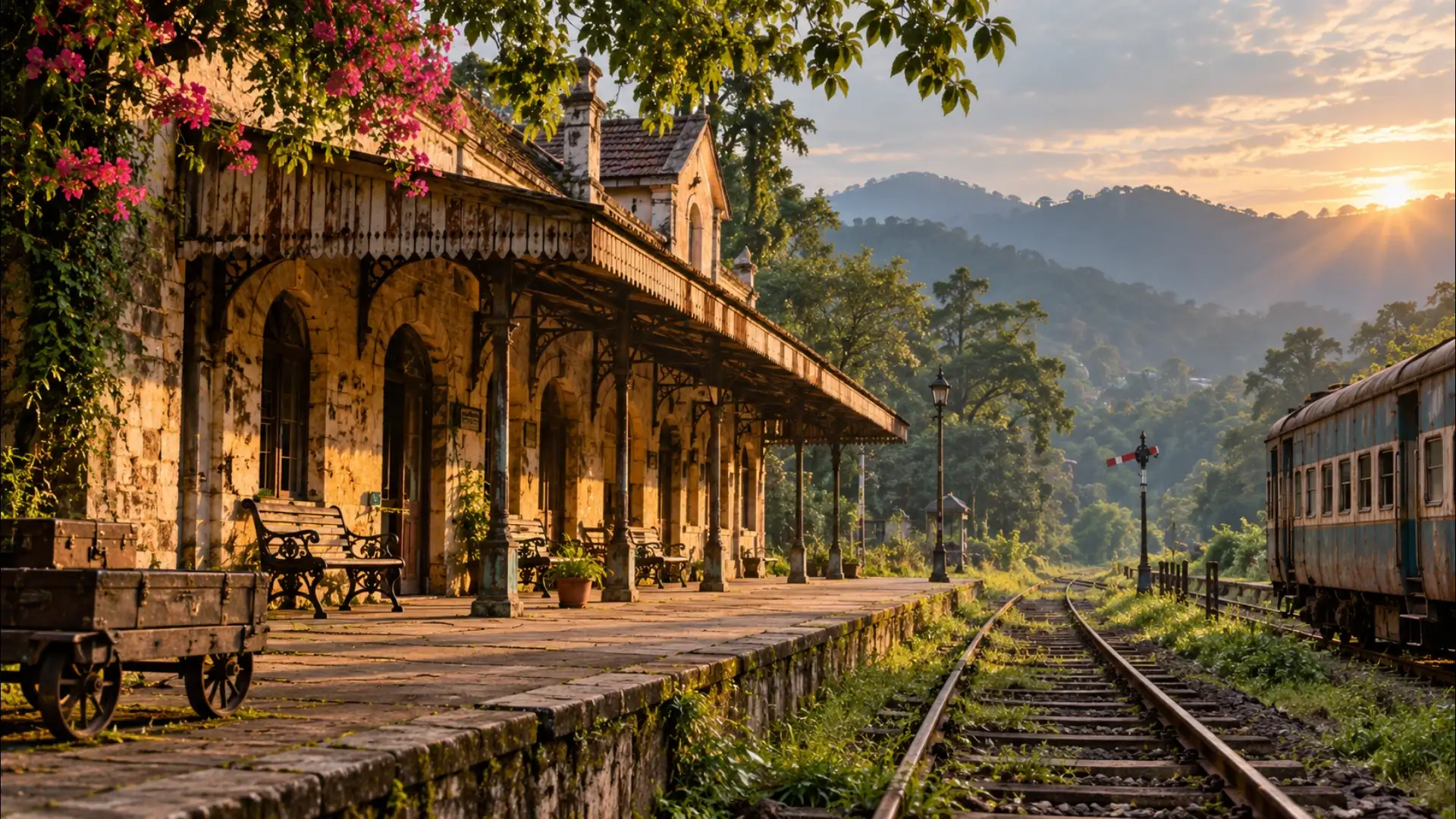
That world changed on 22 December 1964, when a devastating cyclone struck the region. A passenger train travelling towards Dhanushkodi was overwhelmed by the storm, and the town itself suffered catastrophic destruction. The railway line was subsequently abandoned, leaving behind the remains of a settlement that had once been an important transport link.
Today, the ruins around Dhanushkodi are a striking reminder of how quickly geography and nature can change the fortunes of a railway town.
The station opened with the railway in 1903 and is surrounded by pine-covered hills and steep valleys.
Its most famous story concerns Colonel Barog, an engineer involved in constructing one of the railway's tunnels. According to historical accounts, an error meant that the two sides of the tunnel failed to meet correctly. He was fined by the British authorities, and the incident became associated with the tunnel that eventually carried his name.
The railway itself remains an extraordinary engineering achievement, with numerous bridges, curves and tunnels built across difficult Himalayan terrain.
The workshop transformed what had been a relatively insignificant settlement into a planned railway community. Houses, schools, technical institutions, recreational facilities and places of worship developed around the railway workforce. Indian Railways describes Jamalpur as one of the earliest major railway colonies and notes that its design influenced railway settlements elsewhere in the country.
St Mary's Church, established in 1867, became part of this wider social landscape. The surviving historical record shows that Jamalpur was not simply a workplace but a complete railway community.
That makes its history particularly valuable. It demonstrates that India's railways created towns and communities, not merely tracks and stations.
The station later reopened, but the legends remained part of its popular identity. Such stories should be treated as folklore rather than established fact, yet they reveal something interesting about forgotten railway places. When platforms become quiet and railway buildings lose their original purpose, local memories often become an important part of their identity.
Railways carried workers, migrants, traders, soldiers and tourists across enormous distances. They connected ports with inland markets and remote towns with major cities. Railway colonies introduced new forms of urban planning, while stations often became the centre of local economic activity.
Some stations disappeared because routes changed. Others were damaged by floods, cyclones or earthquakes. A few survived but lost their importance as newer roads and transport systems emerged.
Their stories also remind us that infrastructure has a human lifespan. A railway line may appear permanent, but the communities built around it can change dramatically within a generation.
At Dhanushkodi, the ruins evoke a town destroyed by nature. At Barog, the railway represents extraordinary colonial-era engineering in the mountains. At Jamalpur, the railway reveals how an industrial workshop could grow into an entire community.
Together, these places show that India's railway history is not contained within grand terminals or famous locomotives. It exists in abandoned platforms, old colonies, forgotten tunnels and small stations where very few passengers now get off.
Dhanushkodi: The Station Swallowed by a Cyclone
Few Indian railway stations have a story as dramatic as Dhanushkodi in Tamil Nadu. Once a busy railhead on the route towards the Palk Strait, the station connected passengers with the ferry service towards Talaimannar in present-day Sri Lanka.That world changed on 22 December 1964, when a devastating cyclone struck the region. A passenger train travelling towards Dhanushkodi was overwhelmed by the storm, and the town itself suffered catastrophic destruction. The railway line was subsequently abandoned, leaving behind the remains of a settlement that had once been an important transport link.
Today, the ruins around Dhanushkodi are a striking reminder of how quickly geography and nature can change the fortunes of a railway town.
Barog: A Hill Railway Station With a Story Behind Its Tunnel
High in Himachal Pradesh, Barog railway station sits along the historic Kalka-Shimla Railway, a UNESCO World Heritage railway line.The station opened with the railway in 1903 and is surrounded by pine-covered hills and steep valleys.
Its most famous story concerns Colonel Barog, an engineer involved in constructing one of the railway's tunnels. According to historical accounts, an error meant that the two sides of the tunnel failed to meet correctly. He was fined by the British authorities, and the incident became associated with the tunnel that eventually carried his name.
The railway itself remains an extraordinary engineering achievement, with numerous bridges, curves and tunnels built across difficult Himalayan terrain.
Jamalpur: More Than a Railway Station
Jamalpur in Bihar represents another side of India's railway history. Its importance comes from the enormous railway workshop established there in 1862 by the East Indian Railway.The workshop transformed what had been a relatively insignificant settlement into a planned railway community. Houses, schools, technical institutions, recreational facilities and places of worship developed around the railway workforce. Indian Railways describes Jamalpur as one of the earliest major railway colonies and notes that its design influenced railway settlements elsewhere in the country.
St Mary's Church, established in 1867, became part of this wider social landscape. The surviving historical record shows that Jamalpur was not simply a workplace but a complete railway community.
That makes its history particularly valuable. It demonstrates that India's railways created towns and communities, not merely tracks and stations.
Begunkodor and the Stories That Grew Around Railway Places
Begunkodor railway station in West Bengal became famous for a very different reason. For decades, stories circulated about supernatural sightings around the station, eventually contributing to its reputation as one of India's supposedly haunted railway locations.The station later reopened, but the legends remained part of its popular identity. Such stories should be treated as folklore rather than established fact, yet they reveal something interesting about forgotten railway places. When platforms become quiet and railway buildings lose their original purpose, local memories often become an important part of their identity.
Why These Stations Still Matter
Forgotten railway stations are more than photogenic ruins. They help explain how modern India developed.Railways carried workers, migrants, traders, soldiers and tourists across enormous distances. They connected ports with inland markets and remote towns with major cities. Railway colonies introduced new forms of urban planning, while stations often became the centre of local economic activity.
Some stations disappeared because routes changed. Others were damaged by floods, cyclones or earthquakes. A few survived but lost their importance as newer roads and transport systems emerged.
Their stories also remind us that infrastructure has a human lifespan. A railway line may appear permanent, but the communities built around it can change dramatically within a generation.
The Heritage Hidden Between Famous Stations
India's best-known railway landmarks naturally attract visitors, but the quieter stations can sometimes tell more intimate stories.At Dhanushkodi, the ruins evoke a town destroyed by nature. At Barog, the railway represents extraordinary colonial-era engineering in the mountains. At Jamalpur, the railway reveals how an industrial workshop could grow into an entire community.
Together, these places show that India's railway history is not contained within grand terminals or famous locomotives. It exists in abandoned platforms, old colonies, forgotten tunnels and small stations where very few passengers now get off.
Next Story