
Half a course, full consequences: How India is losing its antibiotics


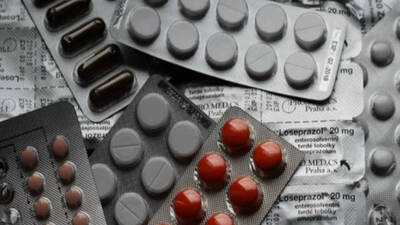
Most Indian households know the routine. A fever lingers, a half-used strip of tablets from an earlier illness sits in the drawer, and the corner chemist asks few questions. Two doses later the fever eases and the strip goes back into the drawer. It feels like a small, sensible saving.
Inside the body, the picture is different. The bacteria that survive a partial course are often the hardiest ones, and they are left free to multiply. Multiplied across millions of households, hospitals, pharmacies and farms, this is how a medicine stops working.
A problem that has moved into the clinic
Antimicrobial resistance occurs when bacteria develop the ability to survive medicines that once killed them. An infection that a common antibiotic could treat becomes harder to control, pushing doctors toward stronger, costlier drugs.
Doctors say they see this daily. Dr Sowmya Muralikumaran, an internal medicine specialist at Apollo Spectra hospital in Chennai, is asked how often she now sees infections that do not respond to the first antibiotic prescribed.
"Very often," she says, "especially with patients who have self-medicated with multiple medicines before coming for a consultation."
What hospital laboratories are finding
The national picture is documented in the annual report of the Indian Council of Medical Research's ( ICMR ) Antimicrobial Resistance Research and Surveillance Network, which for 2025 analysed 1,13,008 culture-positive bacterial and fungal samples from 30 tertiary-care hospitals. For the first time, it also included data from 34 secondary-care hospitals, 12 of them district hospitals, which contributed another 20,529 samples.
The findings are stark. Only 18.4 per cent of E. coli samples responded to cefotaxime and 24.7 per cent to ceftazidime. Among E. coli from urine samples, just 9 per cent were sensitive to ciprofloxacin and 18.2 per cent to levofloxacin. Low sensitivity was seen even among patients visiting outpatient departments, which suggests resistance is not confined to those admitted to hospital.
Klebsiella pneumoniae, which can cause bloodstream and lung infections, fared worse. Sensitivity to third-generation cephalosporins was between 23 and 27 per cent. Carbapenems, powerful drugs that doctors turn to when others fail, worked against only 35 to 40 per cent of samples. The report found genes such as OXA-48 and NDM, which help bacteria survive carbapenems, in some Klebsiella samples.
Intensive care units showed the heaviest burden. Sensitivity of ICU Klebsiella samples to ertapenem, imipenem and meropenem was 26.1, 24.9 and 26.3 per cent, respectively. Among Acinetobacter baumannii samples that were retested, 91.1 per cent were resistant to carbapenems. More than half of Staphylococcus aureus samples (56.8 per cent) from tertiary hospitals were methicillin-resistant, or MRSA, and about one in five enterococci samples was resistant to vancomycin.
Typhoid shows how uneven the picture can be. Samples remained highly sensitive to azithromycin (99.4 per cent) and ceftriaxone (96.6 per cent), but only 2 per cent responded to ciprofloxacin.
There is some good news. Fosfomycin worked against 96.5 per cent of urine E. coli samples and nitrofurantoin against 79.1 per cent. The report is clear that these are laboratory findings, and the right drug still depends on the site and severity of infection and on the patient's own tests.
Why antibiotics are prescribed when they may not be needed
Doctors do not always prescribe antibiotics because patients demand them, but expectations play a part. Dr Muralikumaran points to two reasons.
"Many people have this feeling that only when they take antibiotics will they heal," she says. The second reason lies with the doctor. "There is uncertainty in diagnosis. Mostly all of us might have a viral infection, but sometimes it might be bacterial, so in fear of missing a bacterial infection, an antibiotic can be prescribed too."
Antibiotics do not act on viruses. Yet a viral and a bacterial illness can look alike in the first days, and without a quick, affordable test the cautious choice is often to prescribe.
The half-finished course
The patient's side of the story begins before the consultation. "Quite many have already taken antibiotics," Dr Muralikumaran says. "What they usually do is, after one or two doses, they will feel fine and drop it. They will not fully finish their course."
Self-medication then complicates what comes next. A patient who arrives after taking several medicines at home presents a doctor with a muddier clinical picture and, possibly, a more resistant infection.
When the first drug fails
Once an antibiotic fails, she says, swapping it for another is not enough. "Simply recommending an antibiotic will not help." The patient has to be reassessed: symptoms re-examined, more detailed blood tests ordered, and only then a higher antibiotic prescribed, sometimes by a different route.
The ICMR report makes a similar point. It highlights that identifying the specific resistance mechanism can help doctors decide which newer medicines may work, and it advises choosing antibiotics based on laboratory testing rather than on what worked in the past.
The cost falls on the patient. "It does have a cost on their finances," Dr Muralikumaran says, "and their recovery time also might get delayed."
What the rules say
On paper, India restricts how antibiotics are sold. They are listed under Schedules H and H1 of the Drugs Rules, 1945, which means a registered medical practitioner's prescription is needed. Schedule H1, in force since 2014, adds stricter conditions: pharmacies must record each sale in a separate register, and under the rules, these supply records are to be kept for three years.
The health ministry's Red Line campaign asks the public not to use medicines marked with a red vertical line, including antibiotics, without a doctor's prescription.
Enforcement is another matter. Studies of retail practice have found that over-the-counter sale of antibiotics remains widespread despite these measures. A 2019 study in Kerala that interviewed pharmacy owners found a general perception that the regulations were poorly enforced, and that awareness of the Red Line campaign was patchy, even among healthcare professionals.
What the government is attempting
India's policy effort stretches back more than a decade. The country formed a National Task Force on AMR Containment in 2010 and published its first National Action Plan on AMR in 2017. The second, NAP-AMR 2.0 for 2025 to 2029, was launched by Union Health Minister J P Nadda on 18 November 2025, the first day of the World Health Organization's World AMR Awareness Week.
At the launch, Nadda said the misuse and overuse of antibiotics had become an unfortunate common practice. The health ministry said the new plan addresses gaps in the first by increasing ownership of AMR efforts, improving coordination between sectors and engaging more closely with the private sector. It follows a One Health approach, which treats human, animal and environmental health together.
Some states have moved on their own. Kerala was the first state to introduce a state action plan on AMR, in 2018. In January 2024, its Drug Control Department launched Operation AMRITH, which involves surprise inspections of pharmacies to detect sales of antibiotics without a prescription. Pharmacies must display a notice saying antibiotics will not be sold without one and must keep accurate sales records. Citizens can report violations on a toll-free number.
A caution about the numbers
The ICMR figures come from hospital laboratories, largely tertiary-care centres, and they show how many samples responded to a drug in testing. They do not show how many patients failed treatment, developed complications or died. They also do not reflect resistance levels in the wider community. Even so, the direction they point in is clear, and ICMR itself has called for better antibiotic use, stronger infection control in hospitals and treatment guided by local resistance patterns.
What one doctor would change
Asked what single change she would make, Dr Muralikumaran does not hesitate.
"We should start prescribing antibiotics only after establishing a bacterial disease," she says, "and pharmacies should start giving antibiotics based on a prescription."
It is a modest-sounding request. It asks doctors to wait for a diagnosis, patients to finish the course they are given, and chemists to ask for the slip of paper. Each of those habits is small, and the damage from skipping them adds up across the country.
Inside the body, the picture is different. The bacteria that survive a partial course are often the hardiest ones, and they are left free to multiply. Multiplied across millions of households, hospitals, pharmacies and farms, this is how a medicine stops working.
A problem that has moved into the clinic
Antimicrobial resistance occurs when bacteria develop the ability to survive medicines that once killed them. An infection that a common antibiotic could treat becomes harder to control, pushing doctors toward stronger, costlier drugs.
Doctors say they see this daily. Dr Sowmya Muralikumaran, an internal medicine specialist at Apollo Spectra hospital in Chennai, is asked how often she now sees infections that do not respond to the first antibiotic prescribed.
"Very often," she says, "especially with patients who have self-medicated with multiple medicines before coming for a consultation."
What hospital laboratories are finding
The national picture is documented in the annual report of the Indian Council of Medical Research's ( ICMR ) Antimicrobial Resistance Research and Surveillance Network, which for 2025 analysed 1,13,008 culture-positive bacterial and fungal samples from 30 tertiary-care hospitals. For the first time, it also included data from 34 secondary-care hospitals, 12 of them district hospitals, which contributed another 20,529 samples.
The findings are stark. Only 18.4 per cent of E. coli samples responded to cefotaxime and 24.7 per cent to ceftazidime. Among E. coli from urine samples, just 9 per cent were sensitive to ciprofloxacin and 18.2 per cent to levofloxacin. Low sensitivity was seen even among patients visiting outpatient departments, which suggests resistance is not confined to those admitted to hospital.
Klebsiella pneumoniae, which can cause bloodstream and lung infections, fared worse. Sensitivity to third-generation cephalosporins was between 23 and 27 per cent. Carbapenems, powerful drugs that doctors turn to when others fail, worked against only 35 to 40 per cent of samples. The report found genes such as OXA-48 and NDM, which help bacteria survive carbapenems, in some Klebsiella samples.
Intensive care units showed the heaviest burden. Sensitivity of ICU Klebsiella samples to ertapenem, imipenem and meropenem was 26.1, 24.9 and 26.3 per cent, respectively. Among Acinetobacter baumannii samples that were retested, 91.1 per cent were resistant to carbapenems. More than half of Staphylococcus aureus samples (56.8 per cent) from tertiary hospitals were methicillin-resistant, or MRSA, and about one in five enterococci samples was resistant to vancomycin.
Typhoid shows how uneven the picture can be. Samples remained highly sensitive to azithromycin (99.4 per cent) and ceftriaxone (96.6 per cent), but only 2 per cent responded to ciprofloxacin.
There is some good news. Fosfomycin worked against 96.5 per cent of urine E. coli samples and nitrofurantoin against 79.1 per cent. The report is clear that these are laboratory findings, and the right drug still depends on the site and severity of infection and on the patient's own tests.
Why antibiotics are prescribed when they may not be needed
Doctors do not always prescribe antibiotics because patients demand them, but expectations play a part. Dr Muralikumaran points to two reasons.
"Many people have this feeling that only when they take antibiotics will they heal," she says. The second reason lies with the doctor. "There is uncertainty in diagnosis. Mostly all of us might have a viral infection, but sometimes it might be bacterial, so in fear of missing a bacterial infection, an antibiotic can be prescribed too."
Antibiotics do not act on viruses. Yet a viral and a bacterial illness can look alike in the first days, and without a quick, affordable test the cautious choice is often to prescribe.
The half-finished course
The patient's side of the story begins before the consultation. "Quite many have already taken antibiotics," Dr Muralikumaran says. "What they usually do is, after one or two doses, they will feel fine and drop it. They will not fully finish their course."
Self-medication then complicates what comes next. A patient who arrives after taking several medicines at home presents a doctor with a muddier clinical picture and, possibly, a more resistant infection.
When the first drug fails
Once an antibiotic fails, she says, swapping it for another is not enough. "Simply recommending an antibiotic will not help." The patient has to be reassessed: symptoms re-examined, more detailed blood tests ordered, and only then a higher antibiotic prescribed, sometimes by a different route.
The ICMR report makes a similar point. It highlights that identifying the specific resistance mechanism can help doctors decide which newer medicines may work, and it advises choosing antibiotics based on laboratory testing rather than on what worked in the past.
The cost falls on the patient. "It does have a cost on their finances," Dr Muralikumaran says, "and their recovery time also might get delayed."
What the rules say
On paper, India restricts how antibiotics are sold. They are listed under Schedules H and H1 of the Drugs Rules, 1945, which means a registered medical practitioner's prescription is needed. Schedule H1, in force since 2014, adds stricter conditions: pharmacies must record each sale in a separate register, and under the rules, these supply records are to be kept for three years.
The health ministry's Red Line campaign asks the public not to use medicines marked with a red vertical line, including antibiotics, without a doctor's prescription.
Enforcement is another matter. Studies of retail practice have found that over-the-counter sale of antibiotics remains widespread despite these measures. A 2019 study in Kerala that interviewed pharmacy owners found a general perception that the regulations were poorly enforced, and that awareness of the Red Line campaign was patchy, even among healthcare professionals.
What the government is attempting
India's policy effort stretches back more than a decade. The country formed a National Task Force on AMR Containment in 2010 and published its first National Action Plan on AMR in 2017. The second, NAP-AMR 2.0 for 2025 to 2029, was launched by Union Health Minister J P Nadda on 18 November 2025, the first day of the World Health Organization's World AMR Awareness Week.
At the launch, Nadda said the misuse and overuse of antibiotics had become an unfortunate common practice. The health ministry said the new plan addresses gaps in the first by increasing ownership of AMR efforts, improving coordination between sectors and engaging more closely with the private sector. It follows a One Health approach, which treats human, animal and environmental health together.
Some states have moved on their own. Kerala was the first state to introduce a state action plan on AMR, in 2018. In January 2024, its Drug Control Department launched Operation AMRITH, which involves surprise inspections of pharmacies to detect sales of antibiotics without a prescription. Pharmacies must display a notice saying antibiotics will not be sold without one and must keep accurate sales records. Citizens can report violations on a toll-free number.
A caution about the numbers
The ICMR figures come from hospital laboratories, largely tertiary-care centres, and they show how many samples responded to a drug in testing. They do not show how many patients failed treatment, developed complications or died. They also do not reflect resistance levels in the wider community. Even so, the direction they point in is clear, and ICMR itself has called for better antibiotic use, stronger infection control in hospitals and treatment guided by local resistance patterns.
What one doctor would change
Asked what single change she would make, Dr Muralikumaran does not hesitate.
"We should start prescribing antibiotics only after establishing a bacterial disease," she says, "and pharmacies should start giving antibiotics based on a prescription."
It is a modest-sounding request. It asks doctors to wait for a diagnosis, patients to finish the course they are given, and chemists to ask for the slip of paper. Each of those habits is small, and the damage from skipping them adds up across the country.
Next Story