
Himalayan climate concerns need global attention, science-led action: ICIMOD chief


NEW DELHI: With mountain ecosystems facing growing climate threats, scientific evidence must guide policy decisions on mitigation and adaptation, particularly in the Himalayas , Pema Gyamtsho, Director General of the International Centre for Integrated Mountain Development ( ICIMOD ).
Speaking to PTI on the sidelines of the UN Climate Change Conference ( COP31 ), Gyamtsho said scientific research must not remain confined to academic discussions but should translate into policies and decisions that address the impact of climate change on mountain regions.
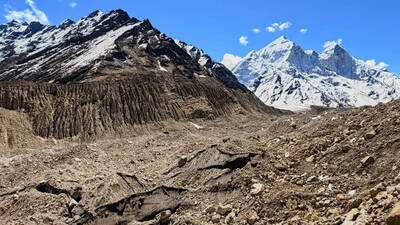
“Science needs to be followed in order to reduce the impacts of climate change on the mountains through mitigation and adaptation,” he said.
He added that communicating scientific findings in a language understood by policymakers, local communities and climate negotiators was equally important.
“In many cases, it's a question of the right kind of communication. However, science not being taken seriously is no excuse for us not to pursue this line because science has to inform policies. Ultimately, science has to inform the decisions that we make,” Gyamtsho said.
Himalayan concerns get attention, but no separate agenda at COP31
On whether the Himalayas would feature in the final outcome of COP31, Gyamtsho said discussions at the conference indicated growing international attention to the region, particularly after recent disasters in Nepal.
“From what I've heard at these different sessions, there's a lot of talk and attention on the Himalayas, particularly in connection with the recent disasters in Nepal,” he said.
The conference, which began on November 9, saw proposals by Nepal, Bhutan and Kyrgyzstan to secure dedicated agenda space for mountain-related climate concerns fail to find support from major negotiating blocs.
Nepal and Bhutan had sought a scientific assessment of mountain ecosystems, an annual high-level political dialogue and a dedicated UN climate work programme. They also called for mountain-specific priorities to be included in global climate adaptation and finance frameworks.
Kyrgyzstan separately proposed an annual dialogue on mountains and climate change as a standing agenda item at meetings of the UN climate body's subsidiary bodies.
Both proposals featured in the supplementary provisional agenda issued by the UN Framework Convention on Climate Change (UNFCCC) on November 6. However, neither was retained as a separate agenda item when countries adopted the agenda on the opening day.
As a compromise, parties agreed that the COP31 presidency would hold consultations on mountain-related issues. The subject will also be taken up in a research dialogue and discussions at meetings of the subsidiary bodies in 2027 and 2028.
Speaking to PTI on the sidelines of the UN Climate Change Conference ( COP31 ), Gyamtsho said scientific research must not remain confined to academic discussions but should translate into policies and decisions that address the impact of climate change on mountain regions.
“Science needs to be followed in order to reduce the impacts of climate change on the mountains through mitigation and adaptation,” he said.
He added that communicating scientific findings in a language understood by policymakers, local communities and climate negotiators was equally important.
“In many cases, it's a question of the right kind of communication. However, science not being taken seriously is no excuse for us not to pursue this line because science has to inform policies. Ultimately, science has to inform the decisions that we make,” Gyamtsho said.
Himalayan concerns get attention, but no separate agenda at COP31
On whether the Himalayas would feature in the final outcome of COP31, Gyamtsho said discussions at the conference indicated growing international attention to the region, particularly after recent disasters in Nepal.
“From what I've heard at these different sessions, there's a lot of talk and attention on the Himalayas, particularly in connection with the recent disasters in Nepal,” he said.
The conference, which began on November 9, saw proposals by Nepal, Bhutan and Kyrgyzstan to secure dedicated agenda space for mountain-related climate concerns fail to find support from major negotiating blocs.
Nepal and Bhutan had sought a scientific assessment of mountain ecosystems, an annual high-level political dialogue and a dedicated UN climate work programme. They also called for mountain-specific priorities to be included in global climate adaptation and finance frameworks.
Kyrgyzstan separately proposed an annual dialogue on mountains and climate change as a standing agenda item at meetings of the UN climate body's subsidiary bodies.
Both proposals featured in the supplementary provisional agenda issued by the UN Framework Convention on Climate Change (UNFCCC) on November 6. However, neither was retained as a separate agenda item when countries adopted the agenda on the opening day.
As a compromise, parties agreed that the COP31 presidency would hold consultations on mountain-related issues. The subject will also be taken up in a research dialogue and discussions at meetings of the subsidiary bodies in 2027 and 2028.
Next Story