
India’s Old Caravan Routes That Once Shaped Trade Across Regions

Long before highways, railways and container trucks transformed the way goods moved across India, traders travelled enormous distances with caravans of horses, camels, bullocks and pack animals. These old caravan routes connected agricultural plains with mountain passes, inland markets with ports and Indian merchants with trading communities beyond the subcontinent. Salt, textiles, spices, precious stones, grains and metals travelled along these routes, but so did languages, ideas, religions and customs. Many of these pathways have disappeared beneath modern roads or faded from public memory. Yet their influence can still be found in old market towns, trading communities, historic passes and settlements that grew wealthy because caravans once stopped there.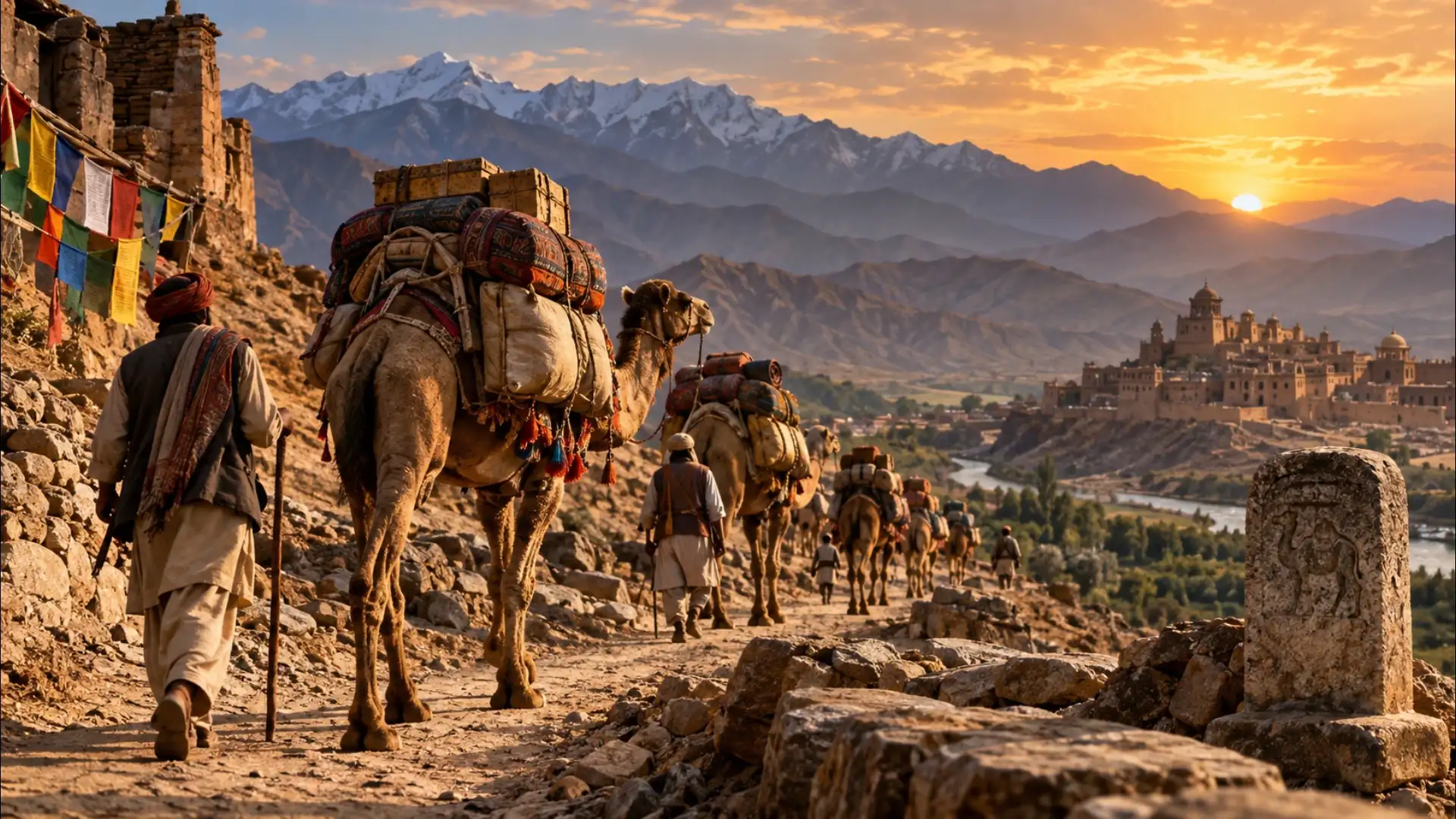
The route linked Bengal with northern India and continued towards the north-west. It became an important corridor for travellers, armies and merchants.
Caravan movement depended on regular stopping points. Sarais, or roadside inns, provided travellers and animals with shelter, water and basic facilities. These establishments helped transform a difficult journey into a connected commercial network.
Some towns along the route grew into important centres of trade because merchants could rest, exchange goods and connect with local markets.
Ladakh became particularly important because of its position between South Asia and Central Asia. Leh developed as a major trading centre where merchants exchanged products arriving from different directions.
Caravans carried wool, salt, tea, spices, textiles and other valuable commodities. The journeys were extremely demanding, with traders having to cross high-altitude terrain and cope with severe weather.
The trade was not merely commercial. It created cultural connections between communities separated by some of the world's most difficult geography.
Historic towns such as Jaisalmer benefited enormously from their position along routes connecting India with regions to the west.
Jaisalmer's famous havelis and elaborate architecture provide clues to the wealth accumulated by merchant families. The city became prosperous partly because traders and caravans passed through the Thar Desert.
The desert was therefore not simply a barrier. For centuries, it was a commercial landscape with established routes, wells, resting places and trading settlements.
These routes linked producers, merchants and consumers over considerable distances. Bullock carts and pack animals were particularly important where terrain made wheeled transport difficult.
The movement of salt also demonstrates something easily forgotten about historic trade. Everyday commodities could be economically more significant than luxury goods because almost every household needed them.
Goods arriving from inland markets could be transported onwards by sea, while imported products moved in the opposite direction. This created networks stretching from India's interior to the Arabian Sea and Bay of Bengal.
Gujarat was especially important in this system. Historic ports such as Cambay, now Khambhat, became major commercial centres with connections across the Indian Ocean.
Merchants could therefore participate in a chain that involved village producers, caravan traders, urban markets and overseas shipping.
Travellers carried stories, religious beliefs, architectural ideas, cooking traditions and languages. Trading communities settled far from their original homes, creating cultural links that survived long after particular routes declined.
Food is one visible example. Ingredients and cooking techniques often travelled alongside merchants, gradually becoming part of regional cuisines.
The same happened with textiles, jewellery, religious traditions and architectural styles.
Markets developed around old routes. Towns grew near river crossings and mountain passes. Resting places became settlements, while trading families built houses, temples and commercial buildings that remain part of India's architectural heritage.
Understanding these routes also helps explain why certain cities became economically important while others remained relatively small.
The Grand Trunk Road and the Movement of Trade
Few historic routes are as important to South Asian history as the Grand Trunk Road. Its origins can be traced back centuries, while major improvements were made during the reign of Sher Shah Suri in the 16th century.The route linked Bengal with northern India and continued towards the north-west. It became an important corridor for travellers, armies and merchants.
Caravan movement depended on regular stopping points. Sarais, or roadside inns, provided travellers and animals with shelter, water and basic facilities. These establishments helped transform a difficult journey into a connected commercial network.
Some towns along the route grew into important centres of trade because merchants could rest, exchange goods and connect with local markets.
The Himalayan Routes to Tibet
Northern India was also connected to Tibet through difficult mountain routes. Traders from regions such as Ladakh, Himachal Pradesh and Uttarakhand crossed high passes carrying goods between the Indian plains and the Tibetan plateau.Ladakh became particularly important because of its position between South Asia and Central Asia. Leh developed as a major trading centre where merchants exchanged products arriving from different directions.
Caravans carried wool, salt, tea, spices, textiles and other valuable commodities. The journeys were extremely demanding, with traders having to cross high-altitude terrain and cope with severe weather.
The trade was not merely commercial. It created cultural connections between communities separated by some of the world's most difficult geography.
Rajasthan’s Camel Routes Across the Desert
In western India, camels were perfectly suited to long-distance desert travel. Rajasthan's trading communities used camel caravans to move textiles, grains, salt and other commodities between settlements.Historic towns such as Jaisalmer benefited enormously from their position along routes connecting India with regions to the west.
Jaisalmer's famous havelis and elaborate architecture provide clues to the wealth accumulated by merchant families. The city became prosperous partly because traders and caravans passed through the Thar Desert.
The desert was therefore not simply a barrier. For centuries, it was a commercial landscape with established routes, wells, resting places and trading settlements.
Salt Routes That Connected Villages and Markets
Salt was one of the most important commodities transported across India. In areas where salt production was concentrated, caravans carried it towards inland markets where demand was high.These routes linked producers, merchants and consumers over considerable distances. Bullock carts and pack animals were particularly important where terrain made wheeled transport difficult.
The movement of salt also demonstrates something easily forgotten about historic trade. Everyday commodities could be economically more significant than luxury goods because almost every household needed them.
Ports at the End of the Caravan Journey
Caravan routes rarely existed in isolation. Many eventually connected with major ports.Goods arriving from inland markets could be transported onwards by sea, while imported products moved in the opposite direction. This created networks stretching from India's interior to the Arabian Sea and Bay of Bengal.
Gujarat was especially important in this system. Historic ports such as Cambay, now Khambhat, became major commercial centres with connections across the Indian Ocean.
You may also like
- Video: TN CM Vijay-themed Ganesha idols installed in Chennai
- Ex-Tehelka editor-in-chief Tarun Tejpal surrenders before Goa court in 2013 rape case
- Man tied up, brutally assaulted during robbery in Keralam
- Mumbai Cybercrime Surge: 3,689 Online Fraud Cases Reported In 7 Months, Only 847 Detected
- Mumbai Lake Levels Rise To 97.48% After Heavy Rain In Catchment Areas
Merchants could therefore participate in a chain that involved village producers, caravan traders, urban markets and overseas shipping.
More Than Routes for Goods
The most fascinating feature of these old caravan routes is that merchants did not carry only merchandise.Travellers carried stories, religious beliefs, architectural ideas, cooking traditions and languages. Trading communities settled far from their original homes, creating cultural links that survived long after particular routes declined.
Food is one visible example. Ingredients and cooking techniques often travelled alongside merchants, gradually becoming part of regional cuisines.
The same happened with textiles, jewellery, religious traditions and architectural styles.
Why These Routes Still Matter Today
Modern highways and railways have largely replaced traditional caravan networks, but many contemporary Indian cities still follow the geography created by historic trade.Markets developed around old routes. Towns grew near river crossings and mountain passes. Resting places became settlements, while trading families built houses, temples and commercial buildings that remain part of India's architectural heritage.
Understanding these routes also helps explain why certain cities became economically important while others remained relatively small.






Loving Newspoint? Download the app now
