
India’s Traditional Textile Communities Preserving Centuries-Old Craft

India's textile history is far older and more diverse than the famous names that appear on shopping labels. Across villages and small towns, generations of weavers, dyers, embroiderers and artisans continue to practise techniques that were developed long before industrial textile production. Some work on handlooms that require remarkable coordination, while others use natural dyes, resist printing or intricate embroidery passed down through families. These crafts are not simply decorative traditions. They are connected to local geography, communities, festivals and livelihoods. Yet many face an uncertain future as cheaper machine-made fabrics, changing consumer habits and declining numbers of young artisans put pressure on traditional skills. The communities preserving them are therefore protecting an important part of India's cultural and economic history.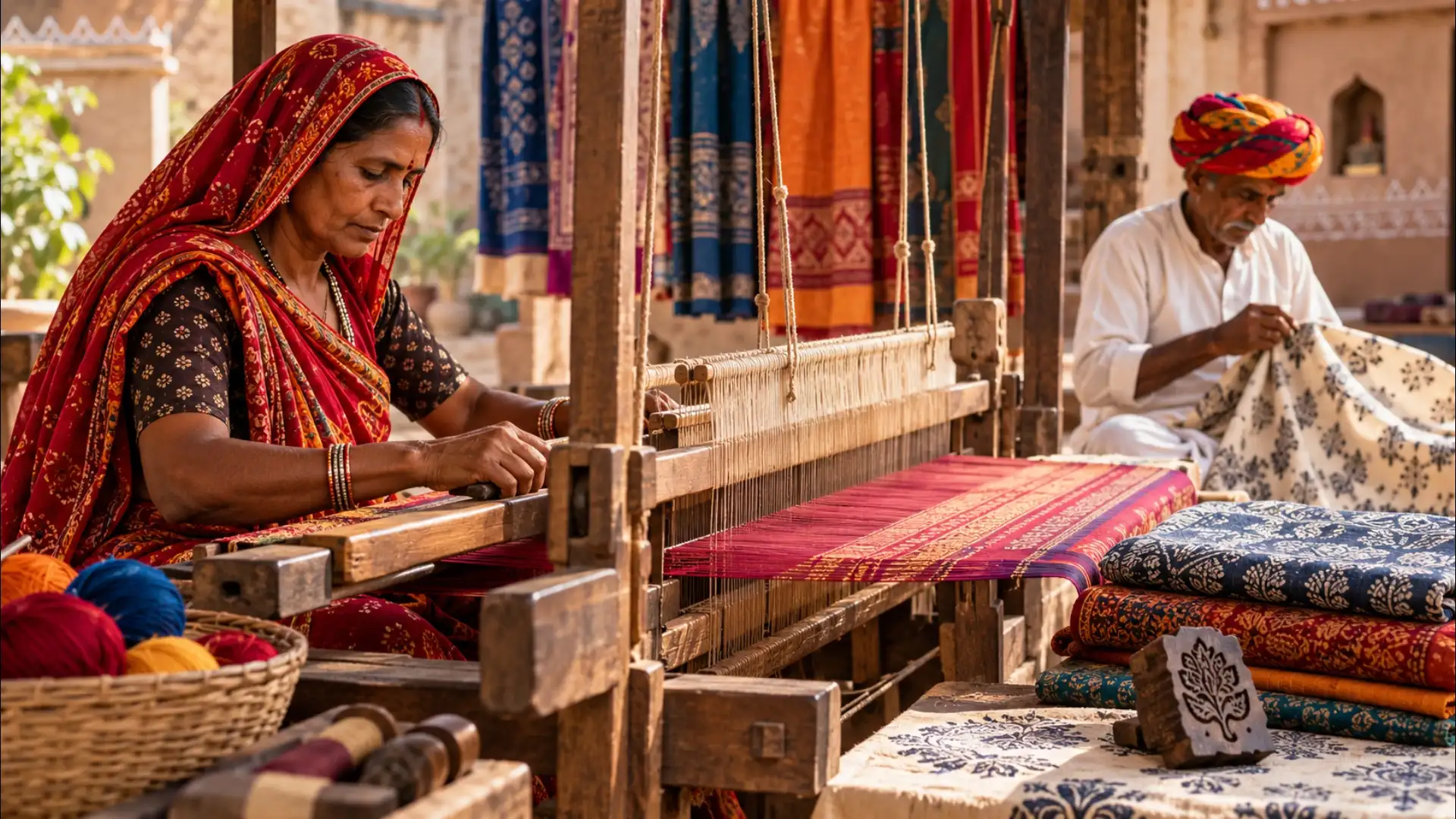
Chanderi weaving has developed over centuries, with artisans traditionally producing lightweight fabrics from combinations of silk and cotton. The fabric's fine texture and characteristic transparency have made it particularly valued for saris and other garments.
The craft depends heavily on skilled handloom work. Patterns and motifs require careful control of threads, making the process considerably slower than industrial textile production.
For weaving communities, Chanderi is not simply a fabric name. It represents a local craft ecosystem involving weavers, designers, dyers and traders.
Ajrakh printing uses carved wooden blocks and carefully prepared dyes to create complex geometric and floral patterns. The process can involve repeated washing, dyeing, printing and drying.
Natural dyes and traditional preparation methods have historically played an important role in the craft.
What makes Ajrakh especially fascinating is the precision required. A design must align across multiple stages, with even small errors potentially affecting the final pattern.
Today, artisans continue to adapt traditional designs for contemporary clothing and home textiles.
Unlike ordinary printed fabric, Ikat involves resist-dyeing threads before they are woven. The threads are carefully tied and dyed so that the final pattern emerges during weaving.
This requires considerable planning. The artisan must understand how the coloured threads will align once they become part of the finished textile.
The technique creates the distinctive blurred or feathered appearance associated with Ikat.
Pochampally demonstrates how mathematical precision and artistic judgement can coexist within traditional craft.
The golden sheen of Muga silk is one of its defining characteristics. It has a strong cultural association with Assam and is used for traditional garments and ceremonial clothing.
Silk production involves multiple stages, from raising silkworms to reeling and weaving the fibre.
For communities involved in the craft, maintaining the knowledge is essential because each stage requires specialised skills.
Muga also illustrates the close connection between textiles and local biodiversity.
Intricate stitching, mirrors, geometric patterns and vivid designs are used to decorate garments and household textiles. Historically, embroidery was often connected to clothing, identity and important life events.
Women played a particularly important role in preserving many of these traditions within households.
The designs can sometimes provide clues about community identity, migration and cultural influences.
What appears to be decorative stitching can therefore carry social information passed between generations.
Artisans understand thread tension, humidity, dye behaviour, yarn quality and the subtle differences between materials.
A master weaver may also learn through years of practice how to correct mistakes while working.
This is why the disappearance of an artisan community can mean the loss of knowledge that cannot simply be recreated from photographs or written instructions.
Handloom production generally takes longer than factory manufacturing, while artisans often face competition from inexpensive machine-made textiles.
Young people may therefore choose other careers rather than entering traditional crafts.
Government schemes, cooperatives, craft organisations and direct-to-consumer platforms can help artisans access better markets. Consumers also play a role by recognising the value of genuine handmade products.
Handwoven fabrics tend to involve slower production and can have strong regional identities. Designers are increasingly collaborating with artisans to combine traditional techniques with contemporary clothing.
But preservation does not mean freezing a craft in the past.
A textile tradition can remain alive precisely because artisans find new uses for it while retaining its essential techniques.
The Weavers of Chanderi
In Madhya Pradesh, Chanderi is closely associated with its delicate handwoven textiles.Chanderi weaving has developed over centuries, with artisans traditionally producing lightweight fabrics from combinations of silk and cotton. The fabric's fine texture and characteristic transparency have made it particularly valued for saris and other garments.
The craft depends heavily on skilled handloom work. Patterns and motifs require careful control of threads, making the process considerably slower than industrial textile production.
For weaving communities, Chanderi is not simply a fabric name. It represents a local craft ecosystem involving weavers, designers, dyers and traders.
Kutch and the Art of Ajrakh
The Kutch region of Gujarat has a remarkable textile heritage, particularly its traditional block-printing practices.Ajrakh printing uses carved wooden blocks and carefully prepared dyes to create complex geometric and floral patterns. The process can involve repeated washing, dyeing, printing and drying.
Natural dyes and traditional preparation methods have historically played an important role in the craft.
What makes Ajrakh especially fascinating is the precision required. A design must align across multiple stages, with even small errors potentially affecting the final pattern.
Today, artisans continue to adapt traditional designs for contemporary clothing and home textiles.
The Pochampally Ikat Tradition
Telangana's Pochampally is internationally associated with Ikat weaving.Unlike ordinary printed fabric, Ikat involves resist-dyeing threads before they are woven. The threads are carefully tied and dyed so that the final pattern emerges during weaving.
This requires considerable planning. The artisan must understand how the coloured threads will align once they become part of the finished textile.
The technique creates the distinctive blurred or feathered appearance associated with Ikat.
Pochampally demonstrates how mathematical precision and artistic judgement can coexist within traditional craft.
Assam’s Muga Silk Weavers
Assam's textile heritage includes the distinctive Muga silk, produced by the silkworm Antheraea assamensis.The golden sheen of Muga silk is one of its defining characteristics. It has a strong cultural association with Assam and is used for traditional garments and ceremonial clothing.
Silk production involves multiple stages, from raising silkworms to reeling and weaving the fibre.
For communities involved in the craft, maintaining the knowledge is essential because each stage requires specialised skills.
Muga also illustrates the close connection between textiles and local biodiversity.
The Embroiderers of Kutch
Kutch is home to numerous embroidery traditions associated with different communities.Intricate stitching, mirrors, geometric patterns and vivid designs are used to decorate garments and household textiles. Historically, embroidery was often connected to clothing, identity and important life events.
Women played a particularly important role in preserving many of these traditions within households.
The designs can sometimes provide clues about community identity, migration and cultural influences.
What appears to be decorative stitching can therefore carry social information passed between generations.
Why Handloom Skills Are Difficult to Replace
Traditional textile production involves knowledge that cannot easily be captured by a simple machine setting.Artisans understand thread tension, humidity, dye behaviour, yarn quality and the subtle differences between materials.
A master weaver may also learn through years of practice how to correct mistakes while working.
This is why the disappearance of an artisan community can mean the loss of knowledge that cannot simply be recreated from photographs or written instructions.
The Economic Challenge Facing Traditional Artisans
Preserving textile traditions is not only a cultural question. It is also an economic one.Handloom production generally takes longer than factory manufacturing, while artisans often face competition from inexpensive machine-made textiles.
Young people may therefore choose other careers rather than entering traditional crafts.
Government schemes, cooperatives, craft organisations and direct-to-consumer platforms can help artisans access better markets. Consumers also play a role by recognising the value of genuine handmade products.
Why Traditional Textiles Matter Today
The revival of interest in handloom and sustainable fashion has created new opportunities for traditional textile communities.Handwoven fabrics tend to involve slower production and can have strong regional identities. Designers are increasingly collaborating with artisans to combine traditional techniques with contemporary clothing.
But preservation does not mean freezing a craft in the past.
A textile tradition can remain alive precisely because artisans find new uses for it while retaining its essential techniques.
Next Story