
India’s Vanishing Villages: Places That Go Underwater Year After Year

For some Indian villages, disappearance is not the end of the story. Every year, as monsoon rains intensify or rivers swell, homes, fields, roads and even entire settlements can be submerged. In some places, the water remains for weeks before gradually receding and allowing residents to return. In others, repeated flooding has permanently changed where people live and how they earn a living. From the shifting islands of the Brahmaputra to flood-prone settlements in Bihar and Assam, these communities have learnt to live with a landscape that can change dramatically from one season to another. Their stories offer a remarkable insight into resilience, adaptation and India's complicated relationship with its rivers.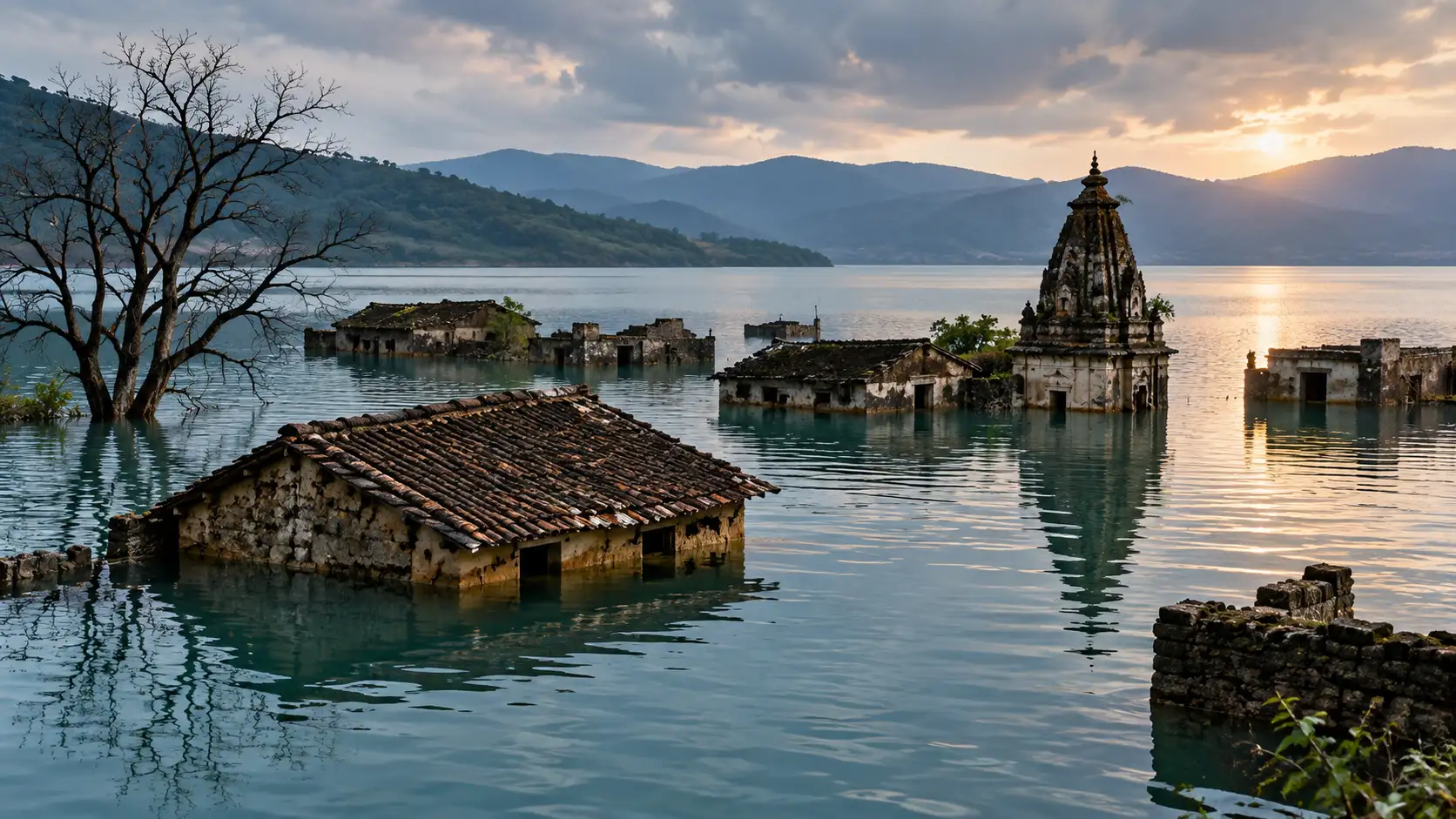
Majuli's geography is constantly influenced by the river's powerful currents, erosion and seasonal flooding . The island has lost substantial land over decades, forcing many families to relocate. During the monsoon, water can cover agricultural fields and affect roads and communication.
Yet life does not simply stop when the river rises. Residents have developed ways of adapting to the seasonal landscape, including raised homes, boats and agricultural practices suited to flood conditions.
The story of Majuli is particularly important because flooding and erosion are not separate problems. Water may temporarily submerge a village, while riverbank erosion can gradually remove the land on which that village stands.
The Kosi is sometimes called the "Sorrow of Bihar" because of its history of changing course and causing destructive floods. Its shifting channels have repeatedly altered settlements and agricultural land.
For residents, flooding can mean much more than water entering houses. Schools may close, roads can become unusable and access to markets or healthcare can become difficult.
In some flood-prone areas, boats become an essential form of transport rather than a tourist attraction. People use them to reach markets, move livestock and transport supplies.
People living on chars often depend heavily on agriculture and livestock. Their lives are closely connected to the river, but that relationship comes with considerable uncertainty.
A family may cultivate a piece of land for several years before erosion takes it away. New land can appear elsewhere, but relocating a home, farm or community is never straightforward.
This makes char communities among the clearest examples of people adapting to a landscape that is literally moving beneath them.
The answer is complicated. Land is tied to livelihoods, family history and social networks. Many families depend on fertile floodplain soil for farming. Moving to a town may also mean losing access to agricultural work or facing housing and employment costs that are difficult to manage.
For many residents, the practical solution is therefore adaptation rather than permanent migration.
Raised platforms, boats, elevated storage spaces and flood-resistant housing can help families survive periods of inundation. Local knowledge can sometimes be just as important as formal infrastructure.
The problem arises when flooding becomes too severe, unpredictable or prolonged.
Climate change is adding another layer of uncertainty. Changes in rainfall patterns, extreme weather and river behaviour can make traditional adaptation strategies harder to rely upon.
For villagers, this can affect crop cycles, household incomes and food security.
People know which possessions need to be moved first, where livestock can be taken and which routes remain accessible by boat. Children may grow up understanding rivers in ways that cannot easily be learned from a map.
This knowledge is increasingly important as governments plan flood-management, evacuation and rehabilitation programmes.
The Villages of Majuli and the Changing Brahmaputra
Assam's Majuli is one of India's best-known examples of a landscape shaped by water. Located in the Brahmaputra, the river island has historically supported numerous villages and farming communities.Majuli's geography is constantly influenced by the river's powerful currents, erosion and seasonal flooding . The island has lost substantial land over decades, forcing many families to relocate. During the monsoon, water can cover agricultural fields and affect roads and communication.
Yet life does not simply stop when the river rises. Residents have developed ways of adapting to the seasonal landscape, including raised homes, boats and agricultural practices suited to flood conditions.
The story of Majuli is particularly important because flooding and erosion are not separate problems. Water may temporarily submerge a village, while riverbank erosion can gradually remove the land on which that village stands.
Bihar’s Floodplains and Seasonal Isolation
Northern Bihar is another region where villages regularly face severe monsoon flooding. Rivers including the Kosi, Gandak and Bagmati can spread across large areas during periods of heavy rainfall.The Kosi is sometimes called the "Sorrow of Bihar" because of its history of changing course and causing destructive floods. Its shifting channels have repeatedly altered settlements and agricultural land.
For residents, flooding can mean much more than water entering houses. Schools may close, roads can become unusable and access to markets or healthcare can become difficult.
In some flood-prone areas, boats become an essential form of transport rather than a tourist attraction. People use them to reach markets, move livestock and transport supplies.
Assam’s River Islands That Appear and Disappear
The Brahmaputra also creates numerous chars, or temporary river islands, across Assam. These sandy formations can emerge, change shape and sometimes disappear as the river shifts.People living on chars often depend heavily on agriculture and livestock. Their lives are closely connected to the river, but that relationship comes with considerable uncertainty.
A family may cultivate a piece of land for several years before erosion takes it away. New land can appear elsewhere, but relocating a home, farm or community is never straightforward.
This makes char communities among the clearest examples of people adapting to a landscape that is literally moving beneath them.
Why People Continue Living in Flood-Prone Villages
An obvious question is why residents do not simply move permanently to safer areas.The answer is complicated. Land is tied to livelihoods, family history and social networks. Many families depend on fertile floodplain soil for farming. Moving to a town may also mean losing access to agricultural work or facing housing and employment costs that are difficult to manage.
For many residents, the practical solution is therefore adaptation rather than permanent migration.
Raised platforms, boats, elevated storage spaces and flood-resistant housing can help families survive periods of inundation. Local knowledge can sometimes be just as important as formal infrastructure.
The Hidden Cost of Seasonal Flooding
Floods are not always entirely destructive. River flooding can deposit nutrient-rich sediment and replenish agricultural land. Historically, many communities deliberately settled near rivers because of fertile soil and access to water.The problem arises when flooding becomes too severe, unpredictable or prolonged.
Climate change is adding another layer of uncertainty. Changes in rainfall patterns, extreme weather and river behaviour can make traditional adaptation strategies harder to rely upon.
For villagers, this can affect crop cycles, household incomes and food security.
When Water Becomes Part of Everyday Life
For outsiders, a village disappearing beneath floodwater can look like an extraordinary event. For residents, it can be part of an annual rhythm.People know which possessions need to be moved first, where livestock can be taken and which routes remain accessible by boat. Children may grow up understanding rivers in ways that cannot easily be learned from a map.
This knowledge is increasingly important as governments plan flood-management, evacuation and rehabilitation programmes.
Next Story