
Jal Jeevan Mission 2.0: Tap Water for Every Rural Household by 2028 - Check Details

Access to clean drinking water is a basic necessity, but for millions of rural families, getting water once meant walking long distances every day. The Central Government launched the Jal Jeevan Mission (JJM) in 2019 under the ‘ Har Ghar Jal ’ campaign to change this situation by bringing piped drinking water directly to rural homes.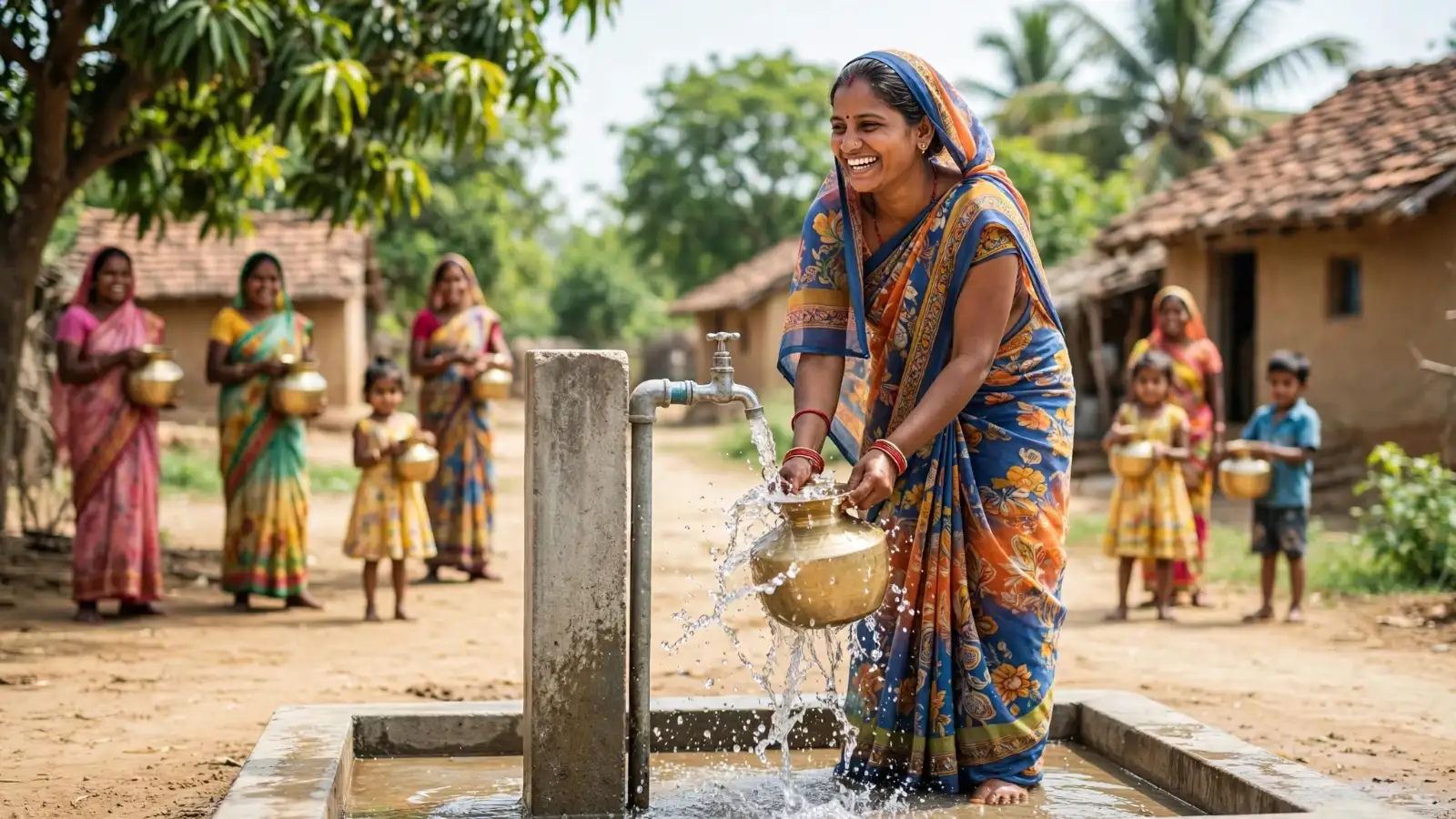
The mission is not limited to installing taps. Its larger goal is to ensure a regular supply of adequate, safe and good-quality drinking water through a sustainable water system.
Government data shows that by July 18, 2026, the number had increased to 15.89 crore households, taking rural tap-water coverage to 82.09%. Around 12.66 crore additional households gained access to piped water during this period.
The figures show how quickly rural water infrastructure has expanded since the launch of the mission.
The second phase places greater emphasis on keeping water systems functional over the long term. This includes protecting water sources, improving service delivery and strengthening the sustainability of village water infrastructure.
A total allocation of ₹8.69 lakh crore has been made for the initiative, including a ₹3.59 lakh crore contribution from the Central Government.
The target is to provide tap water facilities to all 19.36 crore rural households by December 2028.
During the 2025-26 financial year, around 38.78 lakh water samples were tested through 2,843 laboratories.
The government is also training women in villages to carry out field-level water quality tests. This gives local communities a greater role in monitoring the safety of their drinking water.
This means the programme focuses not just on bringing water to homes but also on ensuring that the supplied water meets prescribed quality requirements.
With tap connections reaching homes, this burden has reduced significantly. According to the government, more than 9 crore women have been relieved from the need to fetch water from distant sources.
The time saved can be used for education, work, childcare and other household or community activities.
Jal Jeevan Mission 2.0 aims to bridge this gap and provide tap-water facilities to all 19.36 crore rural households by December 2028.
The mission also gives an important role to Gram Panchayats and village-level committees. Their participation is intended to improve the management, operation and maintenance of local water-supply systems.
With its second phase now focused on sustainability, water quality and reliable services, the next challenge is to ensure that every rural household not only gets a tap, but also receives safe and regular drinking water.
The mission is not limited to installing taps. Its larger goal is to ensure a regular supply of adequate, safe and good-quality drinking water through a sustainable water system.
Tap Water Connections Rise Sharply
When the Jal Jeevan Mission began in 2019, only 3.23 crore rural households, or 16.71% of the total, had tap water connections.Government data shows that by July 18, 2026, the number had increased to 15.89 crore households, taking rural tap-water coverage to 82.09%. Around 12.66 crore additional households gained access to piped water during this period.
The figures show how quickly rural water infrastructure has expanded since the launch of the mission.
What Does Jal Jeevan Mission Aim to Provide?
The mission focuses on more than simply connecting a household to a pipeline. The aim is to provide:- Functional household tap connections
- Regular and adequate water supply
- Safe drinking water meeting quality standards
- Around 55 litres of water per person per day
- Long-term and sustainable water supply systems
Jal Jeevan Mission 2.0 : What Has Changed?
The government approved Jal Jeevan Mission 2.0 in March 2026, extending the programme until December 2028.The second phase places greater emphasis on keeping water systems functional over the long term. This includes protecting water sources, improving service delivery and strengthening the sustainability of village water infrastructure.
A total allocation of ₹8.69 lakh crore has been made for the initiative, including a ₹3.59 lakh crore contribution from the Central Government.
The target is to provide tap water facilities to all 19.36 crore rural households by December 2028.
How Is Drinking Water Quality Checked?
A household tap connection is meaningful only when the water supplied is safe to drink. Therefore, water quality testing is an important part of the mission.During the 2025-26 financial year, around 38.78 lakh water samples were tested through 2,843 laboratories.
The government is also training women in villages to carry out field-level water quality tests. This gives local communities a greater role in monitoring the safety of their drinking water.
Water Must Meet BIS Standards
Water supplied under the Jal Jeevan Mission is required to follow drinking-water quality standards prescribed by the Bureau of Indian Standards (BIS).This means the programme focuses not just on bringing water to homes but also on ensuring that the supplied water meets prescribed quality requirements.
How Are Women Benefiting?
For many rural women and girls, collecting water has traditionally been a daily task involving considerable time and physical effort.With tap connections reaching homes, this burden has reduced significantly. According to the government, more than 9 crore women have been relieved from the need to fetch water from distant sources.
The time saved can be used for education, work, childcare and other household or community activities.
You may also like
- Weather Alert Today: Heavy Rain Likely Across 19 States, Strong Winds May Reach 85 Kmph
- Chidambaram says he is 'proud to be a dimaagi Naxal'; BJP hits back
- Two more Air India pilots fail drug tests: Report
- Two Air India pilots fail prelim dope test; sample sent for confirmation test
- Supreme Court declares August 22 full working day in place of holiday on August 27
Has Every Rural Household Got Tap Water?
Not yet. While rural tap-water coverage has reached 82.09%, a section of households is still waiting for connections.Jal Jeevan Mission 2.0 aims to bridge this gap and provide tap-water facilities to all 19.36 crore rural households by December 2028.
What Is the Role of States and Local Bodies?
Drinking-water supply is primarily a responsibility of states and Union Territories. They plan and implement water-supply projects, while the Central Government provides financial and technical support.The mission also gives an important role to Gram Panchayats and village-level committees. Their participation is intended to improve the management, operation and maintenance of local water-supply systems.
The Bigger Picture
The Jal Jeevan Mission has significantly changed the reach of piped water in rural India. From just 16.71% of rural households having tap connections in 2019, coverage had climbed to 82.09% by July 2026.With its second phase now focused on sustainability, water quality and reliable services, the next challenge is to ensure that every rural household not only gets a tap, but also receives safe and regular drinking water.






Loving Newspoint? Download the app now
