
Lakhpati Didi Scheme: How Rural Women Can Build ₹1 Lakh Annual Income Through SHGs

The Lakhpati Didi Scheme is aimed at strengthening the economic position of rural women by helping them develop sustainable sources of income. Rather than focusing only on one-time financial assistance, the initiative links women in Self-Help Groups (SHGs) with livelihood and business opportunities that can generate regular earnings.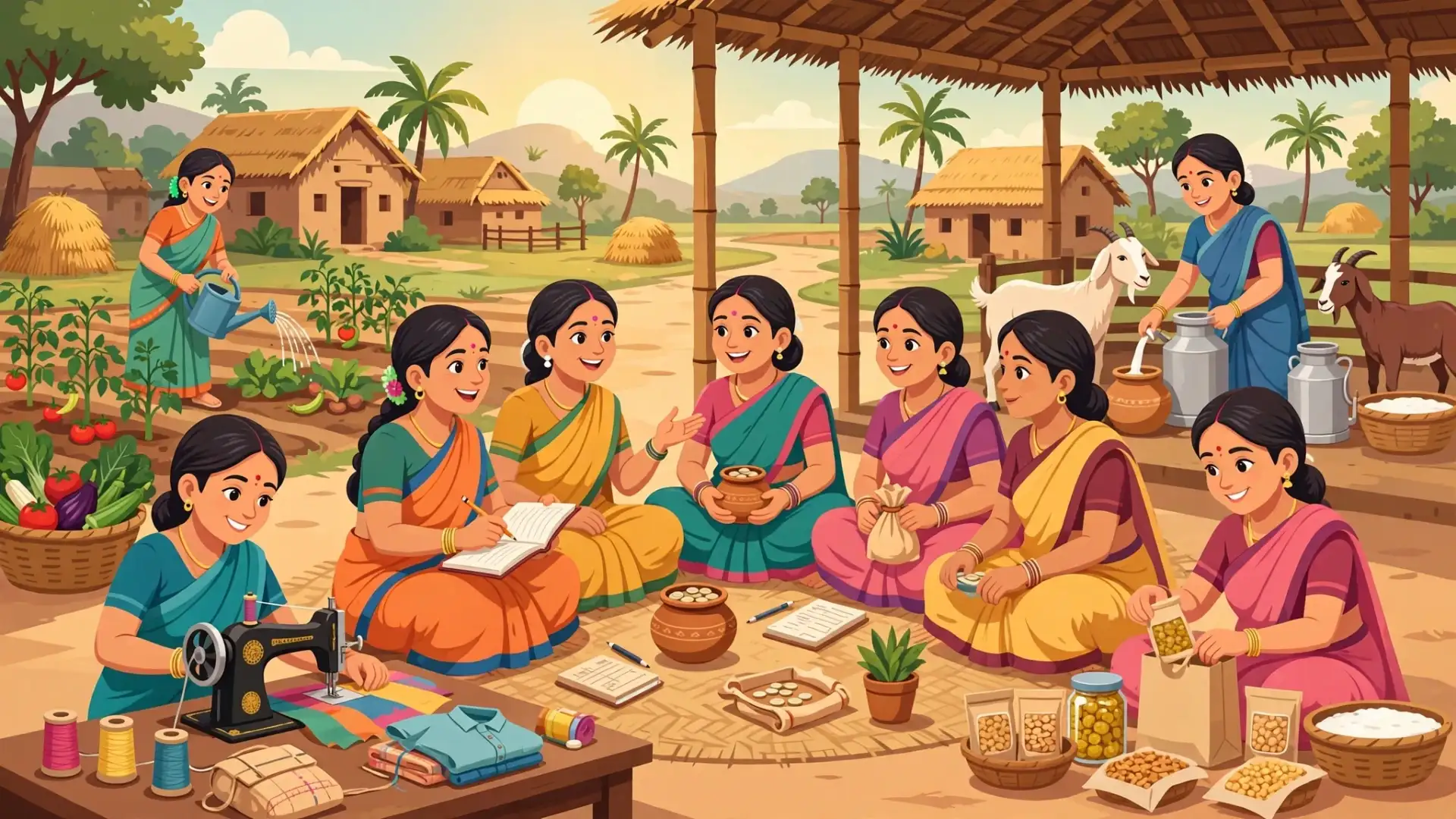
Under the official definition, a Lakhpati Didi is an SHG member whose annual household income is at least ₹1 lakh and remains at that level for a sustained period covering four agricultural seasons or four business cycles. The initiative seeks to support women in reaching that income level through training, finance, enterprise development and market access.
Priority is given to SHG members who have completed at least two years of membership, received benefits from the Community Investment Fund and are involved in livelihood activities under the mission. This means there is no single nationwide age limit or family-income ceiling that can be treated as a universal eligibility rule.
Women should therefore check the criteria applicable in their state before assuming they qualify for the Lakhpati Didi eligibility process.
Women can also explore tailoring, embroidery, textile work, household industries, shops and other service-based businesses. According to experts, choosing an activity that has a viable local market can be important for turning training and financial support into a sustainable source of income.
Training is designed around these livelihood models, helping women develop skills relevant to the activity they choose.
SHGs can also receive interest subvention on bank credit, while women-led enterprises may benefit from credit guarantee facilities and interest support. These provisions are intended to help groups and enterprises access finance without treating the Lakhpati Didi status itself as an automatic loan entitlement.
Women interested in the programme can begin by contacting their Rural Livelihood Mission officials and confirming their SHG membership. They can then identify a suitable livelihood or business activity and seek guidance on the required support.
Before proceeding, women should confirm the exact requirements with their SHG, Village Organisation, Cluster Level Federation or Rural Livelihood Mission office. This can help avoid delays caused by incomplete or incorrect documentation.
The focus of the initiative remains on helping rural women build income-generating activities that can continue over time, rather than relying solely on short-term financial assistance.
Image Courtesy: Meta AI
Under the official definition, a Lakhpati Didi is an SHG member whose annual household income is at least ₹1 lakh and remains at that level for a sustained period covering four agricultural seasons or four business cycles. The initiative seeks to support women in reaching that income level through training, finance, enterprise development and market access.
Who Can Become A Lakhpati Didi?
Membership of a Self-Help Group is a key requirement for women looking to participate in the initiative. The identification process follows specific guidelines, while states and Union Territories can introduce additional criteria depending on local circumstances.Priority is given to SHG members who have completed at least two years of membership, received benefits from the Community Investment Fund and are involved in livelihood activities under the mission. This means there is no single nationwide age limit or family-income ceiling that can be treated as a universal eligibility rule.
Women should therefore check the criteria applicable in their state before assuming they qualify for the Lakhpati Didi eligibility process.
Agriculture To Small Businesses: What Women Can Do
The initiative covers a broad range of income-generating activities based on local opportunities and individual interests. Agriculture and farm-related enterprises form an important part of the programme, alongside activities such as animal husbandry, dairy production and food processing.Women can also explore tailoring, embroidery, textile work, household industries, shops and other service-based businesses. According to experts, choosing an activity that has a viable local market can be important for turning training and financial support into a sustainable source of income.
Training is designed around these livelihood models, helping women develop skills relevant to the activity they choose.
What About Loans And Financial Support?
A key point about the Lakhpati Didi Scheme is that becoming a Lakhpati Didi does not automatically mean receiving an individual loan of ₹20 lakh. The ₹20 lakh figure relates to collateral-free bank loans available to eligible SHGs, subject to applicable rules.You may also like
- Defence Ministry releases 6th Positive Indigenisation List
- Supreme Court keeps hanging as India's official method for executions
- 'No safe harbour if law violated': Government's message to Meta on content moderation
- 'Please take Gyanesh Kumar to America': Congress's jibe at CEC after Trump lauds Indian electoral system
- Intent laudable, but going 'overboard': Court fines Maharashtra FDA ₹5L
SHGs can also receive interest subvention on bank credit, while women-led enterprises may benefit from credit guarantee facilities and interest support. These provisions are intended to help groups and enterprises access finance without treating the Lakhpati Didi status itself as an automatic loan entitlement.
Jan-Dhan Account Holders Get An Overdraft Facility
Women SHG members holding a Jan-Dhan account can access an overdraft facility of up to ₹5,000, subject to the applicable conditions. This provides an additional financial facility for eligible members.Women interested in the programme can begin by contacting their Rural Livelihood Mission officials and confirming their SHG membership. They can then identify a suitable livelihood or business activity and seek guidance on the required support.
Documents And Application Process
Documentation requirements can differ depending on state policies and SHG procedures. Generally, applicants may need identity details, bank account information and proof or details of SHG membership.Before proceeding, women should confirm the exact requirements with their SHG, Village Organisation, Cluster Level Federation or Rural Livelihood Mission office. This can help avoid delays caused by incomplete or incorrect documentation.
The focus of the initiative remains on helping rural women build income-generating activities that can continue over time, rather than relying solely on short-term financial assistance.
Image Courtesy: Meta AI






Loving Newspoint? Download the app now
