
Bomb Blast In Bishnupur, Manipur Back On Violence

Is Manipur headed for another president’s rule?That is what everyone is wondering after the recent violence outrages in Manipur, again between the Meithei and Kuki-Zo communities.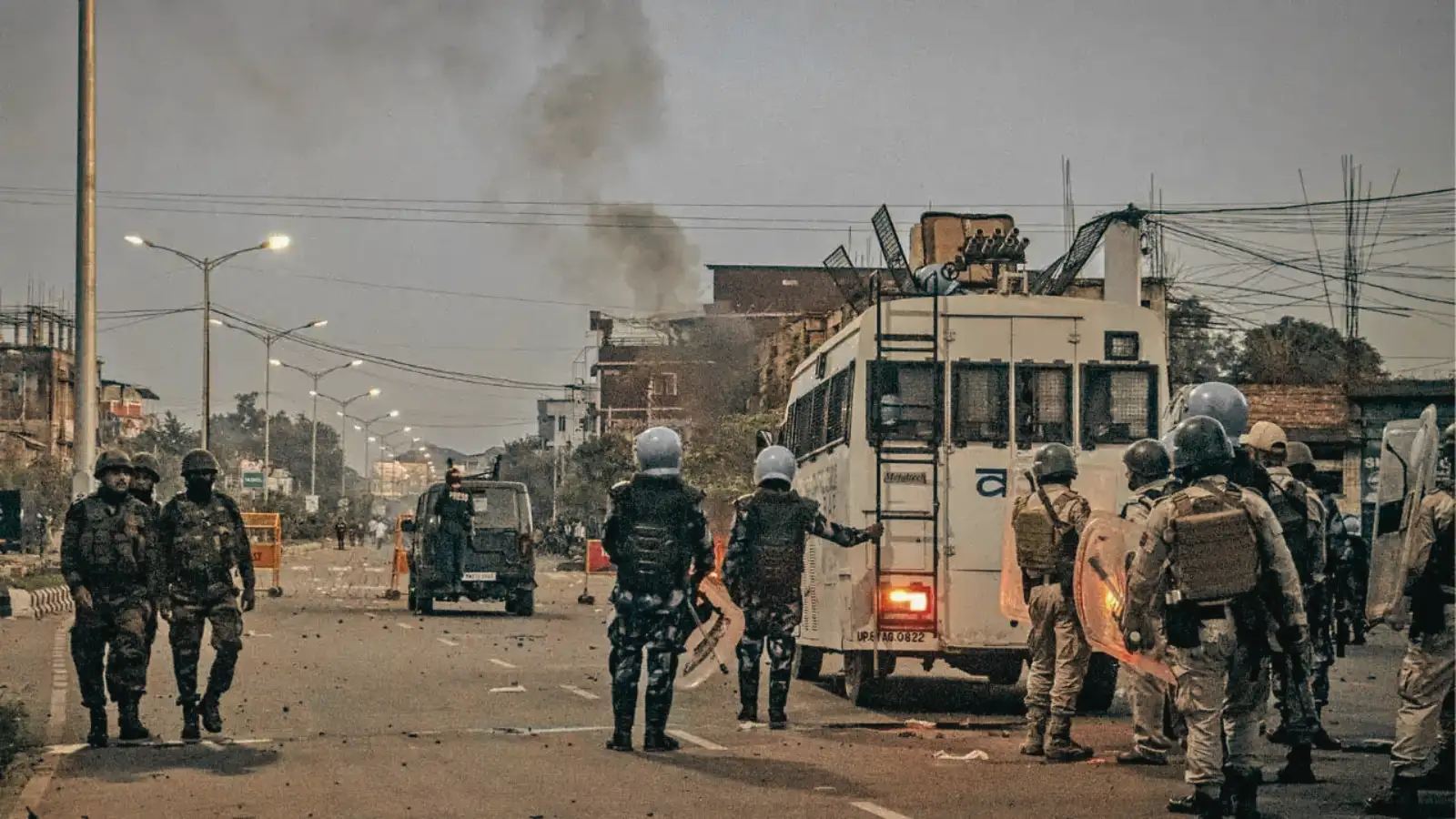
Recently, A bomb blast happened in Bishnupur on 7 April which killed two children and critically injured their mother while they were sleeping. This also triggered mass protests and outrage seeing the brutality of the attacks and by daybreak thousands of protesters took to the streets to protest.
The outrage quickly turned into arson and violence as protesters set fire to vehicles and in one shocking incident, a mob of nearly 500 people reportedly attacked a CRPF camp at Gelmol.
But why is violence erupting? The violence started in 2023 when the Manipur High Court ordered the state government to consider granting Scheduled Tribe (ST) status to the Meitei community.
The Meiteis thought this was a perfect move as they argue that they need ST status to protect their ancestral land and culture from ‘illegal immigration’ and to have the right to buy land in the hills (where they are currently barred according to article 371C).
The Kuki- Zo thought that granting ST status to the politically and numerically dominant Meiteis would allow them to take over tribal lands in the hills and monopolize government jobs and education quotas currently reserved for existing tribes.
This had triggered a series of outrage in 2023 which had stopped for some while but after the Bishnupur bombing, the attacks got renewed.
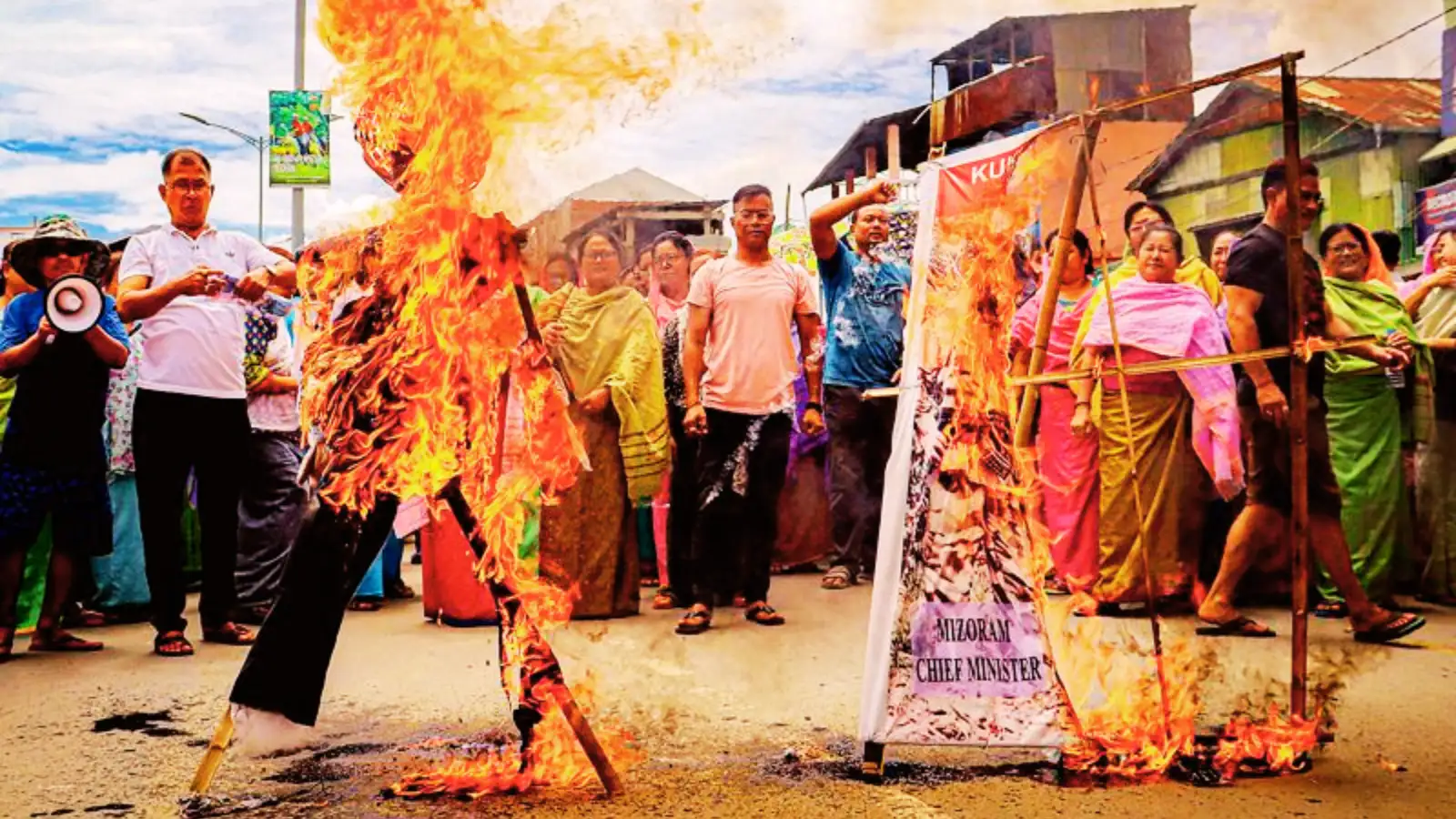
In an effort to curb rumours and prevent mobilization of armed forces, the Manipur government immediately suspended mobile internet and data services in five valley districts: Imphal West, Imphal East, Thoubal, Kakching, and Bishnupur. While broadband services saw intermittent and regulated restoration for essential services like healthcare and banking, the mobile internet ban remained a point of deep frustration for the public.
Even though the government briefly evoked the suspension on April 18 to alleviate public inconvenience, the atmosphere remains thick with ‘digital anxiety’.
The timing of this unrest is particularly challenging for the new Chief Minister, Yumnam Khemchand Singh . Since taking office in February 2026, Singh has attempted a policy of outreach, even visiting Naga-dominated areas and passing through Kuki-Zo regions in an effort to bridge the ethnic divide. However, his administration has characterized the latest attacks as a deliberate attempt to ‘destabilise’ the nascent government and derail fragile peace efforts.
A major logistical hurdle currently facing the state is the depletion of security personnel. Home Minister Govindas Konthoujam recently noted that nearly 100 companies of Central Armed Police Forces (CAPF) were withdrawn from Manipur for election duties in West Bengal. This vacuum in security has emboldened miscreants, leading to ambushes on National Highways. The government is currently pinning its hopes on the return of these forces after the return of these forces after the final phases of the Bengal elections on April 29 to re-establish ‘buffer zones’ and secure vital transit routes.
The National Investigation Agency (NIA) has officially taken over the probe into the Tronglaobi bombing, but progress has been stalled by blockades on the Bishnupur-Churachandpur road. As of late April, a five-day state shutdown called by various civil society organizations continues to affect daily wage earners and students.
What happened
Recently, A bomb blast happened in Bishnupur on 7 April which killed two children and critically injured their mother while they were sleeping. This also triggered mass protests and outrage seeing the brutality of the attacks and by daybreak thousands of protesters took to the streets to protest.
The outrage quickly turned into arson and violence as protesters set fire to vehicles and in one shocking incident, a mob of nearly 500 people reportedly attacked a CRPF camp at Gelmol.
Background
But why is violence erupting? The violence started in 2023 when the Manipur High Court ordered the state government to consider granting Scheduled Tribe (ST) status to the Meitei community.
The Meiteis thought this was a perfect move as they argue that they need ST status to protect their ancestral land and culture from ‘illegal immigration’ and to have the right to buy land in the hills (where they are currently barred according to article 371C).
You may also like
- 'It's all drama': Mamata Banerjee reacts to PM Modi's 'jhalmuri' break
- "Widening of Char Dham Yatra routes have made pilgrimage more accessible, safe": Uttarakhand CM Dhami
- Punjab Police arrests 4 linked to foreign-based narcotics, arms module; seizes 9.9kg heroin, two pistols
- Delhi HC reschedules hearing in ED's National Herald appeal to May 25
- Andhra CM Chandrababu Naidu slams DMK govt in Coimbatore
The Kuki- Zo thought that granting ST status to the politically and numerically dominant Meiteis would allow them to take over tribal lands in the hills and monopolize government jobs and education quotas currently reserved for existing tribes.
This had triggered a series of outrage in 2023 which had stopped for some while but after the Bishnupur bombing, the attacks got renewed.
Government reaction
In an effort to curb rumours and prevent mobilization of armed forces, the Manipur government immediately suspended mobile internet and data services in five valley districts: Imphal West, Imphal East, Thoubal, Kakching, and Bishnupur. While broadband services saw intermittent and regulated restoration for essential services like healthcare and banking, the mobile internet ban remained a point of deep frustration for the public.
Even though the government briefly evoked the suspension on April 18 to alleviate public inconvenience, the atmosphere remains thick with ‘digital anxiety’.
The timing of this unrest is particularly challenging for the new Chief Minister, Yumnam Khemchand Singh . Since taking office in February 2026, Singh has attempted a policy of outreach, even visiting Naga-dominated areas and passing through Kuki-Zo regions in an effort to bridge the ethnic divide. However, his administration has characterized the latest attacks as a deliberate attempt to ‘destabilise’ the nascent government and derail fragile peace efforts.
A major logistical hurdle currently facing the state is the depletion of security personnel. Home Minister Govindas Konthoujam recently noted that nearly 100 companies of Central Armed Police Forces (CAPF) were withdrawn from Manipur for election duties in West Bengal. This vacuum in security has emboldened miscreants, leading to ambushes on National Highways. The government is currently pinning its hopes on the return of these forces after the return of these forces after the final phases of the Bengal elections on April 29 to re-establish ‘buffer zones’ and secure vital transit routes.
The National Investigation Agency (NIA) has officially taken over the probe into the Tronglaobi bombing, but progress has been stalled by blockades on the Bishnupur-Churachandpur road. As of late April, a five-day state shutdown called by various civil society organizations continues to affect daily wage earners and students.






More from our partners


Loving Newspoint? Download the app now
