
National Symbols Of India And Their Meaning Explained

From the fierce roar of the Royal Bengal Tiger to the serene beauty of the Lotus, India’s national symbols are far more than just official icons. They are the heartbeat of a nation, weaving together thousands of years of history, spiritual depth, and a vibrant future.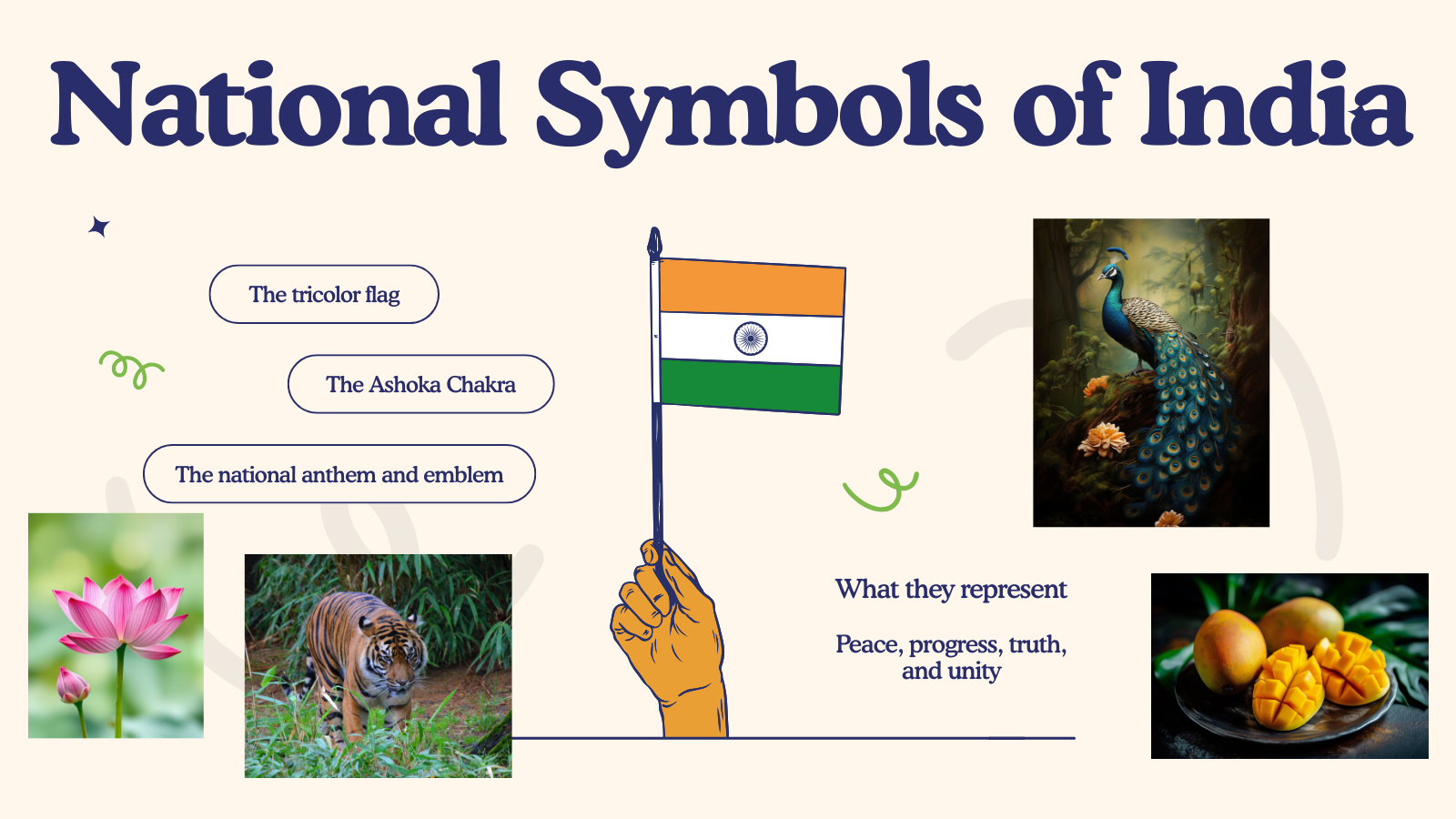
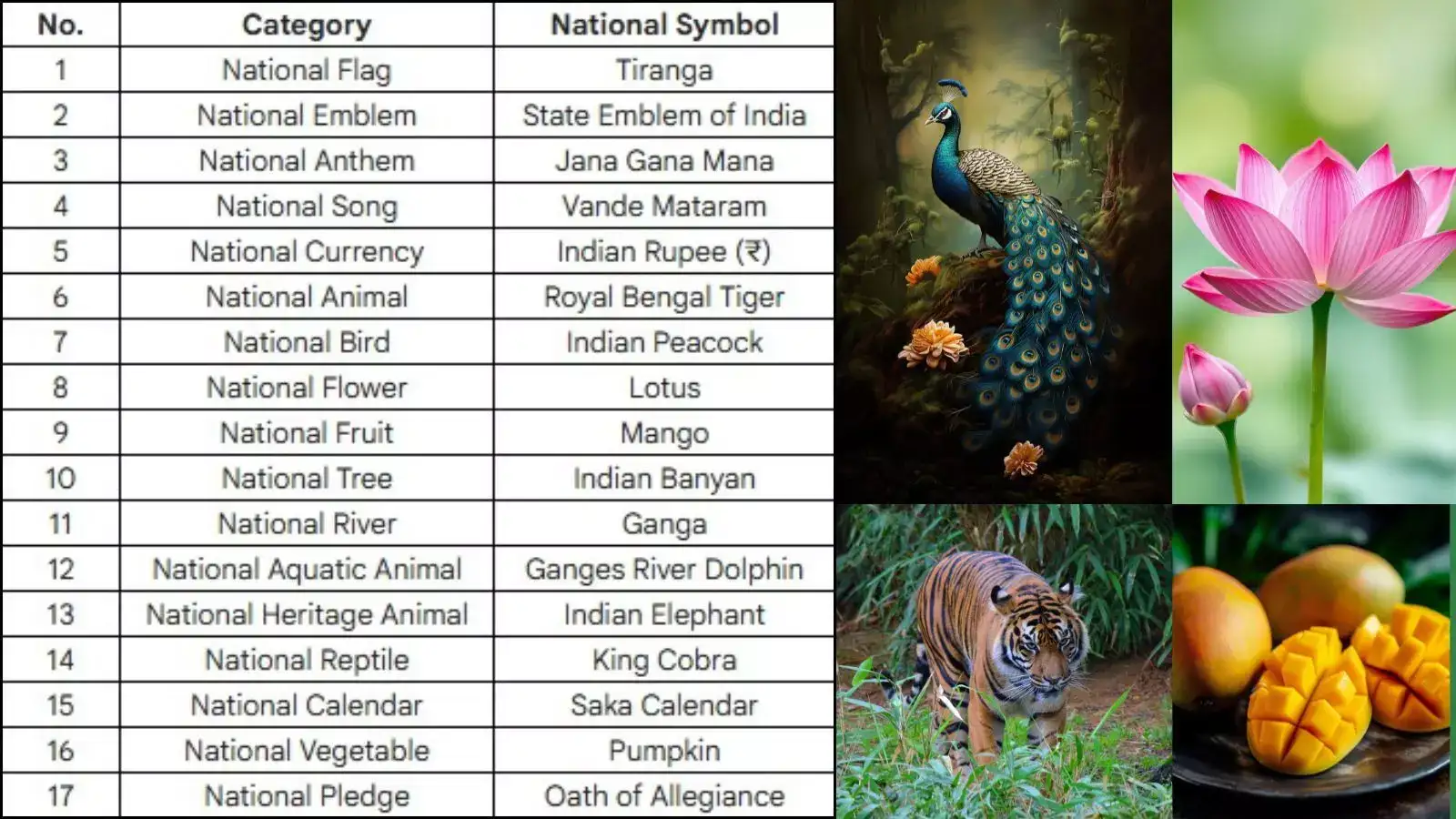
As of 2026, India officially recognises 17 national symbols. Each one has been carefully chosen to reflect the core values of the Republic- unity, courage, and a deep-rooted respect for nature. Whether you are a student preparing for competitive exams or simply a proud citizen, understanding these symbols is like holding a mirror to the soul of India.
These icons serve as a unifying force for India’s 1.4 billion people, representing the country’s identity on the global stage.
The Indian National Flag, or the Tiranga, is a masterclass in symbolism. Adopted on 22 July 1947, its saffron stripe represents courage and sacrifice, the white signifies peace and truth, and the green reflects fertility and growth. At its heart lies the navy-blue Ashoka Chakra, a 24-spoke wheel that reminds every citizen that life is in movement and the nation must progress.
The Royal Bengal Tiger: Strength and Conservation
Chosen as the National Animal of India in 1973, the Royal Bengal Tiger replaced the Lion to highlight India's unique wildlife wealth. It is a symbol of sheer power and agility. Today, it also stands as a testament to the country's massive conservation efforts, with India now home to 75% of the world's wild tiger population.
The National Flower of India is the Lotus, an ancient symbol of spiritual enlightenment. Its ability to bloom beautifully in muddy waters is a powerful metaphor for the Indian spirit rising above challenges with grace and purity.
The National Emblem: Truth Alone Triumphs
Adapted from the Lion Capital of Ashoka at Sarnath, the National Emblem features four Asiatic lions representing power and confidence. Beneath them, the motto "Satyameva Jayate" (Truth Alone Triumphs) serves as the moral compass for the entire nation.
Why These Symbols Matter
These 17 icons are not just for textbooks. They appear on our currency, official seals, and are celebrated in classrooms across the country. They bridge the gap between India's ancient civilization and its modern aspirations, fostering a sense of belonging that transcends language, religion, and geography.
As of 2026, India officially recognises 17 national symbols. Each one has been carefully chosen to reflect the core values of the Republic- unity, courage, and a deep-rooted respect for nature. Whether you are a student preparing for competitive exams or simply a proud citizen, understanding these symbols is like holding a mirror to the soul of India.
The 17 National Symbols of India
These icons serve as a unifying force for India’s 1.4 billion people, representing the country’s identity on the global stage.
A Closer Look at the Icons of India
The Tiranga: A Banner of Unity
The Indian National Flag, or the Tiranga, is a masterclass in symbolism. Adopted on 22 July 1947, its saffron stripe represents courage and sacrifice, the white signifies peace and truth, and the green reflects fertility and growth. At its heart lies the navy-blue Ashoka Chakra, a 24-spoke wheel that reminds every citizen that life is in movement and the nation must progress.
The Royal Bengal Tiger: Strength and Conservation
Chosen as the National Animal of India in 1973, the Royal Bengal Tiger replaced the Lion to highlight India's unique wildlife wealth. It is a symbol of sheer power and agility. Today, it also stands as a testament to the country's massive conservation efforts, with India now home to 75% of the world's wild tiger population. The Lotus: Purity in Diversity
The National Flower of India is the Lotus, an ancient symbol of spiritual enlightenment. Its ability to bloom beautifully in muddy waters is a powerful metaphor for the Indian spirit rising above challenges with grace and purity.
The National Emblem: Truth Alone Triumphs
Adapted from the Lion Capital of Ashoka at Sarnath, the National Emblem features four Asiatic lions representing power and confidence. Beneath them, the motto "Satyameva Jayate" (Truth Alone Triumphs) serves as the moral compass for the entire nation. Why These Symbols Matter
These 17 icons are not just for textbooks. They appear on our currency, official seals, and are celebrated in classrooms across the country. They bridge the gap between India's ancient civilization and its modern aspirations, fostering a sense of belonging that transcends language, religion, and geography.Next Story