
NMC New Guidelines for Doctors: No Fake Reviews, AI Ads or ‘100% Success’ Claims

The National Medical Commission (NMC) has introduced new guidelines to regulate how doctors, hospitals and medical institutions advertise their services. The rules aim to prevent misleading medical promotions , protect patients from exaggerated claims and ensure that healthcare decisions are based on reliable information rather than marketing tactics.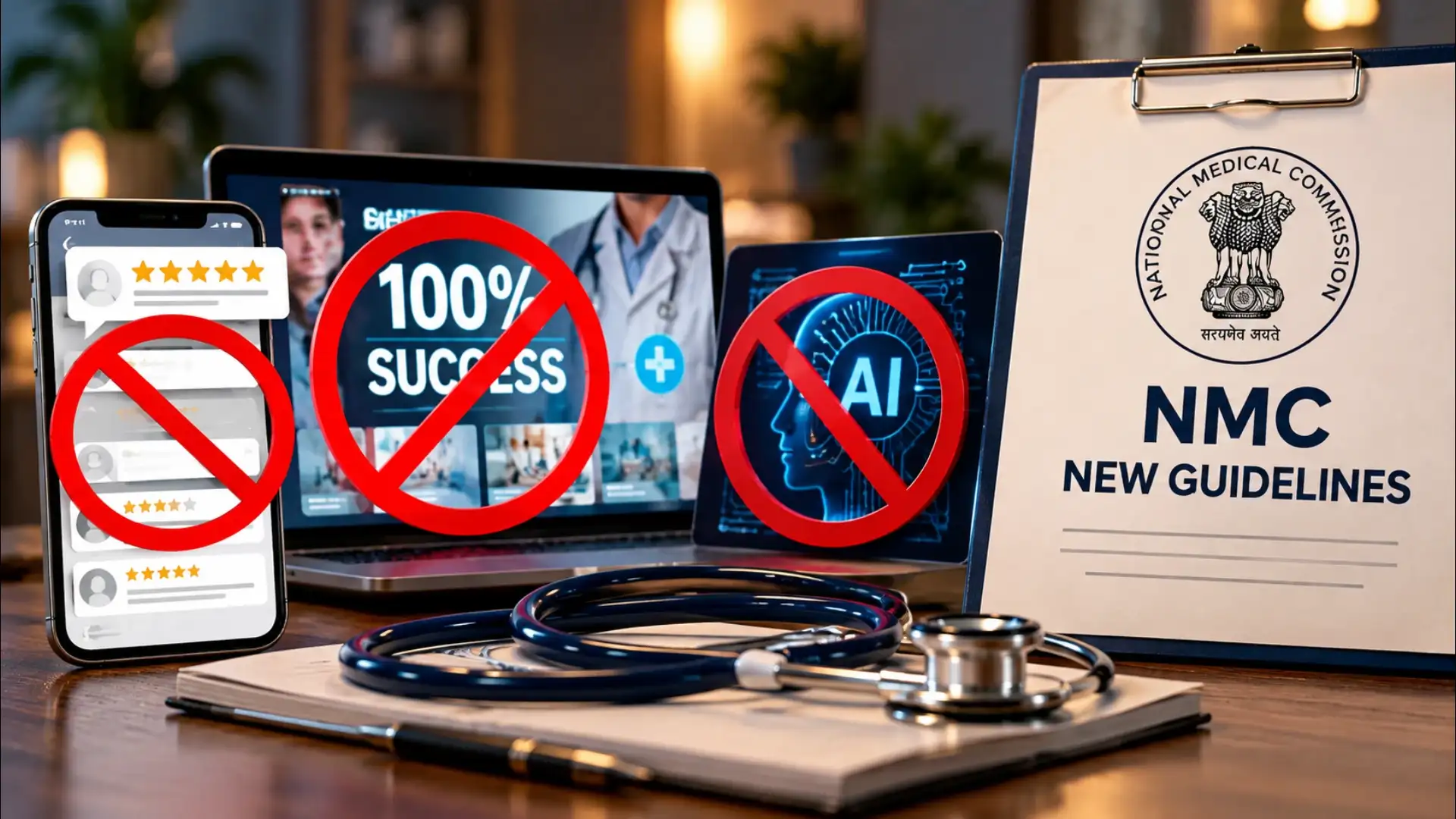
The new guidelines address several forms of advertising, including social media posts, online reviews, promotional offers, artificial intelligence (AI)-generated content and claims about treatment outcomes. They also prescribe penalties for doctors who violate the rules.
While doctors can continue to share health awareness messages and educational information with the public, they must avoid using promotional methods that could mislead patients or encourage unnecessary medical procedures. The guidelines also build on existing medical ethics rules by addressing newer forms of digital advertising and online promotion.
The rules also prohibit doctors and hospitals from creating unnecessary demand for medical procedures or diagnostic tests by frightening patients. This is intended to prevent people from making healthcare decisions because of exaggerated risks or pressure-based marketing.
However, doctors can still participate in public health awareness programmes, share verified health information on social media and take part in educational discussions relevant to their expertise.
They also restrict the manipulation of online popularity. Doctors, hospitals and third parties working on their behalf cannot purchase or manipulate fake followers, likes, comments, reviews, ratings, testimonials or views.
Attempts to manipulate search rankings, online visibility or digital algorithms to create a misleading impression of a medical professional's reputation are also prohibited.
Patient information may be used for scientific or educational purposes when it is appropriately anonymised. This restriction is important because patients may otherwise be influenced by promotional material that presents selected treatment outcomes as evidence of guaranteed results.
Where such claims are made, they must be supported by independently verifiable data. The guidelines require relevant disclosures, where necessary, about the conditions and methodology behind a claim, the dates of the assessment and the organisation that issued an award or ranking.
These requirements aim to make medical advertising more transparent and prevent patients from being misled by unsupported claims about a doctor's qualifications, reputation or treatment outcomes.
Hospitals may also face action under the Clinical Establishments Act in states where the legislation has been implemented, as specified in the guidelines.
Doctors cannot directly or indirectly solicit or accept commissions, rebates, bonuses, gifts, referral fees or lead-generation fees in connection with medical services or recommendations they make.
Hospitals and doctors are also warned against promotional offers that could encourage unnecessary consultations, diagnostic tests or treatments. These include limited-period discounts, coupons, cashback offers, contests, gifts and similar schemes.
The objective is to prevent commercial incentives from influencing medical decisions and encouraging patients to purchase healthcare services they may not need.
The guidelines also address synthetic images, voices and testimonials created using AI or other technologies that could be mistaken for genuine patient experiences or endorsements. Where such representations are used, the guidelines call for clear disclosure to the audience.
These provisions seek to prevent fabricated patient experiences and unsubstantiated treatment claims from being used to influence healthcare decisions.
The penalties outlined in the guidelines include:
The severity of the action will depend on the nature and seriousness of the violation and the applicable provisions of the guidelines.
Doctors can continue to share verified medical information, explain health conditions, participate in educational discussions and raise awareness about disease prevention. However, their communication must remain factual and must not turn into misleading self-promotion or the solicitation of patients.
The rules draw a distinction between educating the public and using advertising tactics to influence patients for commercial gain.
By placing restrictions on digital advertising, financial incentives and AI-generated representations, the NMC aims to strengthen ethical standards in healthcare communication.
The guidelines also reinforce the principle that medical decisions should be guided by patients' needs, reliable evidence and professional judgement rather than aggressive marketing.
For doctors and hospitals, the changes highlight the need to review their advertising practices, social media content, patient testimonials and promotional campaigns to ensure compliance with the new rules.
The new guidelines address several forms of advertising, including social media posts, online reviews, promotional offers, artificial intelligence (AI)-generated content and claims about treatment outcomes. They also prescribe penalties for doctors who violate the rules.
While doctors can continue to share health awareness messages and educational information with the public, they must avoid using promotional methods that could mislead patients or encourage unnecessary medical procedures. The guidelines also build on existing medical ethics rules by addressing newer forms of digital advertising and online promotion.
NMC Guidelines for Doctors : What Has Changed?
The new NMC guidelines establish clearer restrictions on the commercial promotion of medical services. Doctors are not permitted to solicit patients directly or indirectly, promote their own practices through unethical advertising or use their professional names to endorse medicines, therapies or medical devices.The rules also prohibit doctors and hospitals from creating unnecessary demand for medical procedures or diagnostic tests by frightening patients. This is intended to prevent people from making healthcare decisions because of exaggerated risks or pressure-based marketing.
However, doctors can still participate in public health awareness programmes, share verified health information on social media and take part in educational discussions relevant to their expertise.
No Fake Reviews, Patient Testimonials or Before-and-After Photos
The guidelines prohibit doctors and hospitals from using patient success stories, before-and-after photographs and celebrity patients to promote medical services.They also restrict the manipulation of online popularity. Doctors, hospitals and third parties working on their behalf cannot purchase or manipulate fake followers, likes, comments, reviews, ratings, testimonials or views.
Attempts to manipulate search rankings, online visibility or digital algorithms to create a misleading impression of a medical professional's reputation are also prohibited.
Patient information may be used for scientific or educational purposes when it is appropriately anonymised. This restriction is important because patients may otherwise be influenced by promotional material that presents selected treatment outcomes as evidence of guaranteed results.
‘Best Doctor’ and ‘100% Success’ Claims Under Scrutiny
The NMC guidelines also address exaggerated claims used to attract patients. Expressions such as ‘best doctor’, ‘No. 1 specialist’, ‘100% success’, ‘pain-free treatment’, ‘leading’, ‘most trusted’ and ‘unmatched’ cannot be used casually for self-promotion.Where such claims are made, they must be supported by independently verifiable data. The guidelines require relevant disclosures, where necessary, about the conditions and methodology behind a claim, the dates of the assessment and the organisation that issued an award or ranking.
These requirements aim to make medical advertising more transparent and prevent patients from being misled by unsupported claims about a doctor's qualifications, reputation or treatment outcomes.
Hospitals may also face action under the Clinical Establishments Act in states where the legislation has been implemented, as specified in the guidelines.
Doctors and Hospitals Cannot Offer Promotional Discounts
The new rules place restrictions on financial incentives connected with medical services.Doctors cannot directly or indirectly solicit or accept commissions, rebates, bonuses, gifts, referral fees or lead-generation fees in connection with medical services or recommendations they make.
Hospitals and doctors are also warned against promotional offers that could encourage unnecessary consultations, diagnostic tests or treatments. These include limited-period discounts, coupons, cashback offers, contests, gifts and similar schemes.
The objective is to prevent commercial incentives from influencing medical decisions and encouraging patients to purchase healthcare services they may not need.
NMC Rules on AI-Generated Medical Advertisements
Artificial intelligence is another major area covered by the new guidelines. Doctors and medical institutions must not use AI-generated or AI-assisted content to make misleading, deceptive or unverifiable claims about diagnoses, treatments, clinical outcomes, professional qualifications, patient experiences or healthcare services.The guidelines also address synthetic images, voices and testimonials created using AI or other technologies that could be mistaken for genuine patient experiences or endorsements. Where such representations are used, the guidelines call for clear disclosure to the audience.
These provisions seek to prevent fabricated patient experiences and unsubstantiated treatment claims from being used to influence healthcare decisions.
What Are the Penalties for Violating NMC Guidelines?
The NMC guidelines prescribe a graded system of penalties for violations. The action can become more serious if a doctor repeatedly breaches the rules or commits a serious violation.The penalties outlined in the guidelines include:
- First violation: A warning and mandatory ethics training.
- Second violation: Censure and a monetary penalty.
- Third violation: Suspension of medical registration for three to six months.
- Serious violations: Suspension may extend to six to 12 months in cases involving misleading cure claims, patient inducement or digital mass solicitation.
- Repeated violations: Removal of the doctor's name from the medical register for one to three years may be imposed.
The severity of the action will depend on the nature and seriousness of the violation and the applicable provisions of the guidelines.
Can Doctors Still Use Social Media?
Yes. The new guidelines do not prevent doctors from using social media for legitimate educational and public health purposes.Doctors can continue to share verified medical information, explain health conditions, participate in educational discussions and raise awareness about disease prevention. However, their communication must remain factual and must not turn into misleading self-promotion or the solicitation of patients.
The rules draw a distinction between educating the public and using advertising tactics to influence patients for commercial gain.
Why Do the New NMC Guidelines Matter?
Patients increasingly use online platforms to research doctors, compare hospitals and understand treatment options. Misleading advertisements, fake reviews and exaggerated claims can make it difficult to distinguish reliable medical information from promotional content.By placing restrictions on digital advertising, financial incentives and AI-generated representations, the NMC aims to strengthen ethical standards in healthcare communication.
The guidelines also reinforce the principle that medical decisions should be guided by patients' needs, reliable evidence and professional judgement rather than aggressive marketing.
For doctors and hospitals, the changes highlight the need to review their advertising practices, social media content, patient testimonials and promotional campaigns to ensure compliance with the new rules.
Next Story